


Antique Street Lamps
These antique street lamps bring genuine architectural presence to modern gardens and exterior walls.
Antique Street Lamps
When you search for antique street lamps, you are looking at substantial outdoor lighting fixtures designed to illuminate thoroughfares, gateways, and gardens. The pieces found here span the Victorian, Edwardian, and mid-century periods, capturing an era of robust public and domestic illumination.
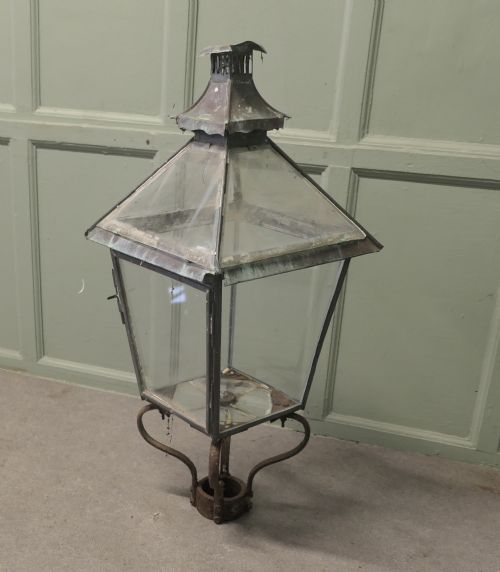
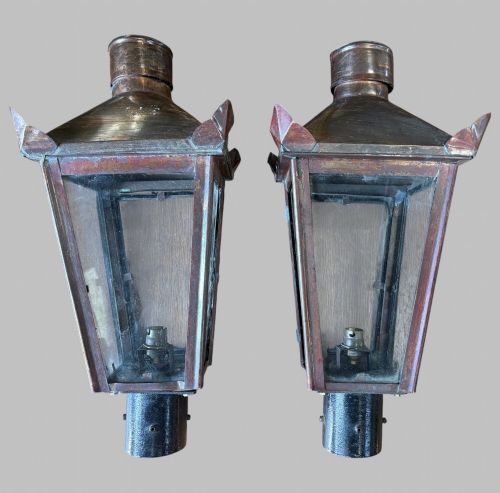
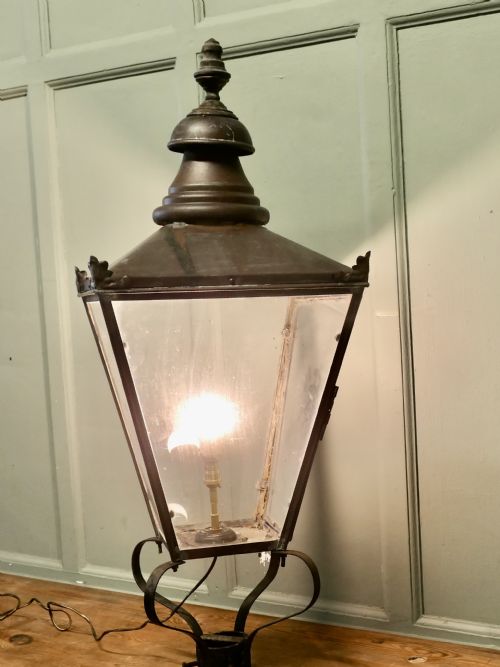
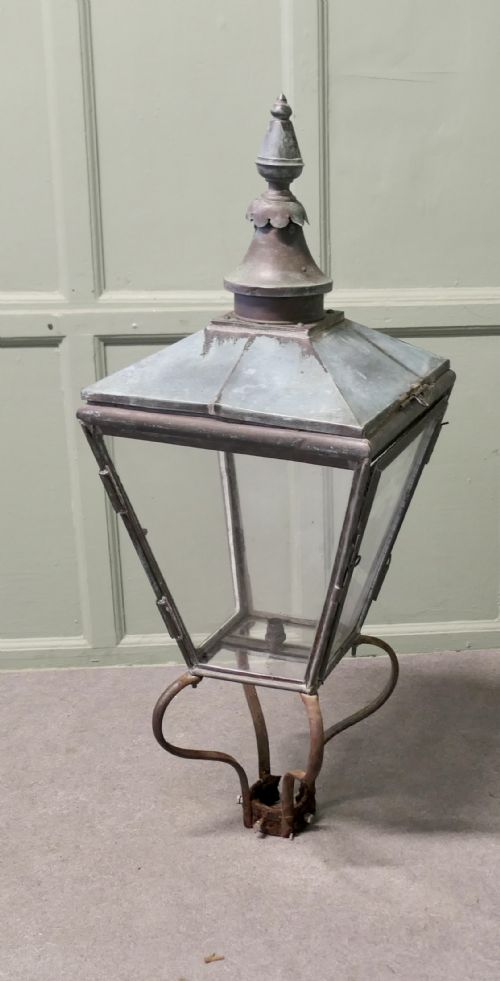
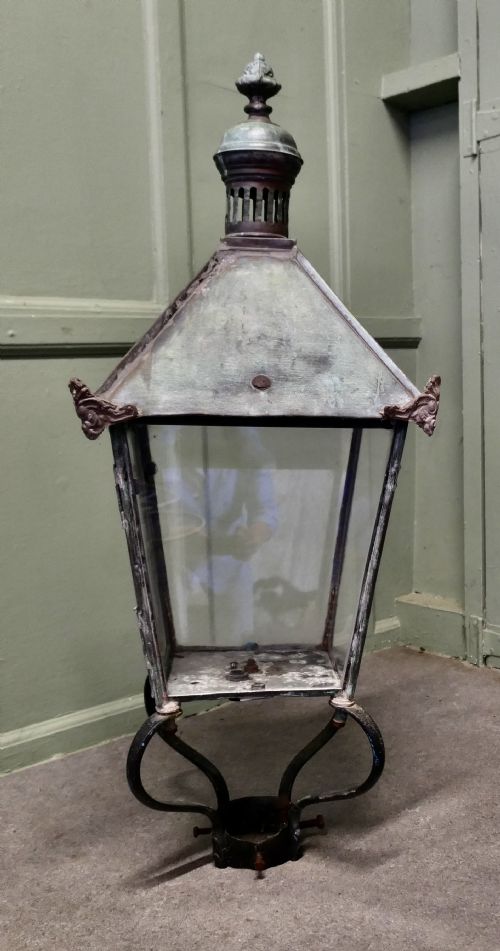
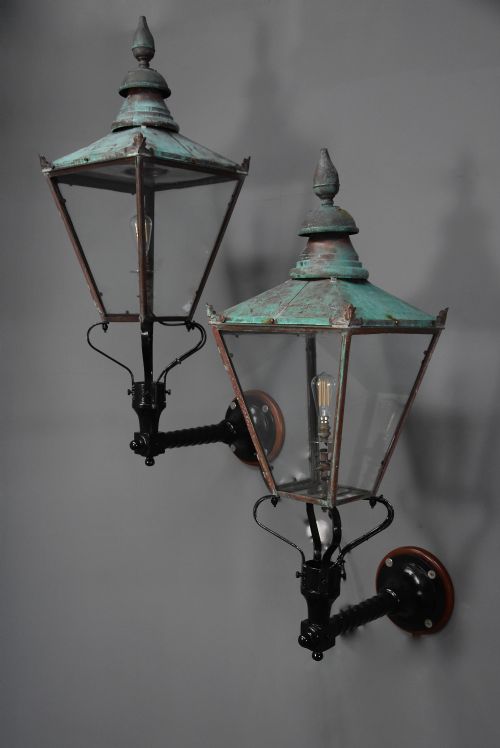
You are most likely to meet large copper lanterns and post-mounted lights, often salvaged from Victorian streets or converted from gas to electricity. Forms range from simple wall brackets and gate post lights to tall lamp posts with distinctive swan neck supports.
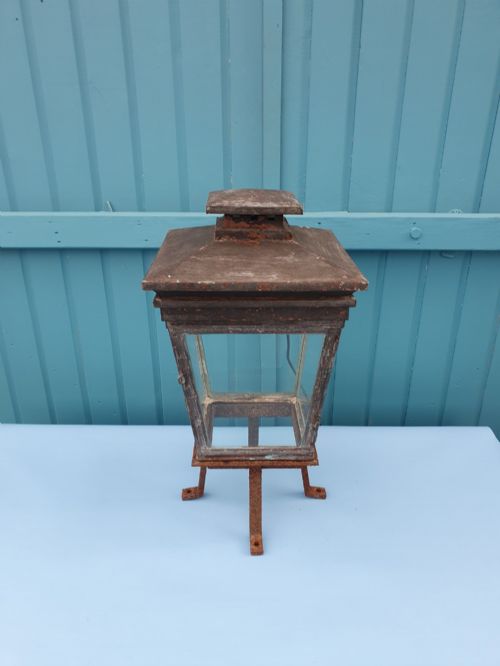
The selection reflects industrial and architectural styles, including classic Victorian designs alongside later industrial art deco pieces. These lights serve equally well mounted on exterior walls or positioned on dedicated posts in larger grounds.
How they were made
Makers built these lanterns using durable metals designed to withstand harsh outdoor conditions, predominantly combining copper with cast iron and wrought iron for structural frames and brackets. Glass panes, often thick or prismatic, were fitted securely into metal channels to protect the flame or bulb within.
Construction techniques relied heavily on traditional metalworking, with copper panels soldered or riveted together and iron components forged or cast. Many surviving examples show evidence of conversion from gas lighting to electrical fittings, adapting original fuel pipes into secure modern wiring conduits.
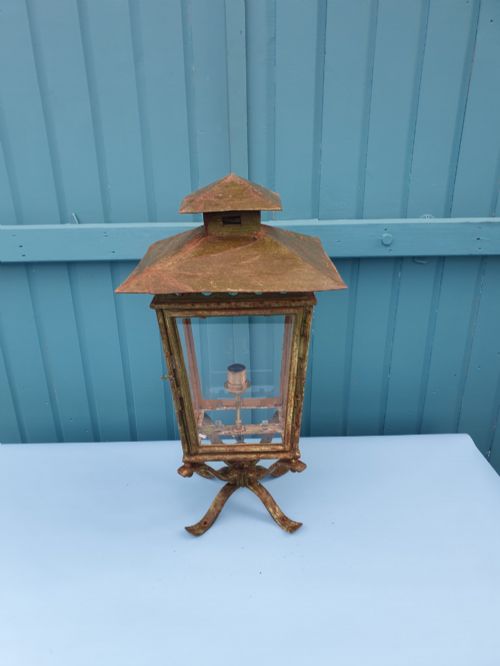
One unexpected desk clock masquerades as a gilt brass lamp post.
What varies in quality
Quality in these street lamps lies in the weight of the metal and the complexity of the fabrication, particularly the thickness of the copper sheet and the intricacy of the iron brackets. Sophisticated details, such as spiral twist wall supports or specialised prismatic glass, distinguish superior commercial or municipal pieces from standard utility lighting.
The integrity of the original metalwork and the degree of survival through successive conversions also dictate the character of each piece. Superior examples retain their original structural proportions and patination without excessive replacement of core components.
A Foster & Pullen Bradford·Revo Tipton·Jaeger Le Coultre
The Antique Street Lamps Glossary
- Gas conversion
- The process of adapting a historic lighting fixture originally fuelled by gas to accommodate electrical wiring and lamp holders. This alteration is standard for period outdoor lanterns intended for modern use.
- Swan neck
- A curved metal mounting arm that extends outward from a post to hold a pendant lantern clear of the vertical support. The profile resembles the graceful curve of a swan's neck.
- Gate post light
- A compact lantern designed specifically to sit atop brick piers or timber gate posts at the entrance to a property. These provide both welcoming illumination and boundary definition.
- Prismatic glass
- Heavy pressed glass moulded with internal ribs or prisms to diffuse and direct light efficiently from a central source. It was widely utilised in early twentieth-century industrial and street lighting to maximise brightness.
Antique Street Lamps: Frequently Asked Questions
Can antique street lamps be used outdoors?
Most of these lanterns and post lights were originally built for exterior use, constructed from weather-resistant copper and iron. They handle outdoor placement well when properly installed and wired by a qualified electrician.
Weatherproofing may require attention depending on how the fixture was previously converted or sealed. Checking the condition of the glass panels and metal joints ensures they remain protected against rain and wind.
How do I mount a wall lantern?
Wall-mounted street lamps typically require a secure masonry fixing or timber backing to support their substantial weight. The robust iron brackets and spiral twist supports need heavy-duty fixings to hold the lantern firmly in place.
Positioning the light at an appropriate height near a doorway or gateway ensures both visual balance and practical clearance. Consulting a professional installer is recommended for mounting heavier copper and iron assemblies safely.
Are these lamps converted from gas?
A significant proportion of Victorian and Edwardian street lanterns started life running on gas before being adapted for electricity. This historical transition is a normal part of their lifecycle and allows them to function with modern bulbs.
Conversions generally involve replacing internal burners with standard lamp holders while preserving the exterior housing. This retains the authentic appearance of the original street light while meeting current electrical standards.
How do I date a street lamp?
Dating relies on stylistic clues, construction methods, and materials associated with specific eras like the Victorian period or the 1930s. Details such as the form of the copper panels, the presence of cast iron brackets, and specific maker stamps help place the piece in time.
Comparing the proportion of the lantern and the type of glass used offers further indicators of manufacture. Surviving labels or embossed foundry marks on iron components provide the most definitive chronological evidence.