
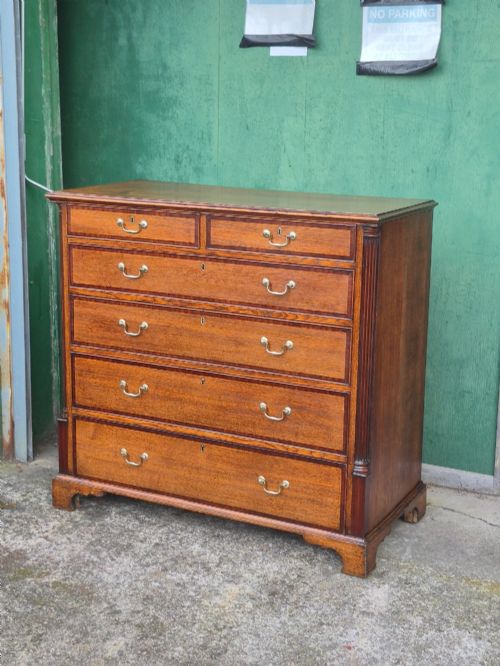
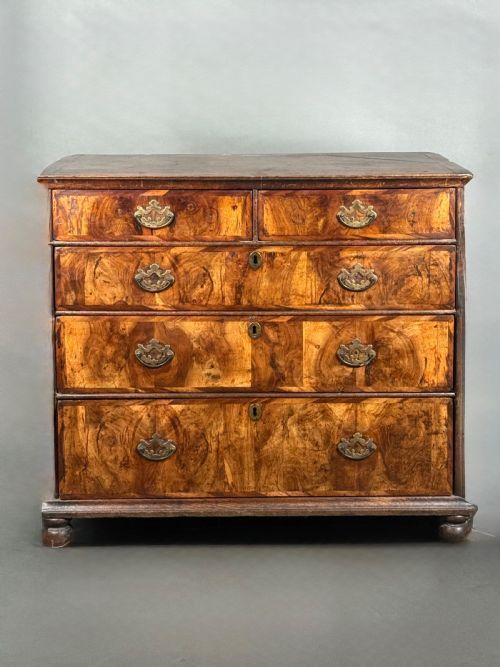
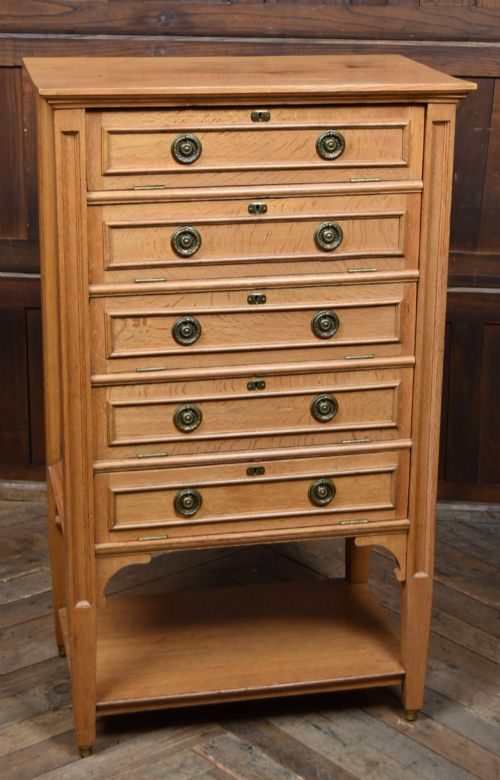
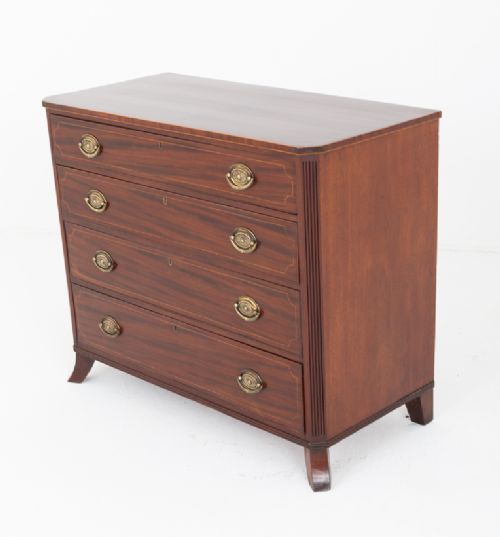
Antique Storage Chest of Drawers
An antique storage chest of drawers organises domestic space through time, offering profound tactile pleasure and deep utility to any room.
Antique Storage Chest of Drawers
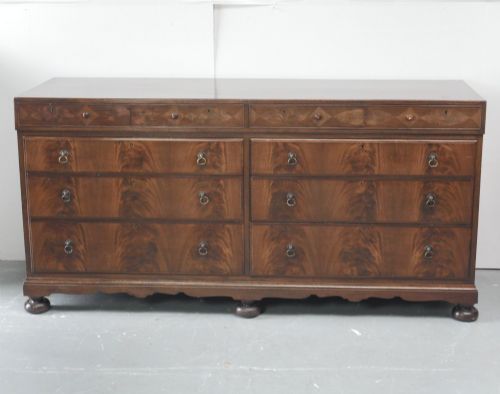
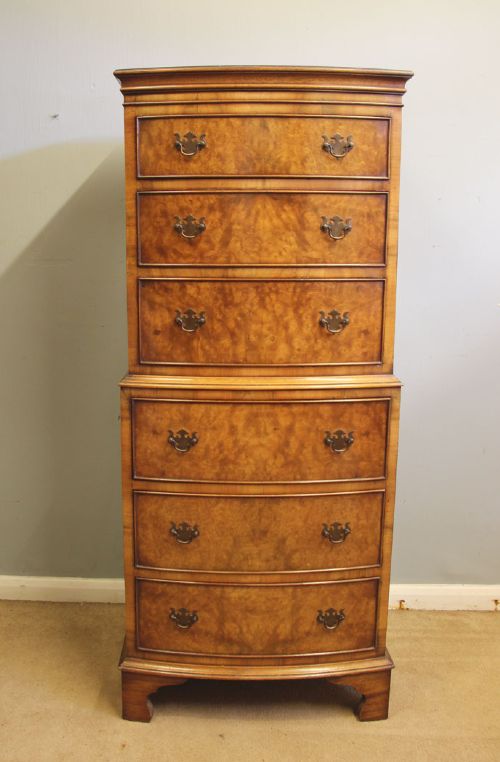
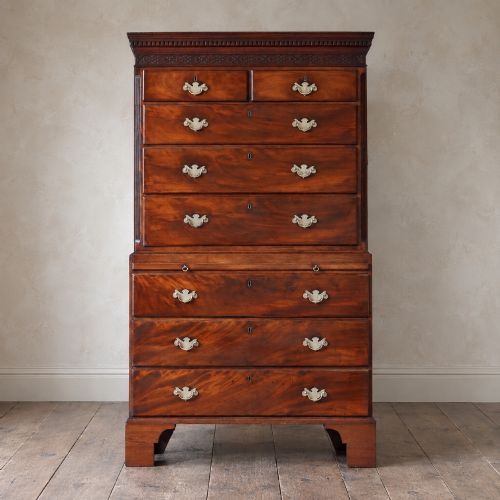
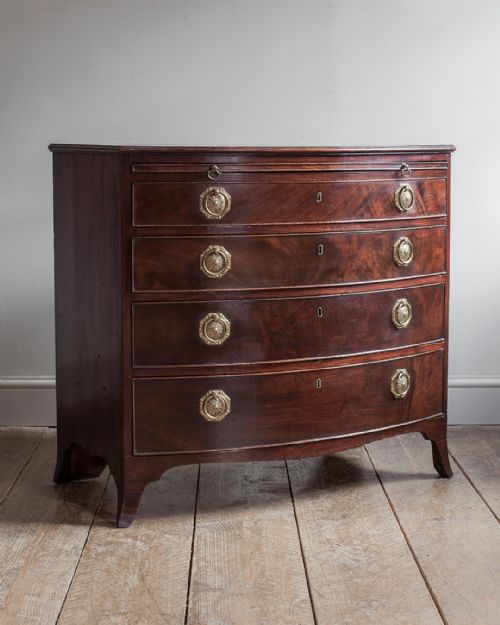
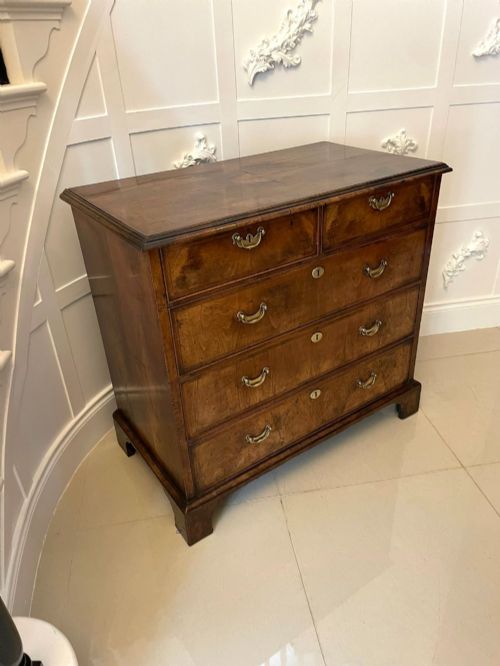
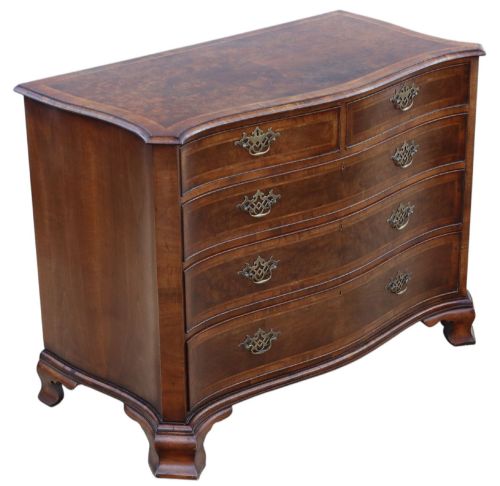
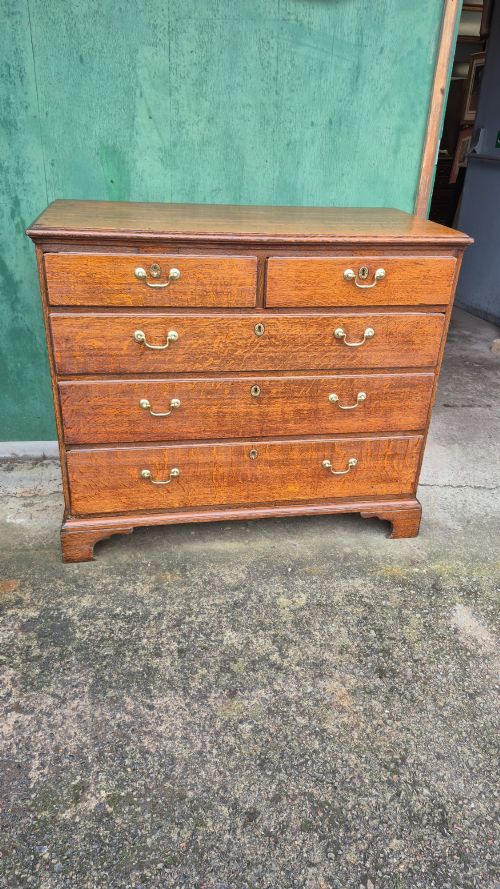
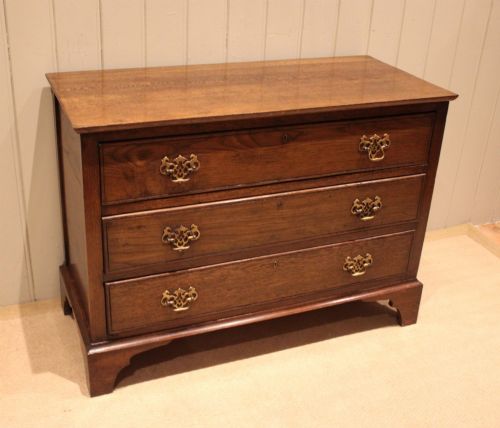
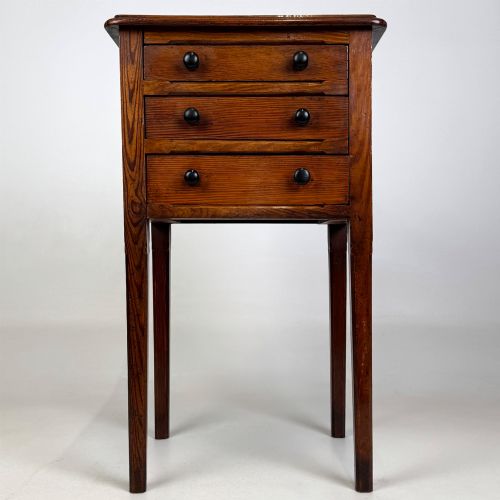
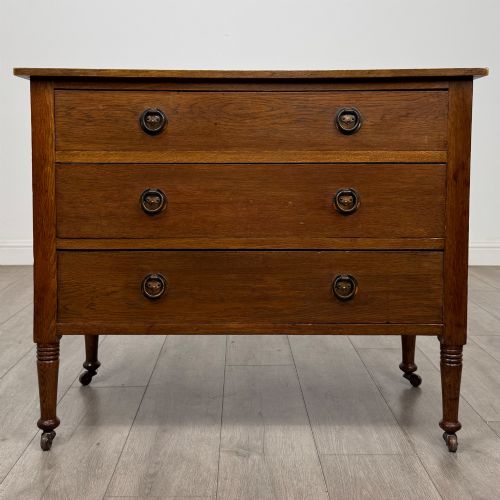
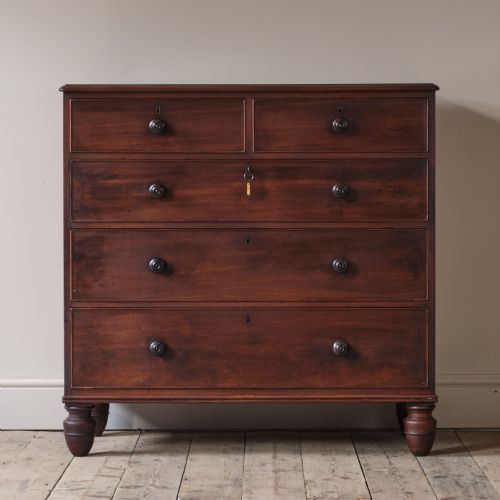
The antique storage chest of drawers appears across several centuries of domestic life, taking forms from simple country pine to sophisticated Georgian mahogany and walnut pieces. A buyer searching this phrase encounters utilitarian filing cabinets alongside grand bow-front and chest on chest configurations.
Georgian and Regency examples dominate the better stylistic offerings, characterised by figured veneers and practical brushing slides. Victorian and Edwardian iterations frequently utilise solid oak or pine, providing robust everyday utility for contemporary homes.
Regional variations span English oak and mahogany workshops to French walnut commodes and specialised vernacular forms like mule chests. This variety allows collectors to select pieces matching specific architectural proportions and interior palettes.
Materials and technique
Cabinetmakers constructed these pieces primarily from foundational timbers such as oak and pine, frequently applying figured mahogany, walnut, and burr walnut veneers to primary surfaces. Craftsmen enhanced visual depth on select surfaces through crossbanding, satinwood banding, and marquetry inlay.
Hardware typically consists of brass drop handles and key escutcheons, securing structural longevity while punctuating the timber grain. Drawers feature traditional jointing techniques, housing contents reliably across generations of domestic service.
Several chests incorporate hidden brushing slides that whisper of long-forgotten letters written in the quiet hours of the morning.
The grading of execution
Quality rests upon the selection of timber veneers and the precision of their matching across drawer fronts, distinguishing standard domestic furniture from high-status output. Figure regularity in walnut and mahogany indicates superior initial material selection by the cabinetmaker.
Construction nuance dictates structural survival, where tight drawer tolerances and refined edge mouldings demonstrate superior workshop practice. The integrity of secondary woods inside drawer linings reveals the original standard of manufacture.
Whytock & Reid·T & G Seddon
The Antique Storage Chest of Drawers Glossary
- Bow Front
- A convex curved cabinet front popular during the Georgian and Regency periods. This shape softens room geometry while expanding internal storage capacity.
- Chest on Chest
- A tall storage unit stacking one smaller chest directly upon a larger base section. This form maximises vertical capacity in high-ceilinged period chambers.
- Brushing Slide
- A pull-out shelf integrated into the upper drawer section of a chest. It served as a temporary writing or folding surface during the eighteenth century.
- Commode
- A low cabinet or chest of drawers, often referencing French or continental design influences. These pieces frequently incorporate marble tops above figured timber bodies.
- Crossbanding
- A decorative border veneer applied with the grain running perpendicular to the surrounding surface. This technique frames drawer fronts to create visual contrast.
Antique Storage Chest of Drawers: Frequently Asked Questions
How do I date a chest of drawers?
Dating relies upon observing timber choices, hardware styles, and construction methods characteristic of specific periods like the Georgian or Victorian eras. Examining secondary woods inside the drawers provides further evidence of the period of manufacture.
Secondary clues include changes in drawer dovetailing and the evolution of decorative veneers such as burr walnut or flame mahogany. Comparative study against documented examples narrows the approximate decade of creation.
Where should I place a chest of drawers?
These pieces suit bedrooms, hallways, and living rooms where vertical storage and surface display space prove useful. Placing them away from direct heat sources protects the antique veneers from drying and cracking.
Ensure the chosen location allows drawers to open fully without obstruction from surrounding furniture. Allowing adequate clearance preserves both the hardware and the timber edges over daily use.
How do I maintain wood finishes?
Routine care involves dusting with a dry, soft cloth and applying appropriate beeswax periodically to nourish historic timber. Avoid chemical polishes that can degrade original shellac or wax surfaces over time.
Maintaining stable room humidity prevents timber expansion and contraction that causes veneer lifting. Consistent environmental conditions keep drawer runners operating smoothly.
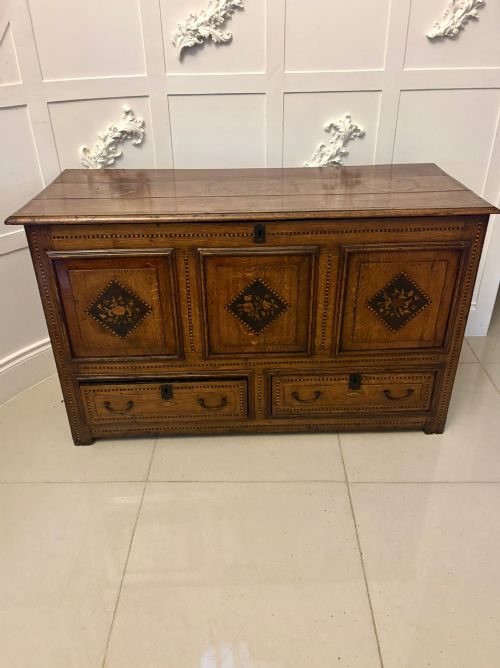
What is a mule chest?
A mule chest combines a traditional blanket chest box with one or more lower drawers for partitioned storage. This hybrid form emerged to provide easier access to linens without unpacking the entire upper compartment.
Cabinetmakers built these primarily in oak and pine during earlier centuries for rural and domestic utility. They remain versatile storage items in modern hallways and bedrooms.