




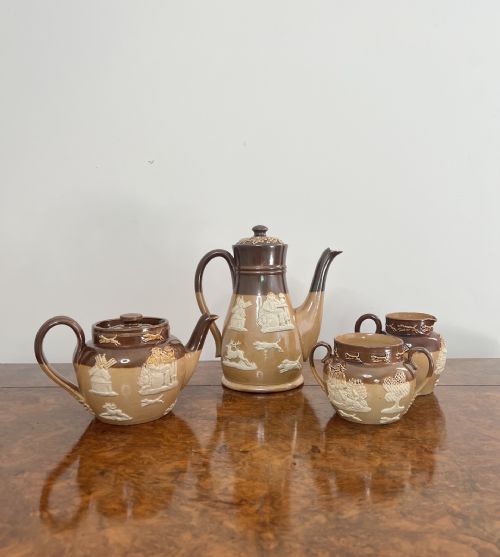


Antique Stoneware Teapot
These antique stoneware teapot pieces offer dense, durable bodies and rich historic glazes that bring genuine utility and character to daily tea service.
Antique Stoneware Teapot
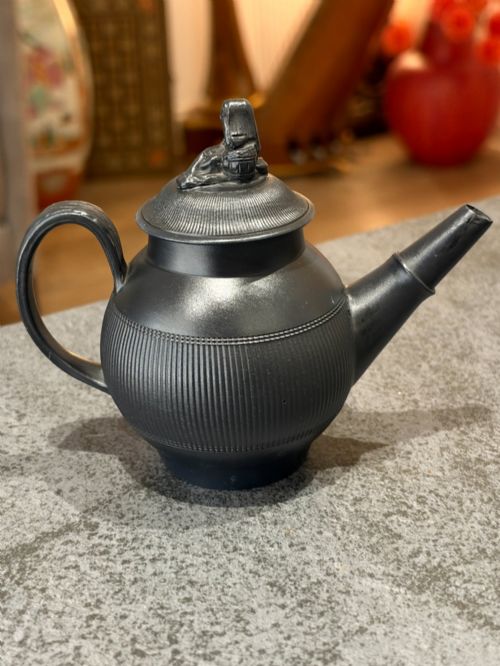
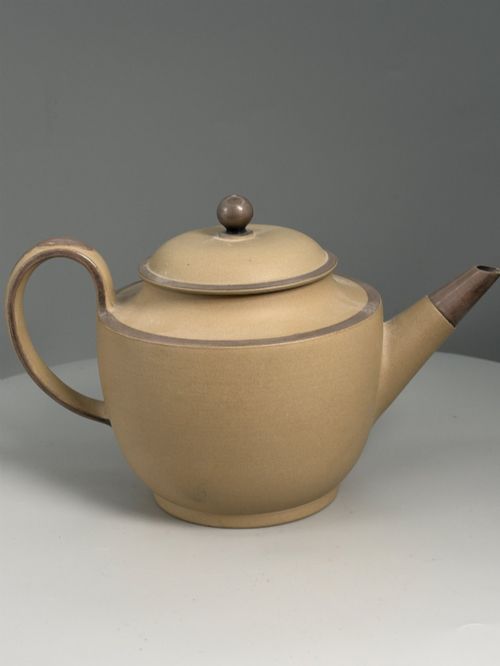
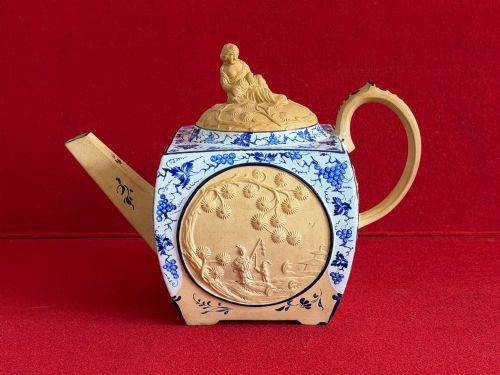
An antique stoneware teapot represents a dense, vitreous ceramic vessel built for daily use, appearing across the eighteenth, nineteenth, and early twentieth centuries. These pieces emerge in styles ranging from Georgian Regency and Victorian Neoclassical to Edwardian and Victorian Folk Art.
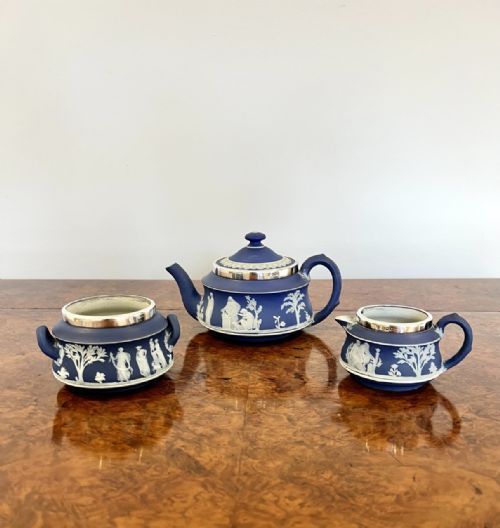
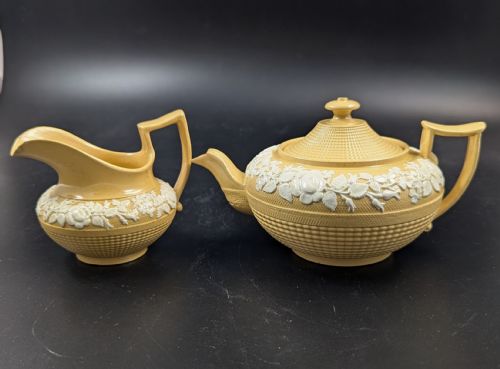
The selection here encompasses individual teapots alongside larger tea sets, ceramic teapots with matching jugs, miniature teapots, and teapots paired with creamers. Origins span standard single vessels to commemorative items and bachelor teasets.
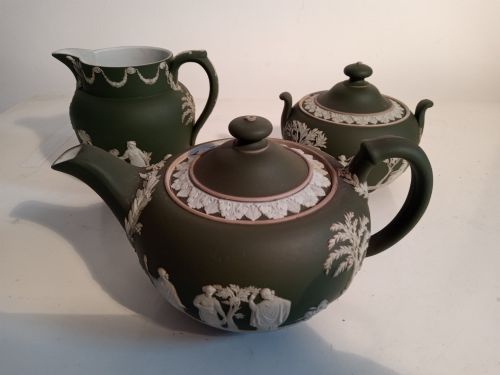
Buyers frequently encounter nineteenth-century productions, alongside examples from the late eighteenth century and early twentieth century. Common forms include classic blue or olive green bodies, dark basalt surfaces, and brightly decorated folk art pieces.
Materials and construction
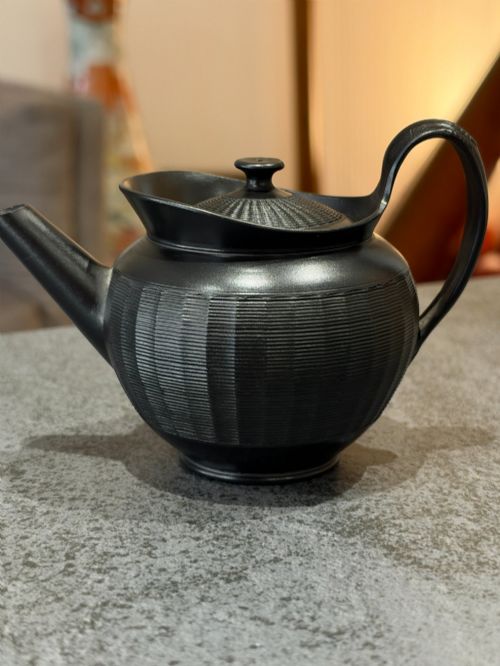
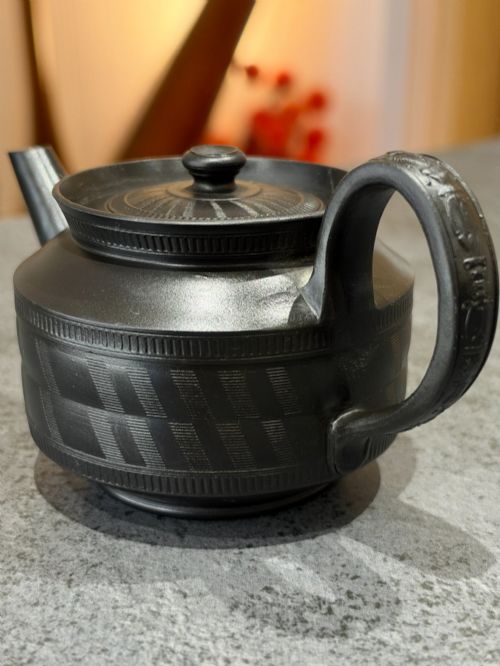
Potters built these vessels using dense stoneware and specialised bodies like jasperware or black basalt, sometimes pairing the ceramic with silver collars, mounts, and lids. These impermeable clay compositions were fired at high temperatures to ensure durability without needing internal glazes.
Makers applied surface decoration through applied moulded reliefs, commemorative transfers, treacle glazes, and lead glazes. Distinctive folk art pieces utilised colourful painted motifs over dark glazed surfaces, while other examples integrated fine silver mountings.
Antique Stoneware Teapot Retail Price Guide 2026
Typical asking prices for stoneware teapot among the pieces listed under this phrase on Sellingantiques today, from the lower quarter to the upper quarter. They describe what is for sale here now, not the wider market.
Some nineteenth-century bargeware teapots are so heavily adorned with applied clay flowers and leaves that holding the handle requires genuine concentration.
Assessing quality and craftsmanship
Superior examples display crisp, sharply defined applied reliefs and evenly saturated body colours, whereas lesser pieces show blurred moulding and uneven coloration. The inclusion of hallmarked or fitted silver collars and matching creamers elevates the standing of a tea set.
The precision of the thrown body and the subtlety of the surface finish distinguish standard utilitarian production from fine cabinet pieces. Maker attribution and documented dates also heavily influence the standing of an individual vessel.
Wedgwood·Copeland Spode·W. Hackwood·Doulton
The Antique Stoneware Teapot Glossary
- Stoneware
- A heavy, durable ceramic fired at high temperatures until vitrified, making it impermeable to liquids even without glaze.
- Jasperware
- A fine-grained, unglazed stoneware developed with coloured bodies and contrasting white moulded applied reliefs.
- Black Basalt
- A dense, fine-grained, solid black stoneware body perfected in the eighteenth century to mimic antique bronze and stone.
- Treacle Glaze
- A rich, dark, glossy brown lead-based glaze frequently utilised on nineteenth-century utilitarian earthenwares and stonewares.
- Bargeware
- A style of brightly coloured folk art pottery traditionally decorated with applied flowers and motifs, associated with canal boat culture.
Antique Stoneware Teapot: Frequently Asked Questions
What is an antique stoneware teapot?
An antique stoneware teapot is a dense, high-fired ceramic vessel designed for brewing tea, produced across the eighteenth, nineteenth, and early twentieth centuries.
These pieces showcase various decorative traditions, from neoclassical sprigged reliefs and black basalt bodies to folk art glazes.
How do I date an antique stoneware teapot?
Dating relies on stylistic markers such as neoclassical motifs, silver mountings, specific colourways like olive green or deep blue, and impressed factory marks.
Pottery bodies and glaze types also shift noticeably between the late eighteenth century and the Edwardian era.
Can I use an antique stoneware teapot daily?
Stoneware is naturally robust and vitrified, meaning the body itself holds up well to hot water and regular handling.
However, collectors often limit use to preserve delicate silver mounts, applied reliefs, and historic surface patinas.
What is jasperware on these teapots?
Jasperware is a matte, unglazed stoneware pioneered in the eighteenth century, featuring a coloured ground applied with contrasting white moulded reliefs.
Common ground colours include soft blues and olive greens, often paired with neoclassical figures.
What is bargeware pottery?
Bargeware refers to nineteenth-century folk art ceramics, typically finished with rich brown glazes and exuberant applied multicoloured floral decorations.
Teapots in this style were traditionally made for canal boat dwellers and often include matching jugs or commemorative inscriptions.