
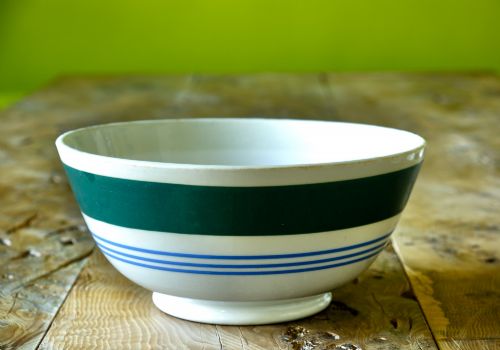


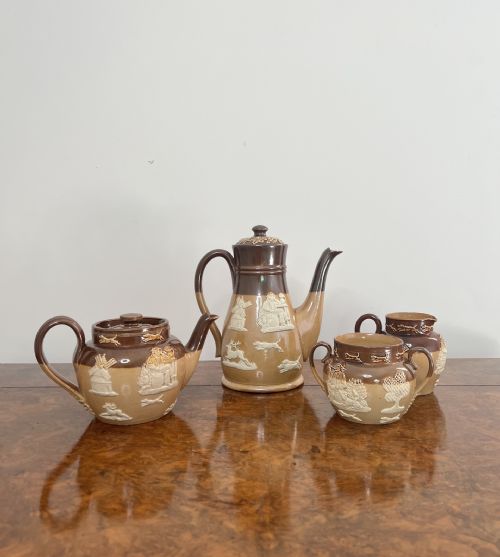
Antique Stoneware Bowl
An antique stoneware bowl brings utility and substance to a table, offering weighty ceramic bodies and rich historical glazes that endure.
Antique Stoneware Bowl
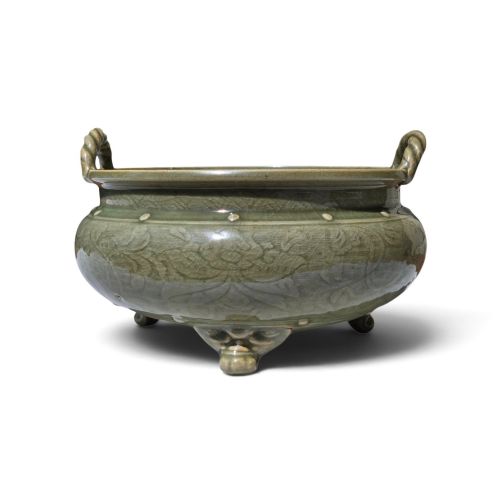
An antique stoneware bowl encompasses a diverse group of heavy ceramic vessels spanning utilitarian kitchen wares to refined decorative pieces. When searching for an antique stoneware bowl, buyers encounter everything from robust nineteenth-century British kitchen crocks and Victorian salad bowls to ancient Chinese celadon censers and ritual vessels.
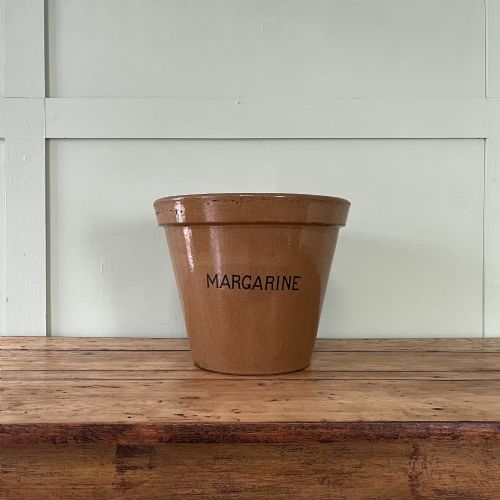
The domestic forms dominate the selection here, particularly large Edwardian margarine bowls, mixing vessels, and banded kitchenware produced by potteries such as Doulton Lambeth and T G Green. Alongside these functional British pieces, collectors find older Asian wares including Song Dynasty celadon bowls and Ming Dynasty tripods.
Vessels range from modest nineteenth-century rustic farm items to monumental early pieces with sophisticated glaze effects. Whether utilised for food service or displayed as standalone decorative objects, these bowls provide a tangible link to historical ceramic traditions.
Materials and construction
The manufacture of an antique stoneware bowl relies on dense, vitrified clay bodies fired at high temperatures to achieve a non-porous finish. This dense matrix distinguishes stoneware from softer earthenware and allows the vessel to hold liquids without seepage.
Glazing techniques define the surface character of these pieces, utilising salt glazes, slip applications, and celadon washes. Artisans applied these mineral coatings before firing, resulting in durable finishes that range from utilitarian mottled browns to translucent greens.
Some antique margarine bowls survived decades of dairy storage only to find a second career holding fruit.
Judging quality and character
Quality in an antique stoneware bowl rests upon the balance of form, the integrity of the clay body, and the depth of the glaze. Master potters achieved precise throwing lines and harmonious proportions, whereas lesser examples appear heavy or clumsy in the hand.
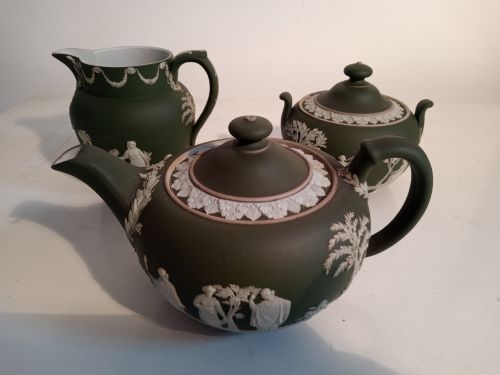
Surface decoration and maker attribution elevate certain pieces significantly. Crisp sprigged ornamentation, clean glaze distribution, and documented factory marks from notable workshops distinguish superior specimens from everyday utility items.
Doulton Lambeth·Wedgwood·T G Green Pottery·Frank Butler
The Antique Stoneware Bowl Glossary
- Stoneware
- A robust ceramic type fired at high temperatures until the clay body vitrifies and becomes impermeable to water. It offers superior durability compared to standard earthenware.
- Celadon
- A pale green or grey-green glaze originating in East Asia, prized for its jade-like translucency and subtle crackle patterns. This finish covers several early bowls in the collection.
- Salt glaze
- A decorative texture achieved by throwing common salt into the kiln during high-temperature firing, creating a distinctive orange-peel surface texture. This finish is typical of many Victorian British pieces.
- Jardiniere
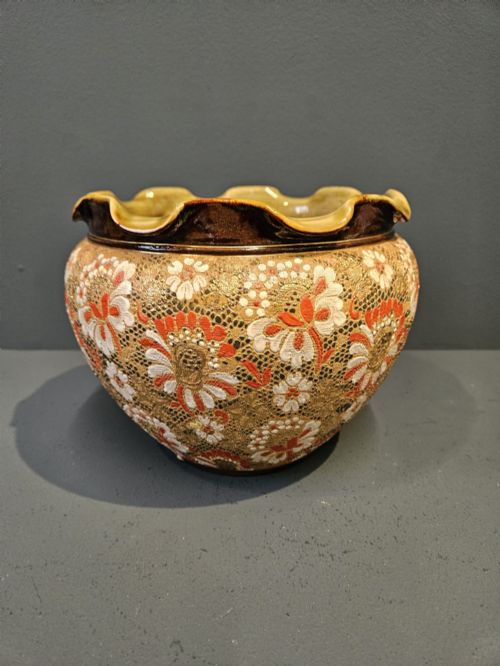
- A large decorative ceramic pot or bowl designed to hold live plants or floral arrangements. These substantial vessels often feature elaborate moulded relief decoration.
- Crock
- A heavy, utilitarian storage vessel used traditionally for holding foods such as butter, pickles, or margarine. They possess thick walls designed for maximum strength.
Antique Stoneware Bowl: Frequently Asked Questions
How do I clean an antique stoneware bowl?
Wash the bowl gently by hand using warm water and a mild detergent, avoiding harsh scouring pads that might damage historic glazes.
Dry the vessel thoroughly with a soft cloth to prevent moisture absorption through any microscopic crazing lines.
Can I use these bowls for serving food?
Many nineteenth and twentieth-century bowls were made for kitchen or table use and remain suitable for serving dry foods or salads.
Older or delicate pieces, particularly ancient Asian ceramics, are best reserved for display to protect their historic glaze surfaces.
What is the difference between stoneware and earthenware?
Stoneware is fired at higher temperatures until the clay vitrifies, making it dense, strong, and naturally waterproof without a glaze.
Earthenware uses a softer, more porous clay body that requires an impermeable glaze layer to hold liquids effectively.
How can I identify a Doulton Lambeth piece?
Look for impressed factory stamps, artisan monograms, and characteristic salt-glazed surfaces featuring detailed incised or sprigged ornamentation.
These pieces typically date from the Victorian and Edwardian eras, displaying high technical skill in handling heavy stoneware.