
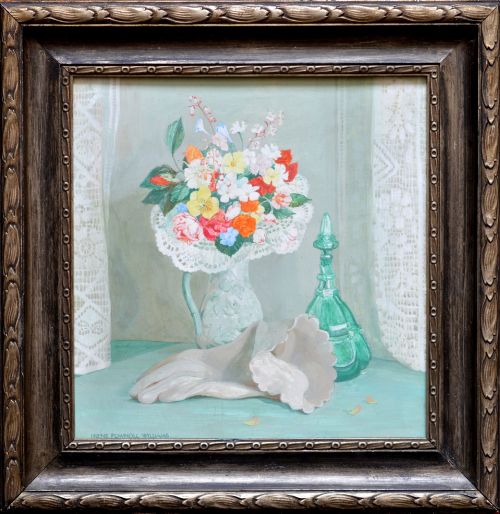
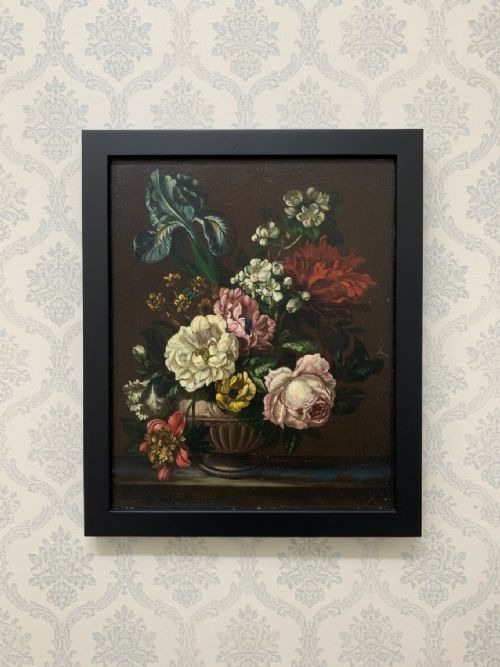
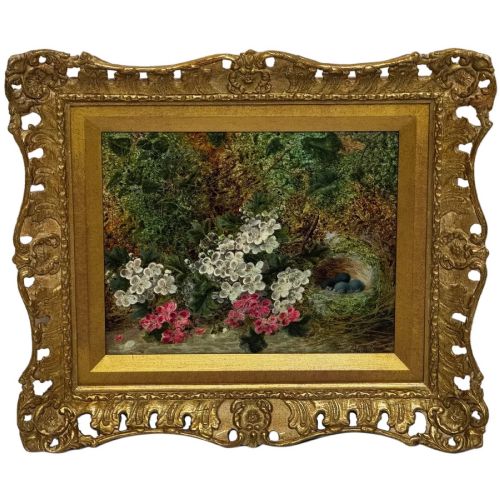


Antique Still Life Panel
An antique still life panel brings centuries of fruit, flowers and game onto a solid wooden support for your wall or screen.
Antique Still Life Panel
When you search for an antique still life panel, you encounter painted works executed directly onto wooden boards, oak panels, mahogany, porcelain or metal rather than flexible canvas. These objects span the Georgian and Victorian eras into the mid-twentieth century, capturing subjects from simple fruit studies and bird nests to Dutch Golden Age floral arrangements.
The most frequent examples on this page are nineteenth century oil paintings on wood panel, alongside folding screens and room dividers bearing painted still life decoration. You will also find tempera works on panel and porcelain supports, ranging from intimate miniatures to large decorative panels set within solid wood period frames.
Makers and regional schools across England, France, Italy, Sweden and the Netherlands shaped these pieces. Subjects repeat across traditions, showing apples, pomegranates, grapes, roses and hanging songbirds rendered with precise realism.
Materials and construction
Artists painted these still lifes primarily in oil or tempera on rigid supports including oak, mahogany, circular wood panels, porcelain and metal panels. The rigidity of wood and metal boards prevented the cracking and slackening common to ageing canvas.
Many of these works sit inside solid wood period frames, some finished with gold leaf or gilt mouldings to accentuate the depth of the painted surface. Folding screens utilise painted leather or multi-fold wooden panels to combine structural furniture with detailed fine art.
Several panels preserve permanent meetings with long-vanished insects, including painted ladybirds and butterflies resting forever among the fruit and roses.
Variations in quality
Quality rests upon the precision of brushwork and the stability of the support panel. Finer works display meticulous rendering of light on fruit skins, feather textures in bird nests, and botanical accuracy in floral studies.
The integration of the piece with its original housing matters significantly. Hand-carved solid wood period frames or gilt surrounds that match the exact age and scale of the panel elevate the overall integrity of the work.
Irene Christobelle Pownoll Williams·Oliver Clare·Michelangelo Meucci·William Rayworth·Edwin Steele·Eric Detthow
The Antique Still Life Panel Glossary
- Panel painting
- A painting executed on a rigid flat support such as wood, metal or porcelain rather than stretched canvas. This technique was favoured by early Dutch and Flemish masters and continued through the nineteenth and twentieth centuries.
- Tempera
- A permanent, fast-drying painting medium consisting of coloured pigment mixed with a water-binder agent. It produces a matte surface that resists yellowing over time.
- Trompe l'oeil
- An art technique involving extremely realistic imagery that creates the optical illusion that the depicted objects exist in three dimensions. It appears frequently in studies of hanging game and still life subjects.
- Gilt
- A thin layer of gold applied to wood, metal or plaster surfaces to provide a decorative metallic finish. Gilt frames are common accompaniments to nineteenth century oil paintings.
- Support
- The physical material upon which paint is applied, which in this collection includes oak, mahogany, leather, porcelain and metal.
Antique Still Life Panel: Frequently Asked Questions
What is an antique still life panel?
An antique still life panel is a painting of inanimate objects such as fruit, flowers or game created on a rigid wooden, metal or porcelain support rather than stretched canvas. These pieces date from the Georgian and Victorian periods through to the mid-twentieth century.
They offer a durable alternative to canvas works because the rigid support prevents sagging and minimises cracking of the paint layer over decades of display.
How do I hang a panel painting?
Panel paintings require secure fixings matched to the weight of the solid wood support and its period frame. Ensure the wall hooks engage securely with the integrated hanging wire or sturdy frame structure.
Keep panels away from direct sunlight, radiators and damp walls to protect the wood substrate from warping and to preserve the oil or tempera paint surface.
Are painted folding screens considered still life panels?
Painted folding screens and room dividers frequently feature still life panels integrated directly into their wooden or leather folds. These large functional pieces served to divide rooms while displaying decorative floral or fruit arrangements.
They share the same artistic traditions and painting techniques as standalone wall art found from the nineteenth and twentieth centuries.
How can I tell a panel from a canvas?
A panel painting lacks the springy give of stretched canvas when gently pressed, feeling entirely rigid because the support is solid wood, metal or porcelain. Edge inspection often reveals the thickness of the board rather than canvas wrapped around stretcher bars.
Older panels may show natural wood grain on the reverse or feature cradling battens applied to prevent the wood from bowing over time.