

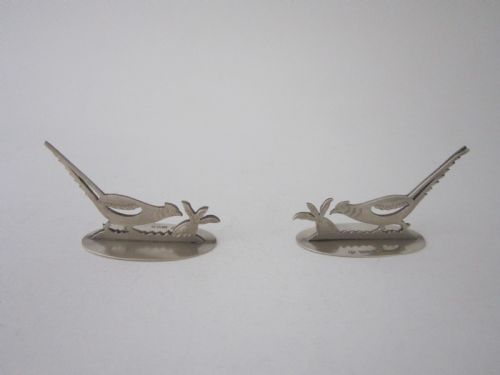


Antique Sterling Place Holders
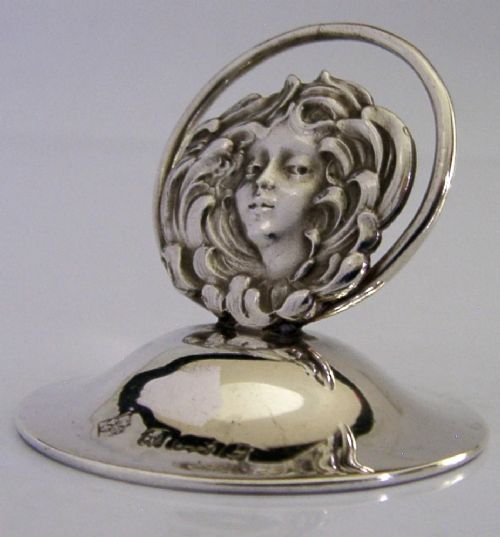
These antique sterling place holders organise dining tables with miniature silver sculptures of animals, birds and figures.
Antique Sterling Place Holders
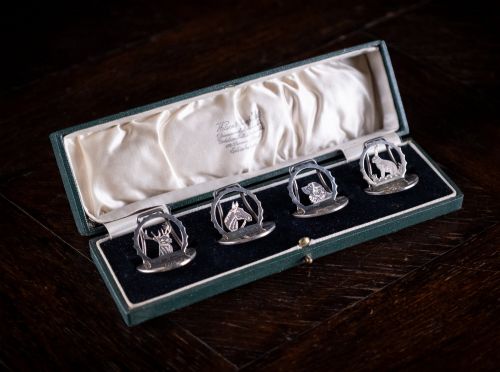
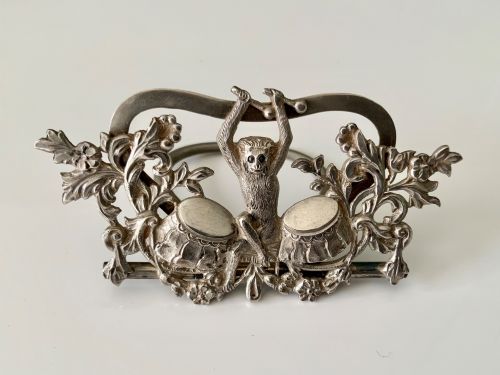
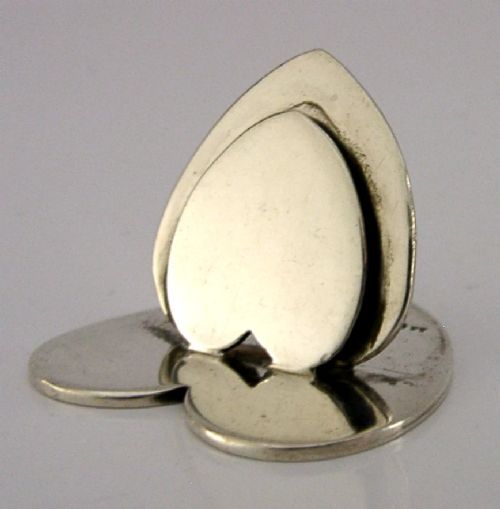
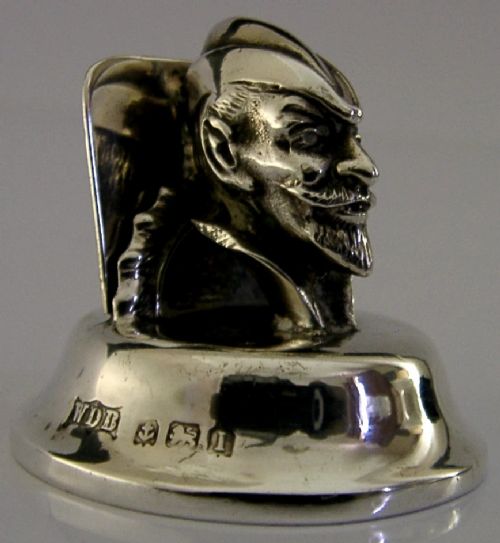
Antique sterling place holders serve as table accessories for displaying menu cards and name markers at formal meals. The pieces range from simple clips to detailed figural representations of animals, birds and literary characters.
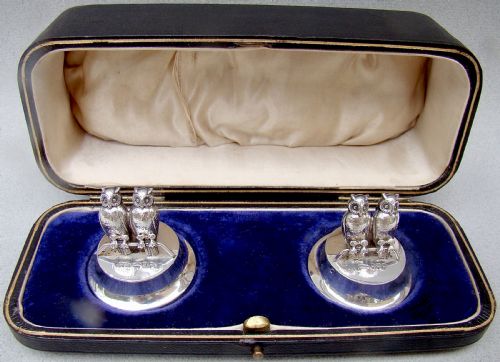
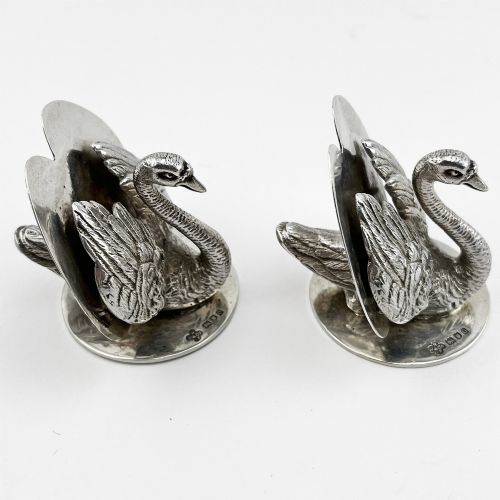
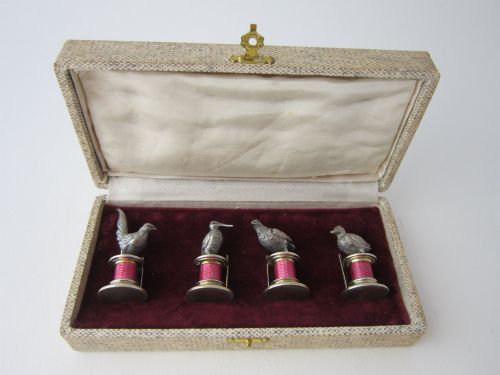
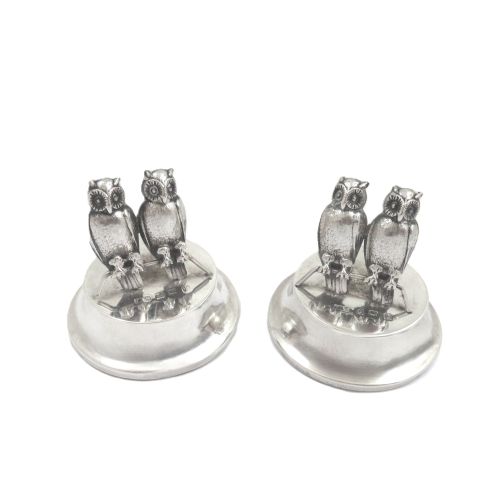
Edwardian examples dominate the selection, alongside items from the Victorian, Art Nouveau, Art Deco, George V and George VI periods. Buyers frequently encounter pairs or sets depicting owls, swans, game birds and nautical subjects.
Formations include menu holders, place card holders and photo clips fashioned from sterling silver. Many retain fitted presentation boxes lined with velvet, silk or leather.
How they were made
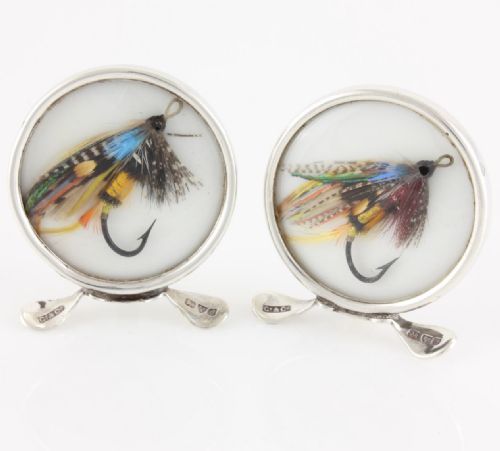
Silversmiths utilised sterling silver alongside specialist decorative materials such as guilloche enamel for coloured surface details. Some figural designs incorporate glass eyes or delicate feather motifs to enhance the realism of animals and birds.
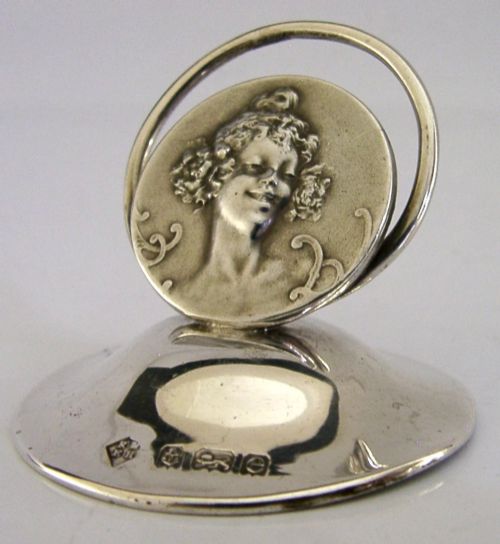
Techniques combine cast figural sculptures with weighted bases or hinged clips to secure cards firmly during dinners. Assay office hallmarks stamped into the silver record the year and place of manufacture across Birmingham, Chester and London.
What varies in quality
The standard of design and casting separates ordinary clips from exceptional figural pieces by known makers. Crisp detail in feathers, fur and facial expressions marks superior work.
Completeness dictates value, as matched sets or pairs preserved in original fitted boxes command greater interest than single items. Crisp, legible hallmarks and undamaged enamel surfaces further distinguish the finest examples.
Levi and Salaman·A Wilcox·Grey and Co·Sampson Mordan·Asprey·Liberty
The Antique Sterling Place Holders Glossary
- Sterling Silver
- A standard alloy of silver containing 925 parts of silver per 1000 parts of other metals. This composition provides the durable metal body used for these small table ornaments.
- Guilloche Enamel
- Decorative enamel applied over a mechanically engraved metal surface. It creates translucent patterned colour layers on ornamental items.
- Assay Office
- An official body that tests and marks precious metal items with hallmarks. Marks from London, Birmingham and Chester verify the silver standard and year.
- Figural
- Representing a human or animal form in sculpture. These place holders often take the shape of birds, foxes or mythical characters.
- Menu Holder
- A standing device designed to hold paper menus upright on dining tables. They share similar construction with place card markers.
Antique Sterling Place Holders: Frequently Asked Questions
What is the difference between a menu holder and a place card holder?
Menu holders traditionally supported larger cards detailing the courses served at a dinner, while place card holders held smaller markers indicating where guests sat.
In practice, many antique sterling place holders were manufactured to serve both functions interchangeably depending on the size of the card used.
How do I date an antique silver place holder?
Dating relies upon the stamped hallmarks, which include a maker's mark, a lion passant indicating sterling standard, a city mark and a date letter.
Comparing these punches against official assay office records reveals the exact year and location of manufacture.
Why are some place holders found in sets?
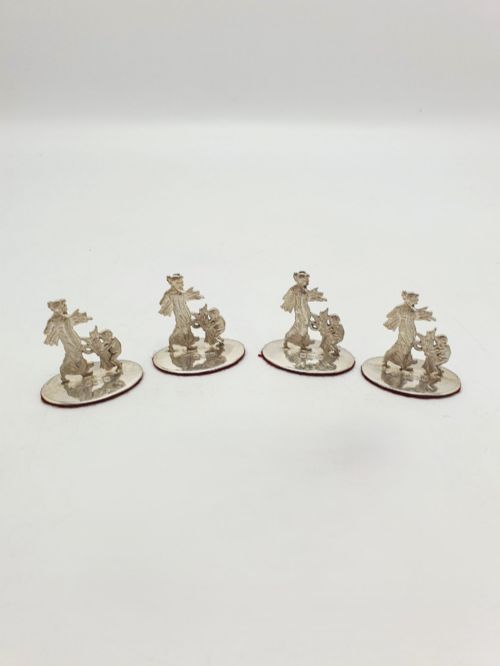
Formal dining customs required matching table appointments for large banquets, prompting silversmiths to produce pairs, sets of four or larger collections of twelve.
Complete matched sets remain desirable because individual pieces often became separated or lost over time.
How should I clean antique sterling silver?
Cleaning requires a soft microfibre cloth and mild silver polish applied gently to avoid wearing away fine details on cast figures.
Enamelled or velvet-backed pieces require extra care to prevent moisture or harsh cleaning agents from damaging delicate coloured surfaces.