

Antique Sterling Caddy Scoop
An antique sterling caddy scoop is a small silver implement designed for measuring loose tea from a caddy, combining utility with miniature sculptural form.
Antique Sterling Caddy Scoop
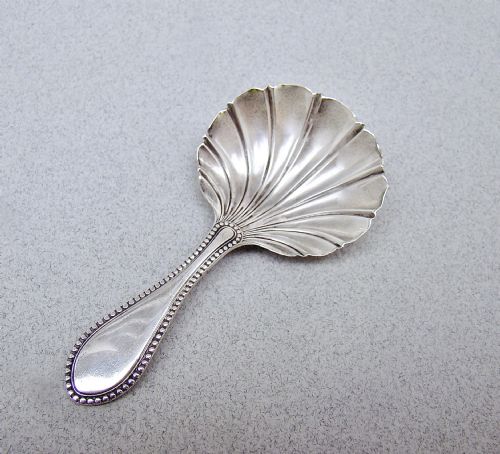
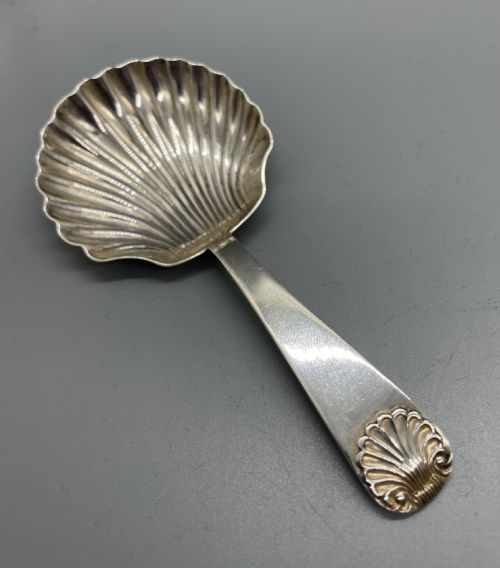
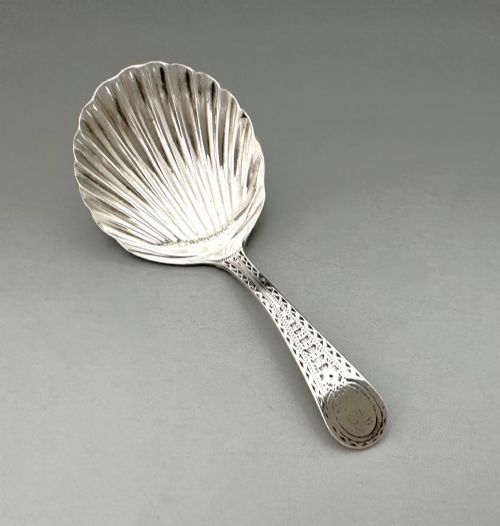
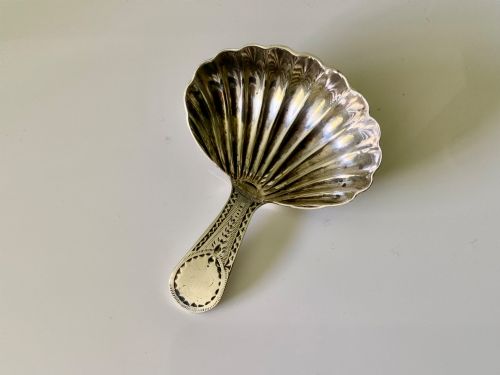
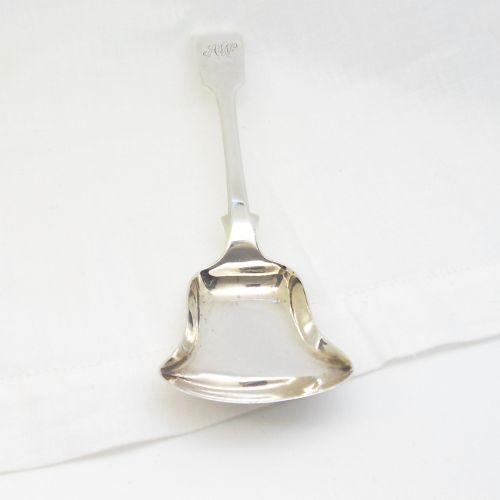
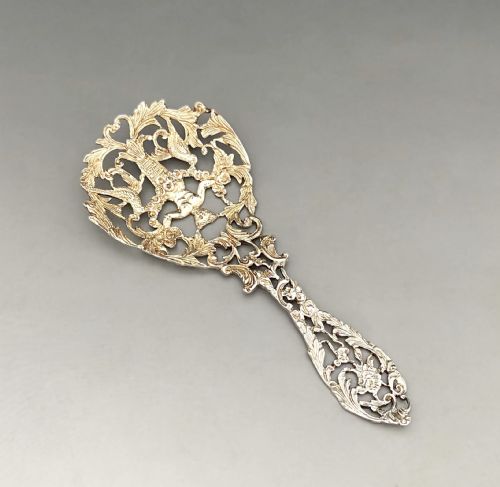
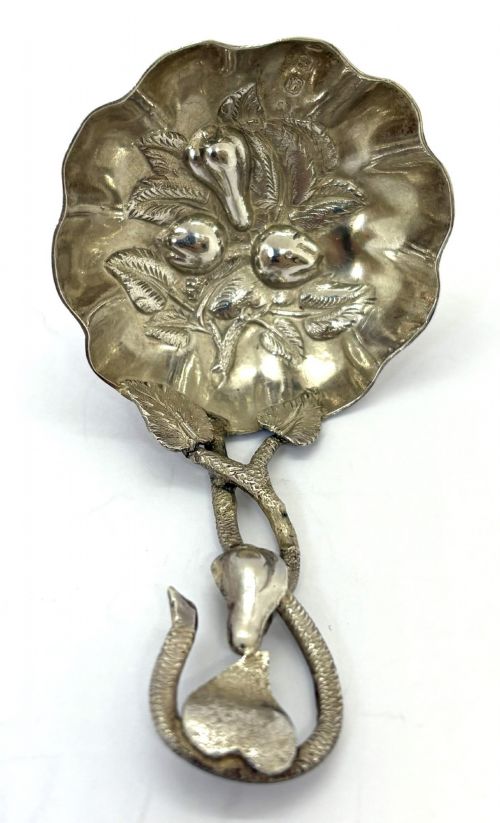
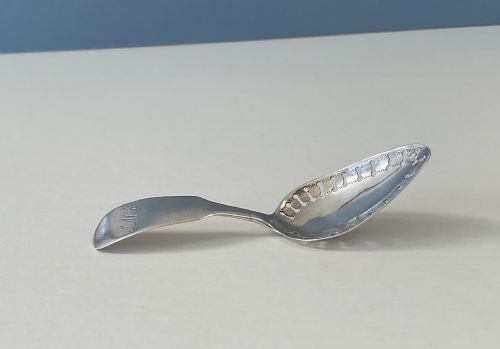
An antique sterling caddy scoop is primarily encountered in Georgian and Victorian forms, often shaped as naturalistic leaves, shells, or practical shovel designs. These small receptacles accompanied tea services to portion dried leaves precisely into the pot.
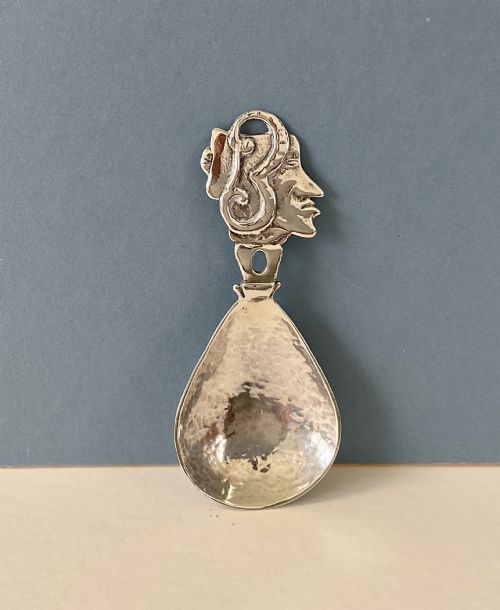
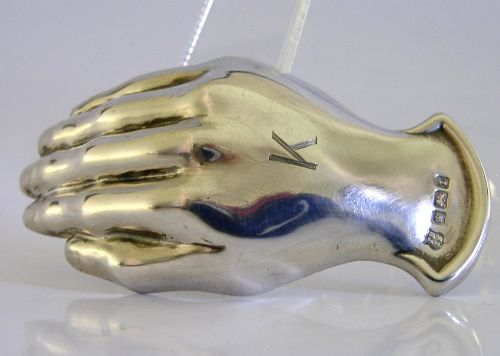
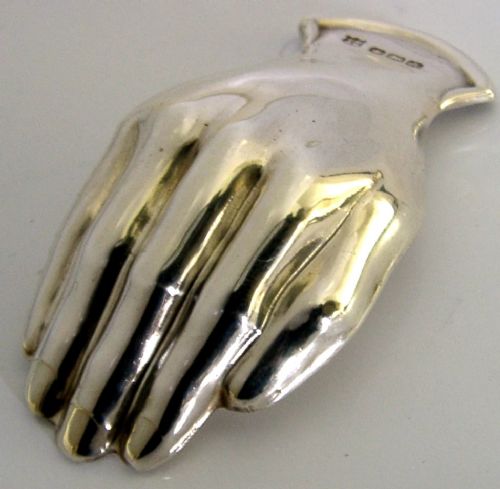
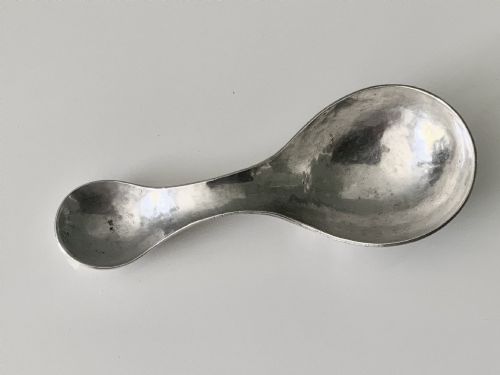
The selection ranges from plain nineteenth-century examples to novelty designs shaped like jockey caps and hands. Makers utilised various regional assay offices across England, Ireland, and Scotland to certify the metal standard.
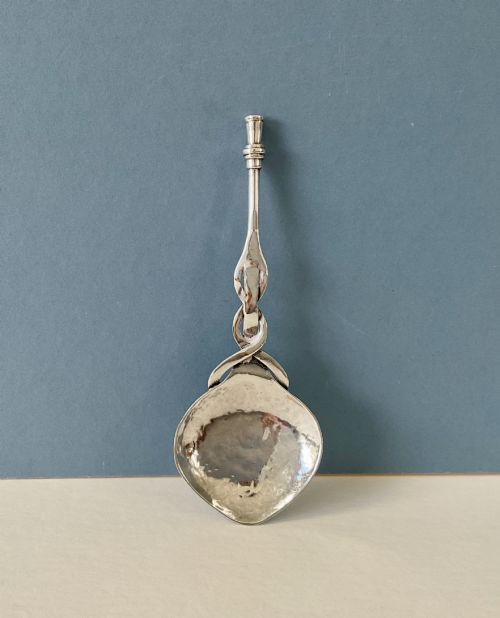
Later periods introduced Arts and Crafts, Art Nouveau, and modernist Scandinavian designs from makers such as Georg Jensen and David Andersen. These twentieth-century iterations retained the fundamental function while embracing simpler lines or enamel accents.
How they were made
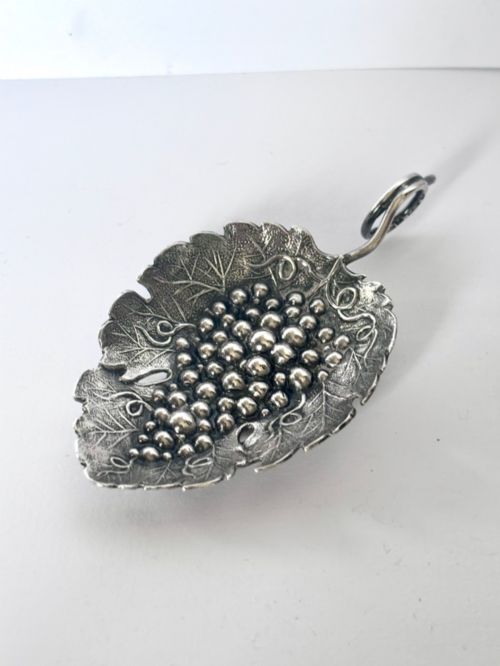
Silversmiths shaped sterling silver and silver gilt through hammering, stamping, and casting techniques. Bowls were frequently hand-hammered or embossed with detailed botanical motifs like vine leaves and grapes.
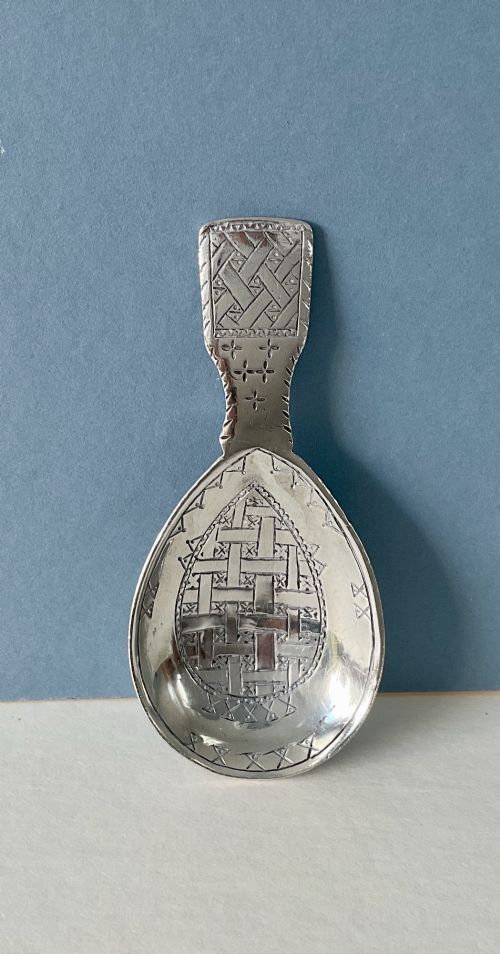
Handles often featured bright-cut engraving or cast elements soldered to the bowl. Some pieces incorporated applied enamel work to add colour and decorative contrast to the silver surface.
Silversmiths occasionally shaped silver into miniature jockey caps and human hands just to measure your afternoon tea.
What varies in quality
Quality rests upon the crispness of the chasing, the weight of the silver, and the distinctness of the hallmarks. Pieces by prominent makers show superior definition in details like feathering on hands or veins on leaves.
Novelty forms and specialised shapes command attention through their clever engineering and proportion. The preservation of original parcel-gilt finishes and enamel surfaces also dictates the distinction between standard production and exceptional examples.
Martin Hall & Co·Joseph Willmore·John Walton·William Comyns·William Neale·David Andersen·Georg Jensen·Mappin & Webb·George Unite
The Antique Sterling Caddy Scoop Glossary
- Sterling silver
- A silver alloy containing 92.5 percent pure silver by mass, with the remainder being other metals, usually copper. This standard is denoted by the lion passant hallmark on British pieces.
- Silver gilt
- Sterling silver that has been coated with a thin layer of gold on the surface. This technique provided a rich golden interior to the scoop bowl.
- Parcel-gilt
- Silver objects that are only partially gilded, highlighting specific decorative areas such as the interior bowl while leaving the exterior plain silver.
- Assay office
- An official body that tested the purity of precious metals and stamped items with appropriate hallmarks. Towns such as Birmingham, Sheffield, London, and Newcastle operated distinct offices.
- Bright-cut engraving
- A style of surface decoration cut with faceted gravers that produce bright, reflective geometric patterns. It appears frequently on Georgian shovel handles.
Antique Sterling Caddy Scoop: Frequently Asked Questions
How were caddy scoops used?
They were kept alongside tea caddies to transfer the valuable tea leaves cleanly without spilling. The small bowl held precisely enough leaf for a single brew.
In polite drawing rooms, they formed part of the tea ceremony equipment displayed on the table.
How do I date a silver caddy scoop?
Dating relies upon the hallmarks stamped into the silver, which record the assay office, the maker's mark, and a date letter indicating the specific year. Stylistic details also help assign pieces to Georgian, Victorian, or Edwardian periods.
Engraved ciphers and crests can sometimes connect a piece to a specific family or era.
How do I care for silver caddy scoops?
Silver requires gentle handling to preserve crisp engravings and delicate gilt finishes. Regular soft dusting prevents tarnish accumulation.
Harsh chemical dips should be avoided, particularly on pieces with enamel work or parcel-gilt surfaces.