



Antique Stationery Tray
An antique stationery tray brings order to the writing desk, holding letters and papers within heavy brass, rosewood, or papier-mâché frames.
Antique Stationery Tray
An antique stationery tray gathers correspondence and writing materials in desk accessories, letter racks, and desk organisers. These pieces range from Georgian oak boxes with secret drawers to ornate Victorian papier-mâché sets and Edwardian brass frames.
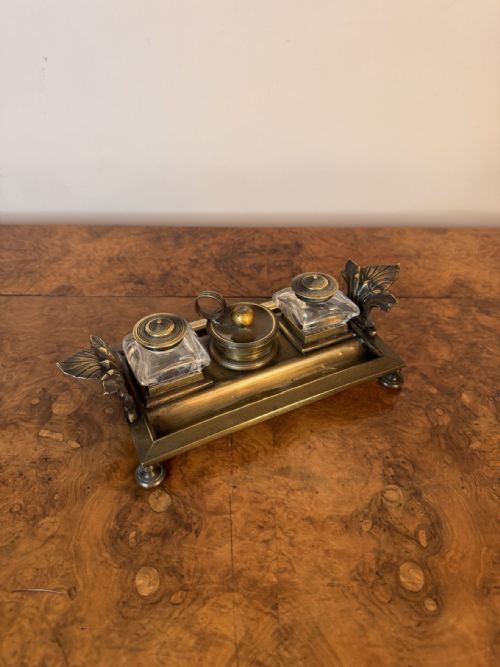
The version most commonly met on this page is the Victorian brass or rosewood desk set, often combining a letter rack with inkwells and pen trays. Pieces span from the nineteenth century through the Edwardian period and into the George V era.
Makers and workshops across England, France, and India produced these wooden and metal tidies for domestic and institutional writing desks. They served as functional desk furniture designed to keep correspondence tidy before the era of digital communication.
How they were made
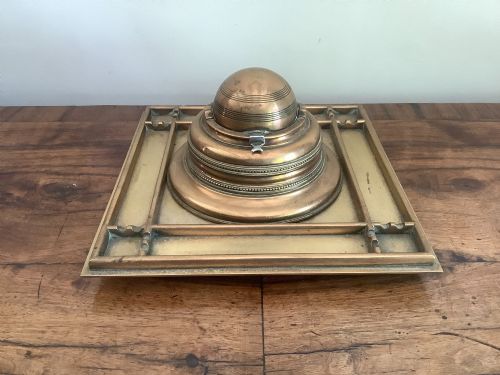
Makers constructed these trays using hardwoods such as oak, rosewood, walnut, and mahogany, frequently applying inlays or raising them on bun feet. Brass, copper, and bronze formed the structural frames and decorative mounts for metalwork pieces.
Surface ornamentation involved mother-of-pearl inlay, agate cabochons, painted papier-mâché, and gilded bronze details. Artisans also incorporated ceramic inkwells and Sheffield plating to complete the fitted desk sets.
Antique Stationery Tray Retail Price Guide 2026
Typical asking prices for stationery tray among the pieces listed under this phrase on Sellingantiques today, from the lower quarter to the upper quarter. They describe what is for sale here now, not the wider market.
Listings show stationery trays spanning the Georgian, Victorian, and Edwardian periods, constructed in brass, oak, rosewood, and papier-mâché.
What varies in quality
The distinction between standard utility items and finer pieces lies in the choice of materials and the complexity of the construction. Solid rosewood, coromandel, and heavy cast brass indicate superior production compared to simpler oak or mahogany variants.
Fitted details such as secret drawers, cabochon agate mountings, and hand-painted papier-mâché distinguish more ambitious desk accessories from basic letter racks. The integration of matching inkwells and pen stands within a unified design elevates the piece.
Daniel Holy of Sheffield
The Antique Stationery Tray Glossary
- Cabochon
- A polished, convex gem or mineral stone without facets, often set into nineteenth-century metalwork desk frames. Agate stones of this cut frequently decorate brass stationery trays.
- Papier-mâché
- A composite material made of paper pulp reinforced with glue and oil, then pressed and lacquered. Victorian makers decorated these surfaces with mother-of-pearl inlay.
- Sheffield Plated
- A fused combination of silver and copper produced by heating the metals together. This technique predates electroplating and appears on Georgian desk sets.
- Coromandel
- A dense, heavily figured timber from Southeast Asia resembling calamander wood. It was used by nineteenth-century cabinet makers for luxury desk accessories.
Antique Stationery Tray: Frequently Asked Questions
What is an antique stationery tray?
An antique stationery tray is a desk accessory designed to hold letters, envelopes, and writing paper upright or in shallow compartments. They often form part of a larger desk set that includes inkwells and pen trays.
These pieces were standard desk furniture in nineteenth and early twentieth-century studies and parlours, keeping correspondence organised before the rise of modern envelopes and postal systems.
How do I date an antique stationery tray?
Dating relies on identifying the materials, timber types, and decorative styles characteristic of specific periods like the Victorian, Edwardian, or Georgian eras. For instance, papier-mâché with mother-of-pearl points to the mid-nineteenth century.
Hardware styles, such as bun feet or specific casting techniques in brass and bronze, also help narrow down the decade of manufacture. Hallmarks on metal elements provide more precise chronological markers.
What materials were used?
Makers utilised a wide variety of materials, ranging from native woods like oak and mahogany to exotic timbers such as rosewood and coromandel. Metalwork pieces typically feature brass, copper, or gilded bronze.
Decorative accents often included mother-of-pearl inlay, agate cabochons, and hand-painted motifs on papier-mâché. Fitted components frequently incorporated ceramic inkwells and glass inserts.
How do I use one today?
These trays function well on modern desks or mantelpieces for holding incoming mail, notebooks, or stationery. They keep loose paper contained while adding period character to a workspace.
Smaller compartments can store pens, stamps, and modern notes. Care should be taken to protect antique wood and papier-mâché finishes from moisture and direct sunlight.