

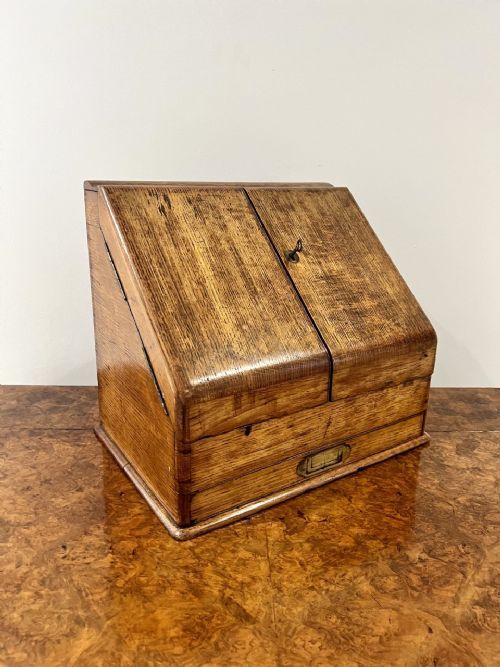


Antique Stationary Desk
An antique stationary desk or box organises papers and correspondence with fitted interiors, bringing nineteenth-century order to a modern writing table.
Antique Stationary Desk
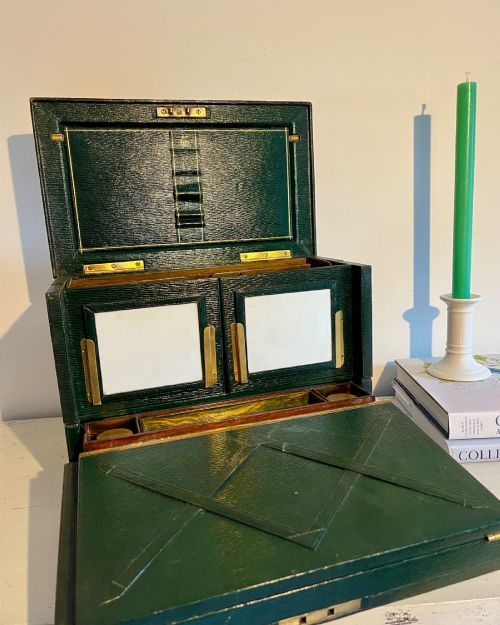
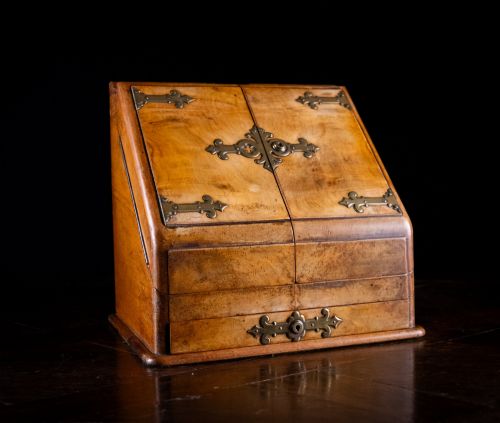
When you search for an antique stationary desk, you encounter desktop cabinets, letter boxes, and writing slopes designed to hold paper, envelopes, and ink. The Victorian period dominates these listings, alongside eighteenth-century and Edwardian examples.
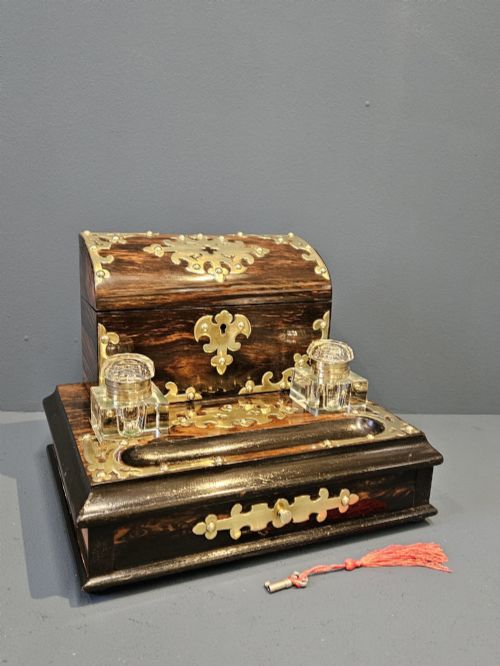
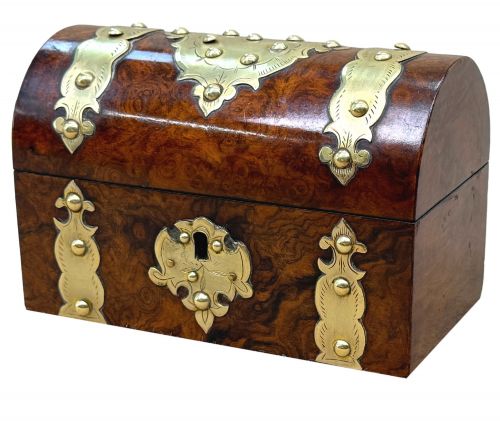
Forms range from simple oak desk tidies and slant-front boxes to elaborate coromandel and burr walnut cabinets fitted with brass mounts and adjustable date calendars. Many pieces function as tabletop caskets or slope-front writing boxes rather than freestanding furniture.
Materials and Construction
Cabinetmakers constructed these pieces from dense hardwoods such as oak, mahogany, walnut, and exotic coromandel, often framing them with brass hinges, locks, and corner mounts. Decorative surfaces feature burr veneers, Tunbridge ware, marquetry, and painted or gilt finishes.
Interiors utilise fitted partitions, leather linings, glass inkwells, and secret drawers designed to secure correspondence. Metal mounts and silver or ormolu details accent the primary timber structure.
Several Victorian boxes include answering and unanswered letter slots to keep a nineteenth-century correspondent from missing a reply.
Standards of Craftsmanship
Quality rests in the selection of figured timbers like burr walnut or pollard oak and the precision of the internal stationery dividers and letter racks. Superior examples display fine dovetail joinery, substantial brass hardware, and integrated locking mechanisms with working keys.
Makers' signatures, fitted calendar markers, and specialist decorative techniques such as pietra dura inlay or Tunbridge ware elevate a piece from standard utilitarian storage to high-end cabinet work.
Gillows of Lancaster·Houghton and Gunn·George Austin of Dublin·C.G. Hope Hastings·F Waller
The Antique Stationary Desk Glossary
- Stationery box
- A tabletop cabinet or casket designed specifically to hold writing paper, envelopes, and correspondence. These boxes typically feature tiered interior dividers.
- Writing slope
- A portable desk with a hinged, slanted writing surface that opens to reveal storage compartments and inkwells. Many incorporate internal secret drawers.
- Davenport
- A compact pedestal desk featuring a sloping desktop and a set of drawers accessed from the side. Early versions date to the nineteenth century.
- Pietra dura
- An inlay technique utilising polished, cut coloured stones to form pictorial designs on cabinet lids. This Italian method appears on select high-status Victorian boxes.
Antique Stationary Desk: Frequently Asked Questions
How do I date an antique stationary box?
Examine the secondary timbers inside the box, the style of the brass hinges, and the type of lock fitted to the lid. Victorian pieces often display Gothic revival details or brass binding, while eighteenth-century examples feature simpler satinwood or mahogany construction.
Hardware styles changed across decades, moving from hand-beaten brass to machine-stamped hinges by the late nineteenth century. Maker stamps and retailer labels inside the lid also provide definitive dates.
Can I use an antique stationery cabinet today?
These cabinets suit modern desktop organisation, holding letters, notepads, envelopes, and pens within their original partitioned interiors. Their compact footprints allow them to sit neatly on modern desks or sideboards.
Care should be taken with delicate leather linings and antique brass locks, which may require gentle cleaning rather than heavy restoration. Keeping them away from direct sunlight preserves the polished wood veneers.
What is the difference between a writing slope and a stationery box?
A writing slope provides an angled platform designed for writing letters, housing inkwells and flat storage beneath the folding writing surface. A stationery box sits upright on a desk to store paper and envelopes in vertical tiers.
Stationery boxes often feature double-opening lids or fall-front doors, whereas writing slopes open outward from a central hinge to create a sloping writing plane.
What woods were used for Victorian stationery cabinets?
Victorian makers utilised domestic oak and mahogany alongside exotic imported timbers like coromandel, rosewood, and walnut. Burr walnut and pollard oak provided highly figured grain patterns for luxury items.
Cheaper utility boxes used simpler softwoods or stained pine beneath thin wood veneers, while high-end pieces utilised solid exotic hardwoods throughout the main carcass.