



Georgian Mahogany Davenport
When you want a georgian mahogany davenport, you seek a compact writing desk that combines functional drawers with a sloping top.
Georgian Mahogany Davenport
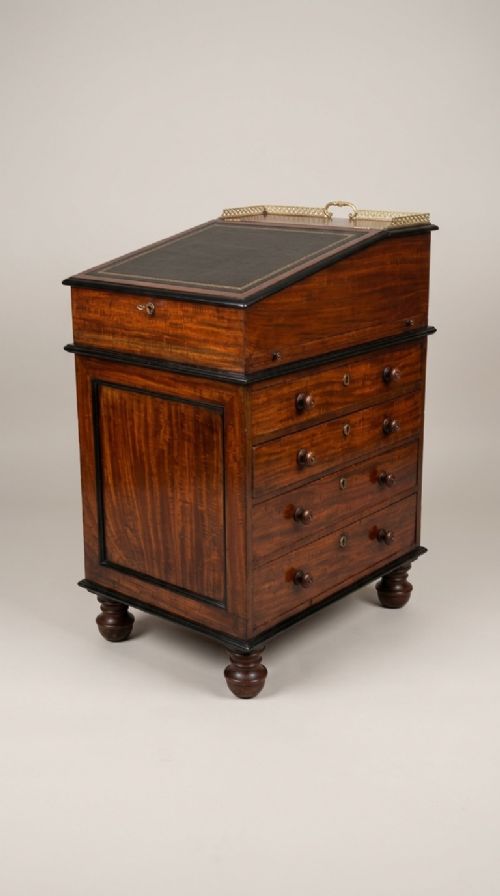
A georgian mahogany davenport is a compact writing desk designed for efficient use of space, typically featuring a sloping writing surface above a pedestal of drawers. These pieces emerge from the Georgian, Regency, and early nineteenth century periods.
Most examples found here date from the Regency era through to the early nineteenth century, constructed as lady's desks or writing offices. The form brings together a writing surface and storage within a single timber cabinet.
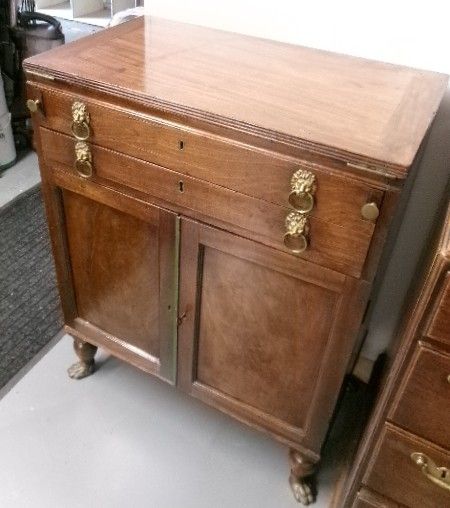
Makers such as Gillows of Lancaster produced these desks in mahogany, sometimes incorporating sliding tops or brass paw feet. The surviving pieces show various configurations of drawers and interior fittings intended for correspondence and record keeping.
Materials and Construction
Construction relies heavily on mahogany, sometimes utilising flame mahogany veneers or ebonised wood details to create contrast on the exterior surfaces. Secondary timbers like oak appear within the drawer linings and internal framing.
Metal and leather components complete the construction, with brass utilised for hardware such as paw feet and handles. Writing surfaces frequently incorporate inset leather or baize panels to provide a suitable texture for writing.
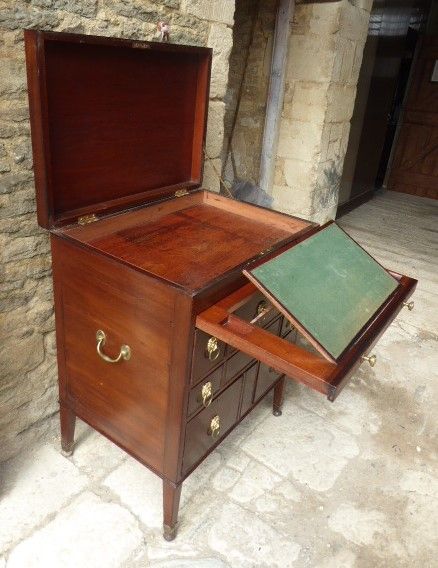
Some desks hide secret compartments within their stacked drawers, ready for forgotten love letters.
Distinctions in Quality
Quality varies according to the precision of the cabinetwork and the selection of timber figures, such as flame mahogany. Finer desks display superior timber grain matching and careful execution of decorative elements like ebonised wood accents.
Mechanisms such as sliding tops and the fitting of interior compartments distinguish the work of prominent makers like Gillows from standard workshop production. The integration of original brass hardware and well-preserved secondary woods also indicates higher execution.
Gillows of Lancaster
The Georgian Mahogany Davenport Glossary
- Davenport
- A small pedestal desk featuring a sloping, hinged writing box on top of a chest of drawers. This form became popular during the Georgian and Regency periods for domestic correspondence.
- Flame mahogany
- A veneer cut from the fork of the mahogany tree where the branches join the trunk, producing a distinctive flame-like pattern. Furniture makers utilised this timber figure on prominent exterior surfaces to enhance visual appeal.
- Ebonised wood
- Timber treated with a dark stain or finish to imitate ebony. Cabinet makers employed this technique for contrasting stringing or mouldings.
- Baize
- A coarse woolen material resembling felt, historically used to cover writing surfaces and game tables. It provides a soft texture beneath paper during writing.
- Campaign chest
- A modular chest of drawers designed to be easily dismantled and transported for military use. These pieces often feature brass corners and recessed carrying handles.
Georgian Mahogany Davenport: Frequently Asked Questions
What is a davenport desk?
A davenport is a compact writing desk with a sloping top and a pedestal of drawers beneath. The design provides a practical writing surface while occupying minimal floor space.
These desks were commonly used in parlours and private sitting rooms for letter writing and managing personal papers.
Were davenports used by women?
Many examples are described as lady's desks due to their smaller proportions and elegant design. Their compact scale suited the domestic interiors of the period.
They served as private writing stations for correspondence within the home.
What timber was used?
Mahogany is the primary timber found in these pieces, occasionally featuring flame mahogany veneers for decorative effect. Secondary woods like oak appear in internal framing and drawer construction.
Desks also incorporate brass for hardware and leather or baize for the writing surfaces.