


Antique Star Pin
An antique star pin brings celestial sparkle to a lapel, offering Victorian and Edwardian craftsmanship set with diamonds, pearls, and precious stones.
Antique Star Pin
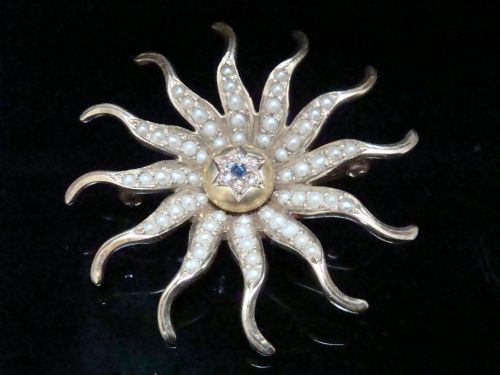
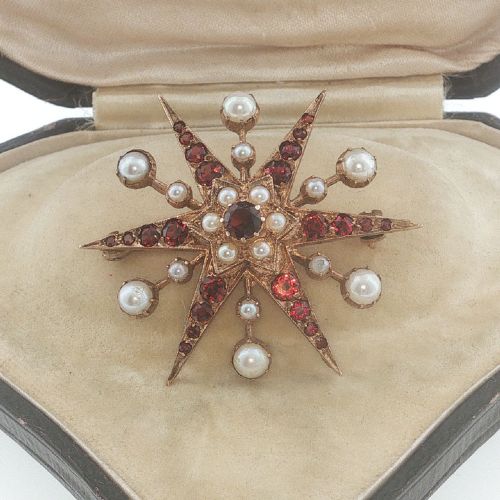
An antique star pin encompasses brooches, pendant brooches, and stick pins shaped as stellar motifs, celestial bodies, and sunbursts. You will most frequently encounter Victorian and Edwardian examples fashioned from gold and silver.
The pieces on offer span the nineteenth century through to the mid-twentieth century, including Victorian revival and 1960s London hallmarks. Forms range from conversion pieces that function as both pendants and brooches to slender stick pins intended for cravats and ties.
How They Were Made
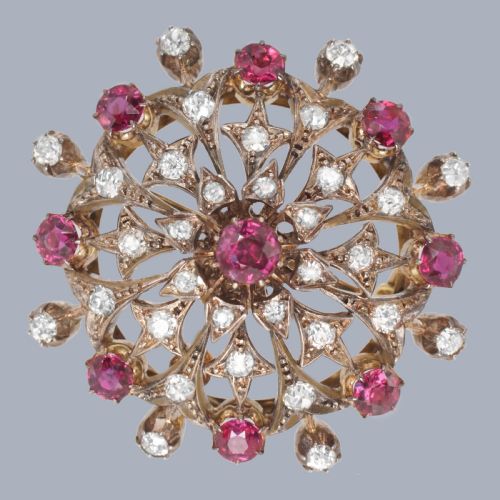
Maker-jewellers constructed these pieces using a combination of yellow gold, 14-carat gold, 18-carat gold, and silver settings. Silver was frequently deployed on the face of brooches to enhance the brilliance of old European cut diamonds.
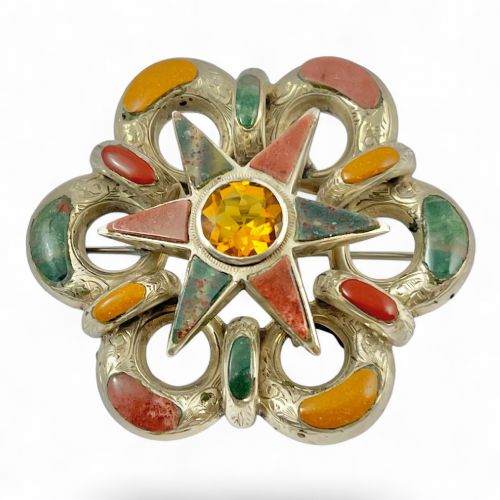
Gems including rubies, garnets, turquoise, agates, citrines, and seed pearls were hand-set into starburst and crescent configurations. Enamel work and delicate claw settings also appear across the surviving inventory.
Listings feature periods from the nineteenth century through the 1960s, incorporating materials such as turquoise, agate, citrine, and enamel alongside traditional diamonds and gold.
What Varies in Quality
Quality rests in the weight and purity of the precious metals, alongside the calibre and carat weight of the central diamonds and coloured stones. Heavier gold bases and substantial gemstone carats elevate a piece.
The refinement of the stone setting and the complexity of the starburst design also differentiate examples. Intricate seed pearl arrangements and undamaged enamel demand higher levels of bench skill than simpler metalwork.
The Antique Star Pin Glossary
- Star burst brooch
- A brooch designed in the symmetrical shape of a radiating stellar burst. These pieces often feature graduated diamonds or pearls emanating from a central cluster.
- Seed pearl
- A very small, naturally occurring pearl, often drilled and threaded onto fine wire. They are frequently clustered tightly together in floral and stellar motifs.
- Pendant brooch
- A dual-purpose jewel fitted with both a pin mechanism and a hidden loop. This allows the wearer to pin it to clothing or suspend it from a chain as a necklace.
Antique Star Pin: Frequently Asked Questions
How do I wear an antique star pin?
These versatile jewels work well pinned to heavy wool lapels, collars, or scarves. Convertible pieces can also be hung from a gold chain using their integrated pendant loop.
Ensure the pin stem is secure before fastening it to thick fabrics to avoid bending the metal. For stick pins, push the protective cap firmly onto the sharp point after placement in a tie or lapel.
What periods do these pins come from?
The available selection primarily spans the Victorian and Edwardian eras, stretching from the mid-nineteenth century into the early twentieth century. You will also encounter later twentieth-century revival pieces and London-hallmarked items.
Victorian pieces often combine silver-topped gold with old cut diamonds, while Edwardian variations lean towards lighter gold frames and delicate pearls. Examining the metal purity marks and stone cuts helps clarify the era.
Are these pieces pendants or brooches?
Many examples are designed to serve as both pendants and brooches, featuring a fold-down loop or a removable pin fitting. This dual functionality was popular in the nineteenth century.
Look at the reverse of the piece to identify hinge placement and bail attachments. Stick pins, conversely, are dedicated single-purpose items meant for securing neckwear.
What stones are set in star pins?
Diamonds form the centrepiece of many stellar designs, accompanied by rubies, garnets, citrines, and agates. Seed pearls and turquoise are also common decorative elements.
Coloured gemstones add rich contrast to the glittering diamond rays and silver settings. Gem reports occasionally accompany pieces containing significant untreated rubies or substantial diamond carats.