


Antique Star Pendant
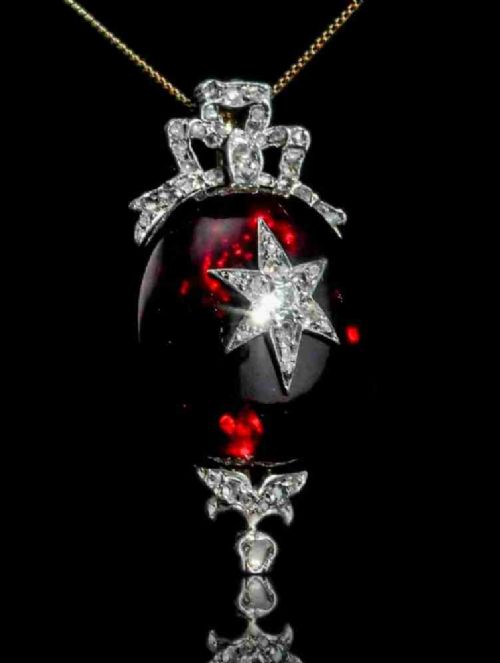
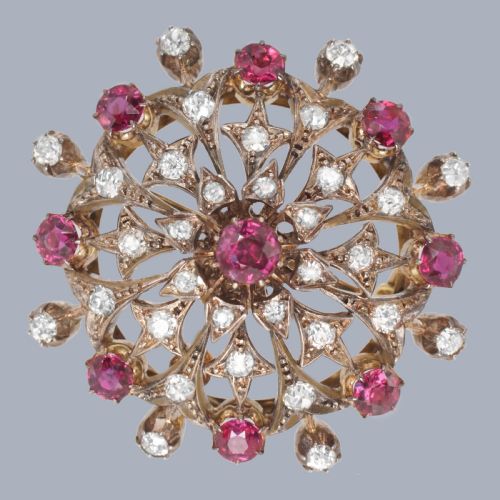
An antique star pendant captures the imagination with celestial motifs crafted in gold and silver, shining from the Victorian and Edwardian eras.
Antique Star Pendant
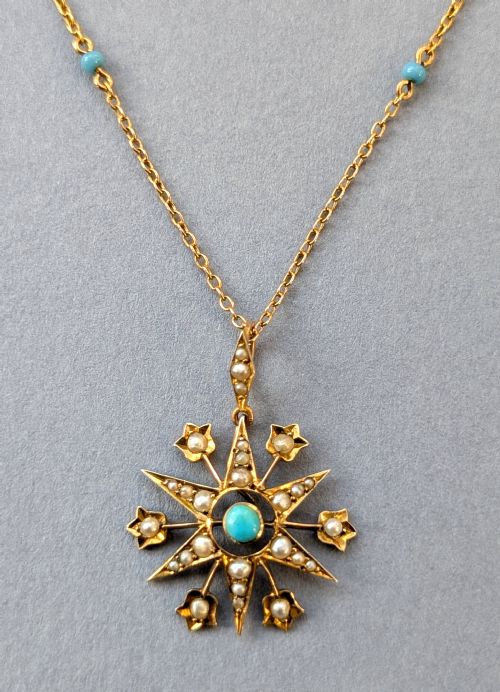
An antique star pendant represents a celestial motif that gained immense popularity during the nineteenth and early twentieth centuries. These jewels take the form of multi-pointed starbursts, often arranged with central gemstones or seed pearls to catch the light.
How They Were Made
Goldsmiths of the nineteenth century utilised high-carat yellow and rose gold, often casting or stamping the foundational star frame before hand-setting gemstones. Silver was frequently layered over gold in earlier pieces to enhance the whiteness and brilliance of old-cut diamonds.
Intricate details such as seed pearl clusters and turquoise cabochons were meticulously wired or pegged into position by hand. Many star pendants incorporated multi-functional hinges and removable bails, allowing a single jewel to serve as both a necklace ornament and a brooch.
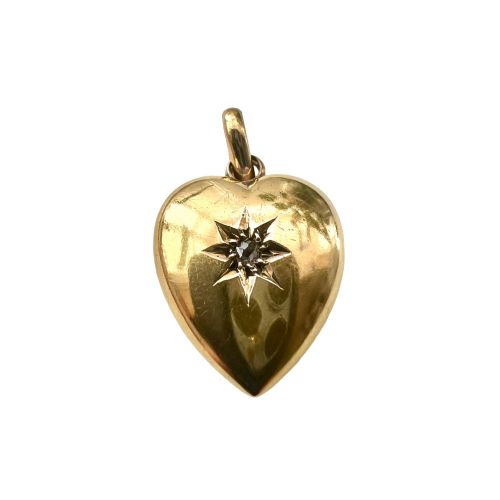
Listings feature 9ct, 15ct, and 18ct gold alongside silver-topped settings, spanning Victorian, Edwardian, and mid-century periods.
What Varies in Quality
The distinction between standard and exceptional pieces rests upon the quality of the gemstones and the precision of the metalwork. Superior examples feature well-matched old-cut diamonds with clean facets and vibrant coloured stones like natural rubies, emeralds, or sapphires.
Execution of design also dictates the tier of the piece, particularly the symmetry of the star points and the fineness of the collet settings. Pieces that retain their original convertible fittings or fitted boxes demonstrate a higher level of historical preservation.
Perroud·Becker·Hirsch & Oppenheimer
The Antique Star Pendant Glossary
- Old-cut diamond
- A hand-faceted diamond cut before the standardisation of modern brilliants, characterised by a smaller table and high crown that glows softly under candlelight.
- Seed pearl
- A tiny, naturally occurring small pearl, frequently drilled and threaded or pegged onto gold settings in clustered star or floral motifs.
- Convertible brooch pendant
- A piece of jewellery engineered with a hidden loop and a detachable pin, allowing the wearer to use it interchangeably on a chain or pinned to clothing.
- Cabochon
- A gemstone shaped and polished with a smooth, convex surface rather than faceted into geometric planes.
- Collet
- A narrow band of metal that holds a gemstone in place by folding over its edge.
Antique Star Pendant: Frequently Asked Questions
How do I wear a convertible star pendant?
Many antique star designs feature a hidden fold-down loop and a secure pin mechanism on the reverse. This dual engineering allows the piece to be suspended from a chain or fastened securely to a lapel.
When transitioning between formats, ensure the pin catch locks firmly to prevent loss during wear.
What periods do these star pendants come from?
The pieces primarily span the Victorian and Edwardian eras, with examples stretching from the late nineteenth century into the early twentieth century. Designs evolved from heavy gold and garnet clusters to delicate seed pearl and diamond starbursts.
Mid-century charm pendants also appear, reflecting a later revival of celestial motifs in yellow gold.
How are diamonds set in Victorian star jewellery?
Victorian jewellers frequently set diamonds in silver topped-gold, a technique that used a thin sheet of silver soldered to a gold base. This method allowed the metal around the stones to be darkened or brightened to accentuate the sparkle of old-cut diamonds.
Open-backed settings were often utilised to let light pass fully through the stones.
Are seed pearls durable for daily wear?
Seed pearls are delicate organic materials that require careful handling and protection from moisture, perfumes, and cosmetics. They are typically secured on fine wire or silk threads within the star framework.
Removing the pendant before swimming or sleeping helps preserve the integrity of the pearls.