

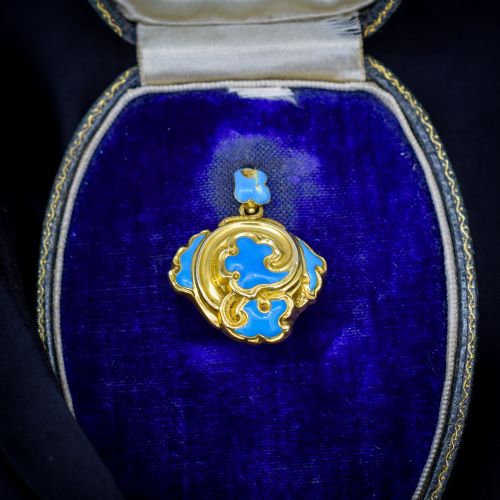
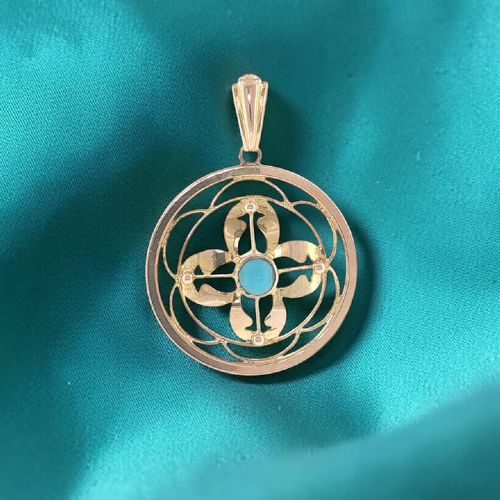


Turquoise Gold Locket
These turquoise gold locket pieces combine vibrant blue stones with precious gold settings to hold intimate miniature portraits or hair mementos close to the heart.
Turquoise Gold Locket
A turquoise gold locket is a hinged pendant designed to hold photographs, hair, or miniature portraits, decorated with turquoise stones set in gold. These pieces mostly date from the Victorian period, the 19th Century, and around 1910, reflecting Georgian influences and French Napoleon III designs alongside British manufacturing.
The forms span heart shapes, star motifs, double photo lockets, mourning pieces, and posy rings with locket compartments, frequently paired with pearls, enamel, or glass. While pendants and lockets dominate the selection, related forms such as earrings, necklaces, and portrait miniatures also appear in the record.
Buyers looking for a turquoise gold locket will find that Victorian examples in 9ct, 15ct, and 18ct yellow or rose gold represent the core of what is available. The designs draw heavily on sentimental motifs like forget-me-nots and witches' hearts.
Materials and construction
Makers built these pieces using varied grades of gold, specifically 9ct, 15ct, and 18ct gold, alongside rolled gold, shaping them into hinges, bezels, and hollow pendant bodies. Stones like turquoise and pearl were hand-set into the metal, while glass protected internal photo and hair compartments.
Surface decoration involved blue enamel work and fine chasing on gold, creating detailed floral, star, and scrollwork patterns. Construction techniques prioritised durability for daily wear while maintaining delicate aesthetic details like tassels and posy compartments.
Turquoise Gold Locket Retail Price Guide 2026
Typical asking prices for turquoise gold locket among the pieces listed under this phrase on Sellingantiques today, from the lower quarter to the upper quarter. They describe what is for sale here now, not the wider market.
Listings feature items spanning the Victorian era, the 19th Century, 18th Century, and 1910, executed in 9ct, 15ct, and 18ct gold.
Distinctions in craftsmanship
Quality rests in the weight and purity of the gold, with higher carat alloys and substantial metal weight separating robust pieces from lighter constructions. The integration of components like working hinges, secure glass covers, and well-fitted loops dictates the structural integrity.
The selection and matching of turquoise stones and seed pearls dictate visual hierarchy, where uniform colour and secure flush or bezel settings elevate the piece. Superior examples display refined hand-finishing in enamel work and metal chasing rather than mass-produced uniformity.
Murrle Bennet
The Turquoise Gold Locket Glossary
- Mourning locket
- A piece designed to commemorate the deceased, often containing woven hair, initials, or a portrait under glass. These items carry deep sentimental value and frequently incorporate black enamel alongside turquoise.
- Witches heart
- A pendant shape featuring a twisted tail at the base, symbolising a hooked heart intended to catch the affections of a lover. This romantic motif appears frequently in Victorian jewellery.
- Double photo locket
- A hinged pendant opening to reveal two separate internal compartments for holding miniature photographs or mementos. They offer practical utility alongside decorative exterior stone settings.
- Rolled gold
- A material formed by bonding a thin sheet of gold to a base metal core, offering the appearance of solid gold at a different cost. It is distinct from solid 9ct, 15ct, or 18ct gold components.
- Seed pearl
- A very small, naturally formed or cultured pearl used as an accent stone around central turquoise clusters. They add delicate texture to floral and star motifs.
Turquoise Gold Locket: Frequently Asked Questions
What fits inside a locket?
These compartments were traditionally used to hold small painted portrait miniatures, locks of human hair, or paper photographs of loved ones. The internal space varies depending on the overall depth and thickness of the gold frame.
Many pieces also accommodate thin fabric or dried floral mementos alongside photographic images, secured safely behind removable glass bezels.
How do I date a locket?
Dating relies on examining the gold purity hallmarks, construction style, and decorative motifs such as Victorian starbursts or Georgian mourning elements. Stylistic cues like enamel work and stone cuts provide further chronological indicators.
Comparative analysis with documented pieces from periods like the 19th Century or around 1910 helps narrow down the year of manufacture.
Can I wear a locket daily?
Daily wear is possible provided the hinge and clasp mechanisms remain secure and the piece is removed before physical activities or bathing. Solid gold settings offer good longevity for regular use.
Checking the security of the pendant bail and the internal glass retainer ensures the contents remain protected during regular outings.