



Antique Standing Hearth Screen
An antique standing hearth screen keeps the heat off the face and the draught from the back while anchoring the fireplace room.
Antique Standing Hearth Screen
The antique standing hearth screen guards the sitter from the glare and sudden heat of an open coal fire. These pieces take the form of adjustable pole screens, folding guards, and fixed panels that stand directly on the floor near the hearth.
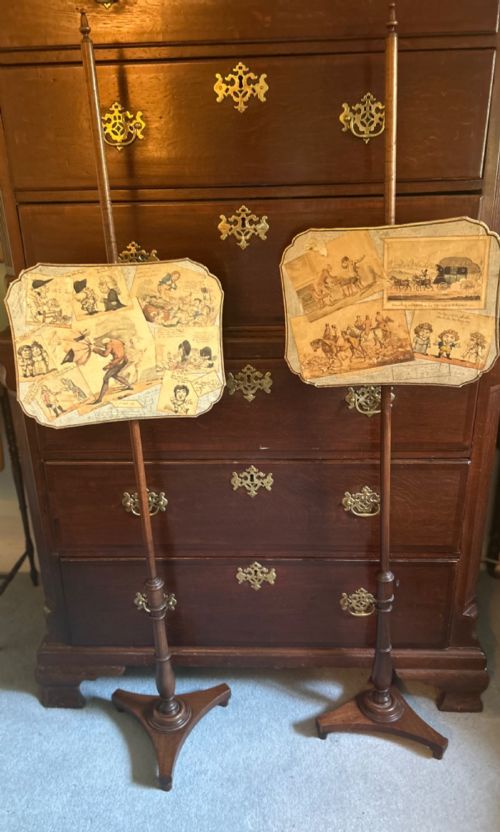
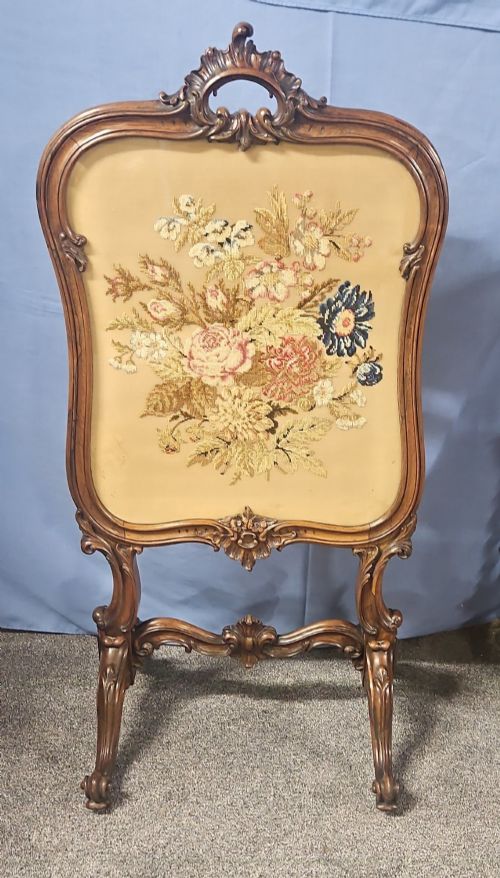
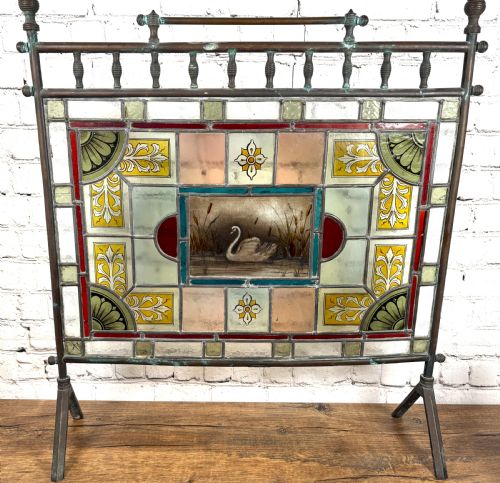
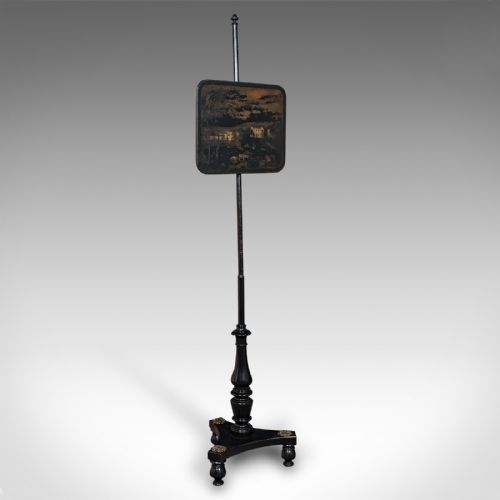
Visitors browsing this page will most commonly meet nineteenth-century pole screens featuring adjustable panels mounted on turned wooden pedestals. Examples range from Regency rosewood and mahogany frames to elaborate Victorian needlework and stained glass variants.
Makers designed these furnishings to be moved easily around the room as the fire burned down or as the wind shifted in the chimney. They serve both a practical domestic purpose and a decorative function within Georgian and Victorian interiors.
Materials and construction methods
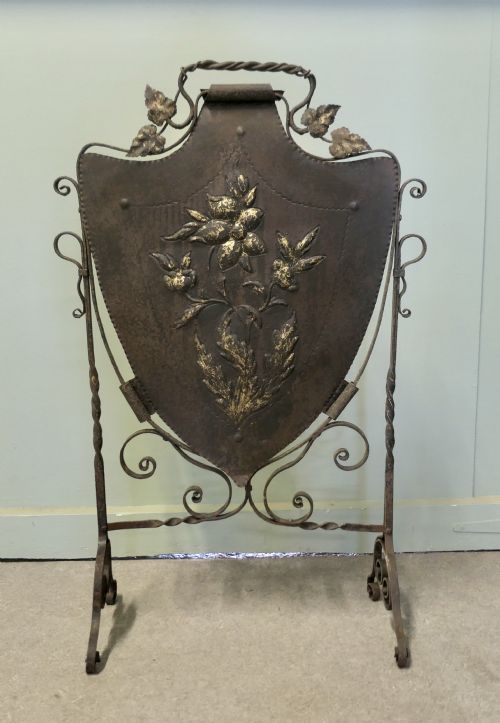
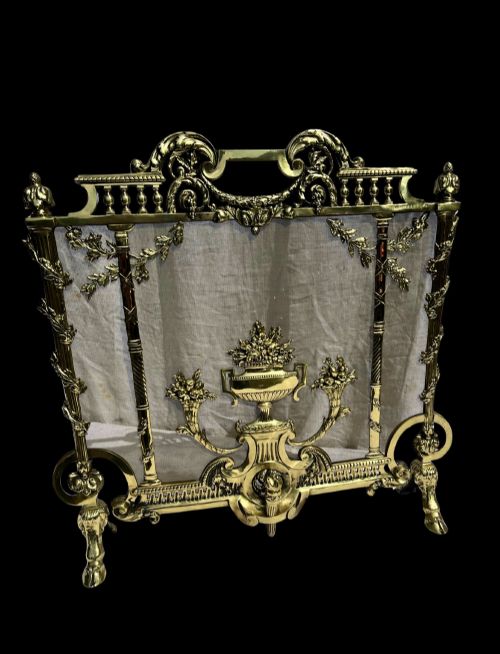
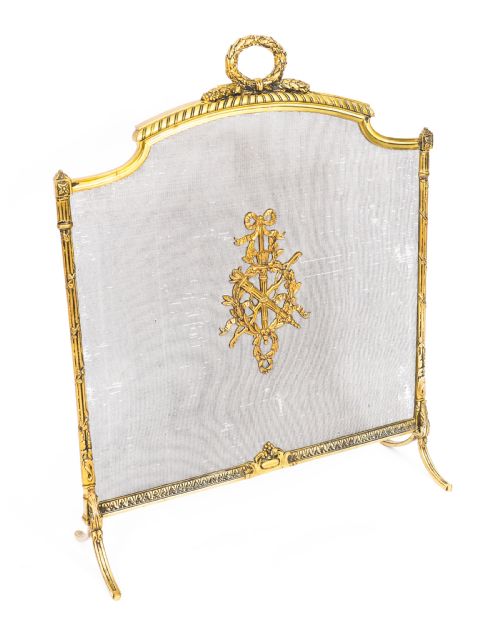
Craftsmen built the frames of these screens from dense timbers such as mahogany, rosewood, walnut, satinwood, and oak, often turning slender poles or carving elaborate scrollwork bases. Metal versions utilise forged iron, brass, copper, and gilt bronze, sometimes shaped into openwork spark guards or delicate fireguards.
The central shields and panels display textile artistry through wool needlework, silk embroidery, tapestry, needlepoint, and painted glass or satirical prints. Many pole screens incorporate clever mechanical brass ratchets or thumbscrews that allow the user to slide the viewing panel up and down the vertical shaft.
Distinctions in quality and execution
Quality in these pieces rests upon the crispness of the timber carving and the stability of the weighted base. Superior examples exhibit finely turned pedestals with substantial legs and tight joinery that prevents the tall vertical pole from wobbling.
The needlework or artistic medium within the frame dictates much of the visual merit. Tightly stitched gros-point and petit-point tapestries or intricate silk embroideries demonstrate superior workshop skill compared to simpler printed panels or faded textiles.
The Antique Standing Hearth Screen Glossary
- Pole screen
- A freestanding firescreen featuring an adjustable panel that slides up and down a vertical wooden shaft. This design allows the sitter to block the direct heat of the fire at eye level.
- Cheval screen
- A self-supporting screen mounted on two vertical floor-standing pillars or feet. These frames typically hold a larger rectangular panel than a standard pole screen.
- Needlepoint
- Embroidery stitched onto an open-weave canvas mesh to form dense pictorial designs. This technique frequently decorates the central panel of nineteenth-century hearth screens.
- Spark guard
- A fine metal mesh or perforated brass screen placed directly before the hearth opening. Its primary duty is stopping stray embers from flying out onto wooden floorboards.
- Palisander
- A dense, richly grained exotic timber akin to rosewood. Cabinetmakers utilised this dark wood for high-status Regency and Victorian frames.
Antique Standing Hearth Screen: Frequently Asked Questions
What is a pole screen used for?
A pole screen protected ladies' complexions from the intense heat of open fires, which could melt heavy cosmetics or flush the face uncomfortably. The sliding panel allowed the user to raise or lower the shield depending on where the heat struck.
Over time these pieces became decorative furnishings for the drawing room as well as practical shields. They stood near the hearth to catch radiant warmth while remaining light enough to reposition.
How do I adjust the panel?
Most pole screens operate with a hidden brass collar, spring mechanism, or thumbscrew set into the back of the panel frame. Loosening this fixture lets the textile or glass shield slide freely along the central wooden rod.
Tightening the screw locks the panel at the desired height. Users should support the weight of the frame with one hand while adjusting the screw to protect the antique mechanism.
Where should I place a hearth screen?
These screens belong near an active fireplace or within a formal reception room setting. They look most natural positioned slightly to the side of the hearth opening where they balance the composition of mantelpiece ornaments and companion sets.
Avoid placing wooden or textile screens directly against active heat sources that lack a metal spark guard. Radiant heat can dry out historic rosewood or mahogany over extended periods.
How do I tell Regency from Victorian screens?
Regency screens tend to feature restrained classical lines, parcel-gilding, Chinoiserie motifs, and exotic timbers like palisander or rosewood. Their forms often draw inspiration from ancient Greek, Roman, or Egyptian sources.
Victorian pieces frequently embrace revival styles such as Gothic, French Rococo, or Arts and Crafts, alongside heavier carved walnut and elaborate needlework. They often display greater ornamentation and more robust proportions than their Regency predecessors.