





Antique St Ives Paintings
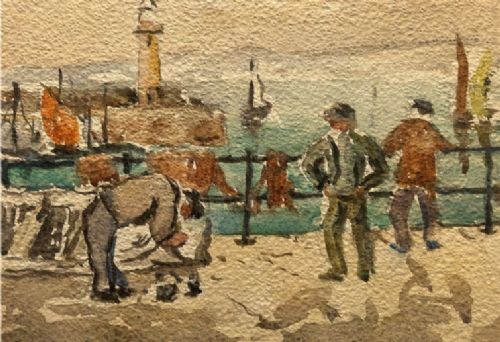
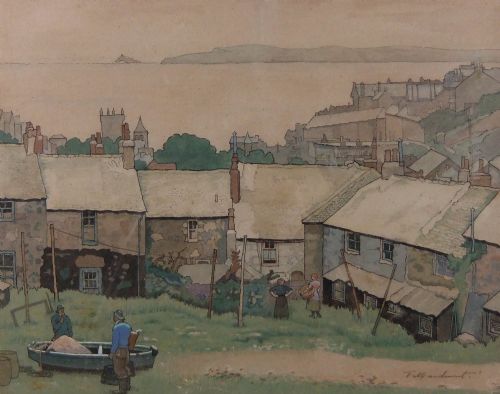
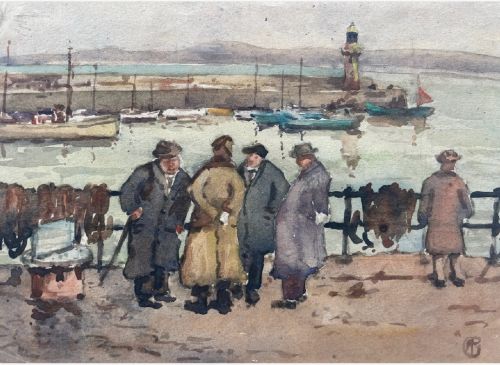
These antique st ives paintings capture the coastal light and maritime life of Cornwall, offering a direct window into a historic artistic colony.
Antique St Ives Paintings
You are most likely to meet marine watercolours and oils depicting harbours, low tides, and village life, reflecting the strong regional focus on the Cornish coast. Styles represented include British Impressionism, the St Ives School, Newlyn School, and Victorian fine art, alongside traditional maritime subjects.
How they were made
Artists working on these paintings utilised traditional materials such as oil paint on canvas and watercolour on paper, framed within wood and gilt wood surrounds. Ink and woodblock prints also appear among the techniques recorded in the early twentieth century works.
The application ranges from fluid watercolour washes capturing coastal light to heavier oil paint layers on canvas, often preserved behind glass where works are framed on paper.
Antique St Ives Paintings Retail Price Guide 2026
Typical asking prices for st ives paintings among the pieces listed under this phrase on Sellingantiques today, from the lower quarter to the upper quarter. They describe what is for sale here now, not the wider market.
Materials recorded across these artworks include canvas, paper, glass, ink, and gilt wood.
What varies in quality
The distinction between works rests upon the strength of the brushwork and the artist's ability to render the specific atmospheric light of the Cornish coast. Stronger examples demonstrate a confident handling of medium, whether in the fluid transparency of a watercolour or the textural depth of an oil painting.
Provenance and attribution also influence the standing of a piece, particularly when connected to established regional movements like the St Ives School or Newlyn School, alongside the quality of the original framing materials such as period gilt wood.
William Banks Fortescue·Thomas Maidment·George F Pennington·Edward Matthew Elliott·George Turland Goosey·Ernest F Hill·David Woodlock·Fred Mayor·Frederick William Jackson·Cuthbert Crossley·Henry Silkstone Hopwood
The Antique St Ives Paintings Glossary
- St Ives School
- An association of artists based in Cornwall who drew inspiration from the local landscape, coastal light, and maritime themes. Their output spans various modernist and impressionist approaches.
- Watercolour
- A painting method in which the paints are made of pigments suspended in a water-based solution. Works in this medium are typically executed on paper.
- Oil paint
- A slow-drying paint consisting of particles of pigment suspended in a drying oil, commonly applied to canvas or wood panels. This medium allows for rich texture and deep colour saturation.
- Newlyn School
- An art colony based in a Cornish fishing village near Penzance, known for its naturalist painting style focusing on plein air subjects and local maritime life.
- British Impressionism
- A movement in British painting that adopted the French impressionist concerns with light, spontaneous brushwork, and everyday subjects.
- Gilt wood
- Wood that has been treated with a thin layer of gold leaf or gold-coloured paint, frequently used for period picture frames.
Antique St Ives Paintings: Frequently Asked Questions
How do I identify a genuine period frame?
Period frames often display the minor wear and patination expected of timber and gilt surfaces from the nineteenth and early twentieth centuries. Construction methods and traditional joinery on the reverse provide further indication of age.
Matching the frame style to the period of the painting ensures historical consistency, though many works have been reframed over their lifetime.
Where should I hang a watercolour painting?
Watercolours on paper are sensitive to direct sunlight, which can cause fading of pigments over time. Position them away from strong windows and sources of heat to preserve the colours.
Ensure the room maintains stable humidity levels to protect both the paper support and the framing materials.
What defines the St Ives School style?
The style is characterised by a direct engagement with the Cornish landscape, maritime activity, and the unique coastal illumination. Artists shifted from Victorian fine art towards impressionist and modernist interpretations of the harbour and surrounding fields.
This regional focus created a distinct visual language centred on light, water, and rugged terrain.
How do oil paintings differ from watercolours here?
Oil paintings utilise pigment bound in drying oil on canvas or wood, offering a heavier texture and greater capacity for layered colour. Watercolours rely on translucent washes on paper, emphasising lightness and the tone of the paper beneath.
Both mediums were employed concurrently by artists working in Cornwall to capture different atmospheric effects.