



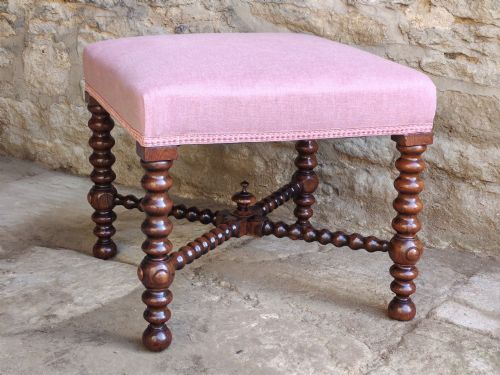
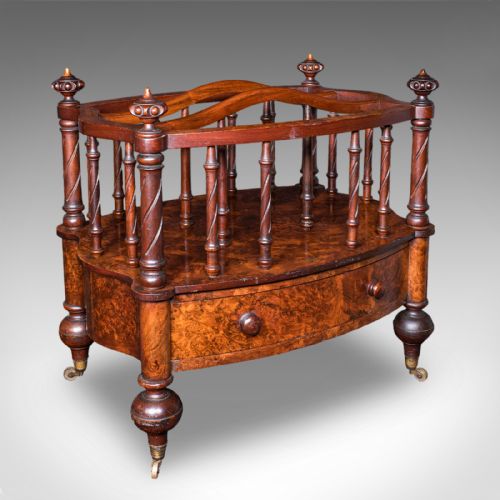
Antique Spindle Table
An antique spindle table brings lightness and turned character to a room, offering practical surface space atop delicate uprights.
Antique Spindle Table
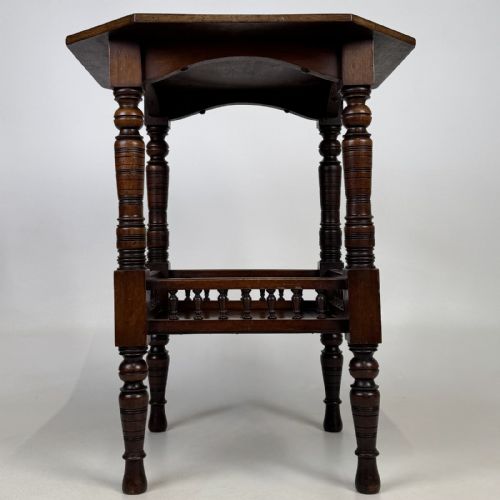
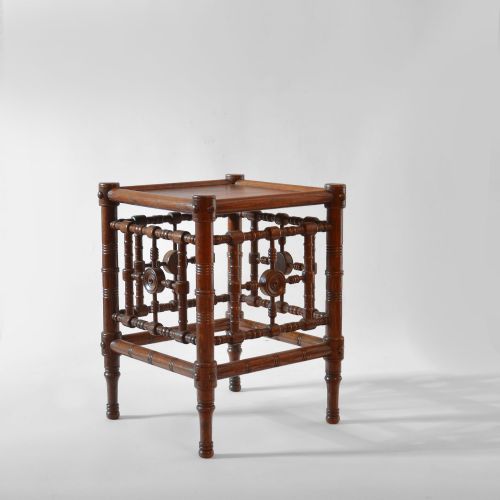
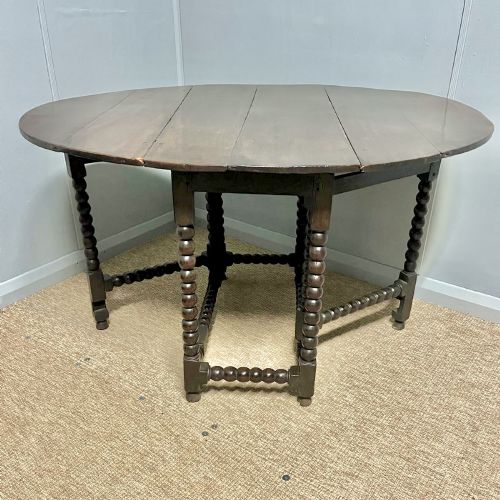
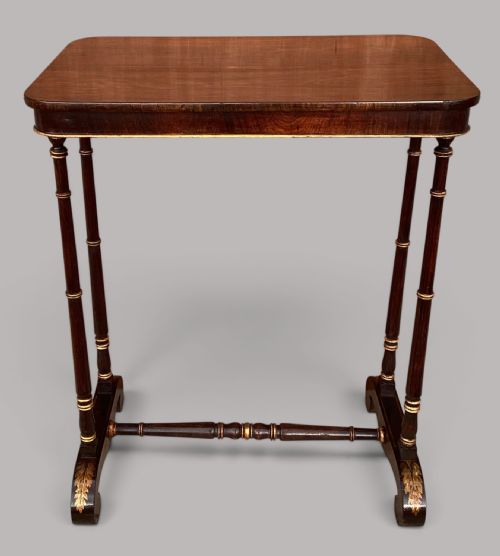
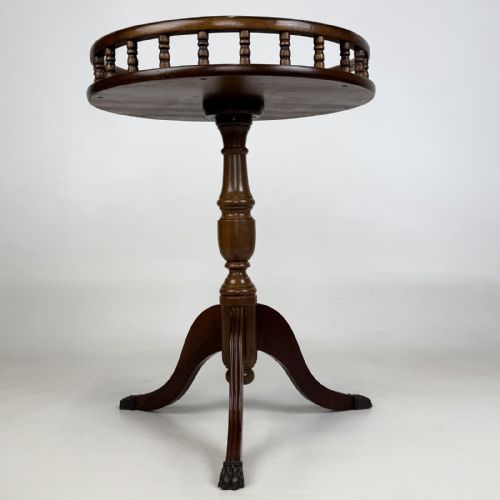
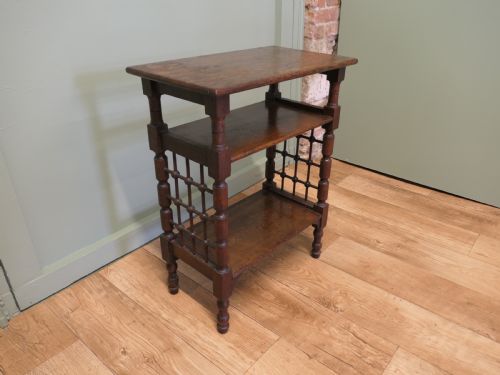
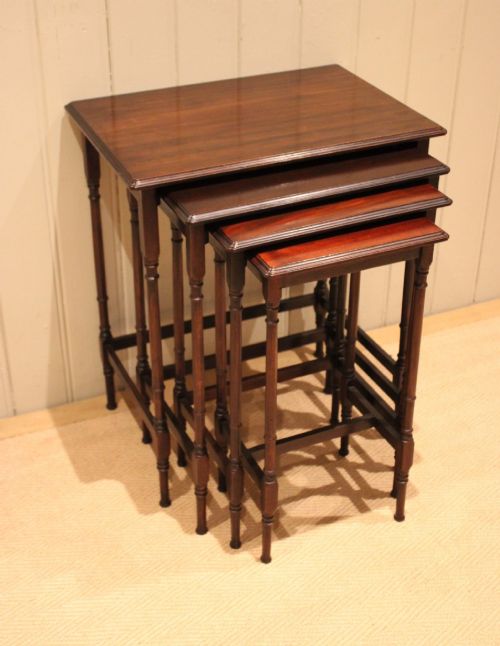
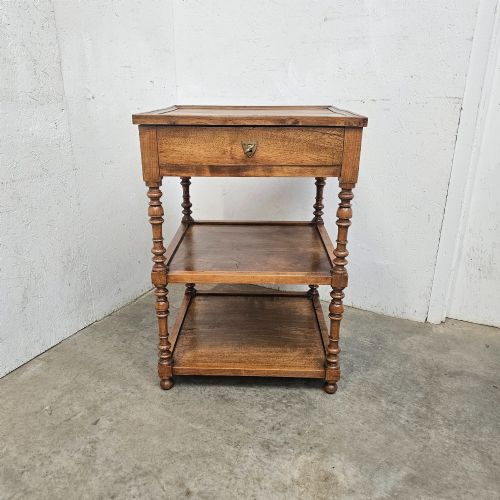
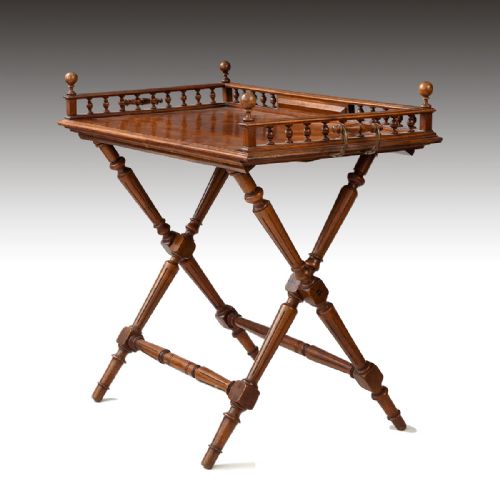
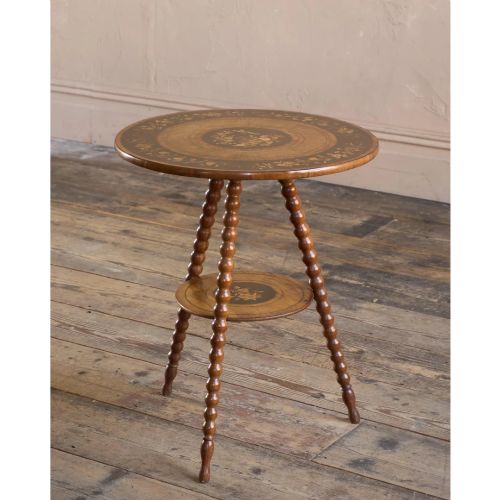
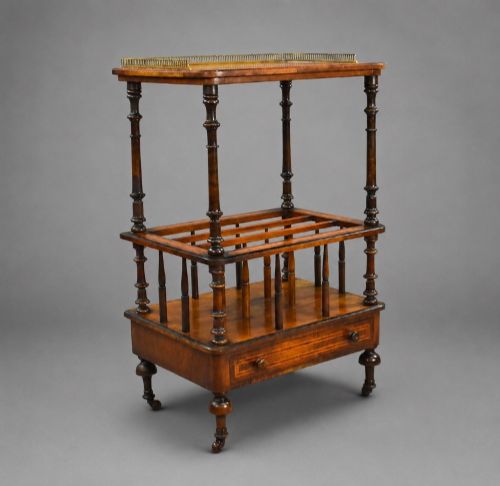
When you search for an antique spindle table, you encounter a variety of small furniture forms built with turned upright supports, spanning periods from the eighteenth century through the Edwardian era and into the 1920s.
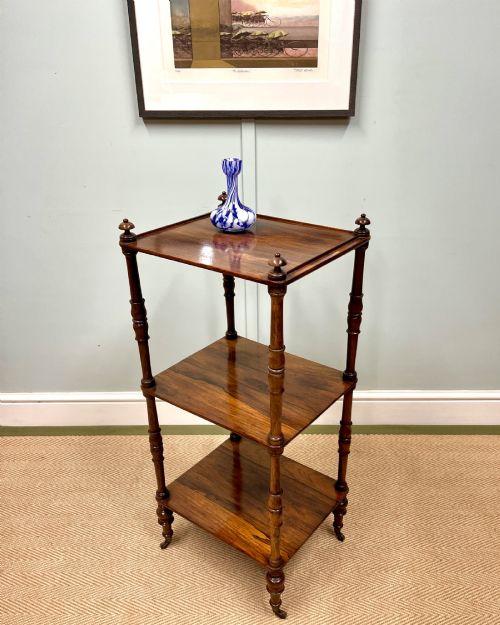
The pieces appearing on this page include occasional tables, side tables, wine tables, and centre tables, alongside multi-tiered formats such as etageres and whatnots.
Construction materials range from rich timbers like mahogany, walnut, burr walnut, rosewood, and oak to ebonised wood and brass accents.
How they were made
Cabinetmakers utilised dense hardwoods such as mahogany, walnut, and oak to construct stable frames that could support slender turned legs and multi-tiered shelving.
Turning lathes shaped the characteristic spindle and bobbin supports, requiring precision to ensure uniform thickness and structural integrity across delicate uprights.
Surface decoration frequently involved marquetry inlay, raised galleries, ceramic elements, and black lacquer finishes applied to highlight the distinct grain and colour of the wood.
Antique Spindle Table Retail Price Guide 2026
Typical asking prices for spindle table among the pieces listed under this phrase on Sellingantiques today, from the lower quarter to the upper quarter. They describe what is for sale here now, not the wider market.
The furniture forms span occasional tables, side tables, canterburys, whatnots, etageres, and revolving book stands.
What varies in quality
The refinement of the turning work on the spindle legs dictates much of the visual appeal, separating simple utility pieces from sharply detailed examples.
Selection of timber veneer, particularly figured burr walnut or rich rosewood, determines the sophistication of the surface finish and overall presence of the table.
Structural stability in smaller occasional and revolving formats relies upon precise joinery at the joints between the top surface and the slender uprights.
Leonard Wyburd·Heals
The Antique Spindle Table Glossary
- Spindle
- A slender, turned wooden rod used as a structural or decorative upright support in legs and galleries. These elements provide visual lightness without sacrificing load-bearing strength.
- Etagere
- A piece of furniture consisting of a set of open shelves for displaying small objects. These tiered stands often incorporate turned spindle supports.
- Whatnot
- A multi-shelved stand utilised for holding books, ornaments, or papers. Examples frequently feature delicate upright turns and corner posts.
- Marquetry
- Decorative veneer applied to furniture in fitted patterns using different woods and materials. This technique adds pictorial or geometric enrichment to tabletops.
- Gallery
- A raised ornamental border running around the edge of a tabletop to prevent items from rolling off. They are often pierced or spindle-turned.
Antique Spindle Table: Frequently Asked Questions
What is an antique spindle table?
An antique spindle table is a small occasional or side table defined by turned wooden uprights rather than heavy straight legs. These tables appeared across Victorian, Edwardian, and earlier periods in various timbers.
They serve as adaptable surface furniture for holding lamps, books, or decorative objects within living spaces and hallways.
How were these tables used originally?
These tables functioned primarily as movable small-surface furniture for parlours and drawing rooms, holding tea wares, reading materials, or decorative ornaments.
Their compact scale allowed servants or residents to reposition them easily around a room depending on daily social activities.
Where do spindle tables fit today?
A spindle table fits neatly beside a sofa, armchair, or bed as an auxiliary surface for lamps and small items. Their slender turned supports prevent them from appearing visually heavy in smaller modern interiors.
Multi-tiered versions like etageres also provide vertical display capacity for books and collections without occupying a large floor footprint.
How do I identify the period?
Period identification relies on observing the combination of timber choice, turning style, and structural hardware. Georgian and George III examples favour mahogany with precise cabinet proportions, while Victorian and Edwardian pieces frequently utilise burr walnut, rosewood, or ebonised finishes.
Construction methods and secondary woods inside drawers or underneath tabletops further assist in dating the piece accurately.