



Antique Spill Vase Figurine
An antique spill vase figurine combines decorative sculpture with a practical holder for wooden tapers used to light fires and candles.
Antique Spill Vase Figurine
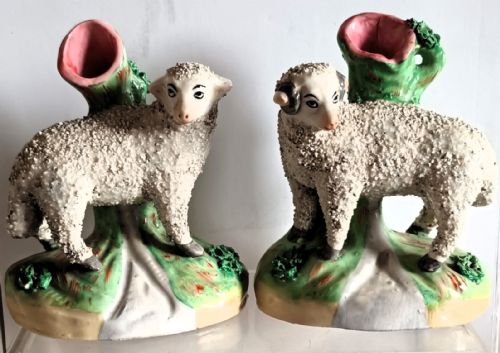
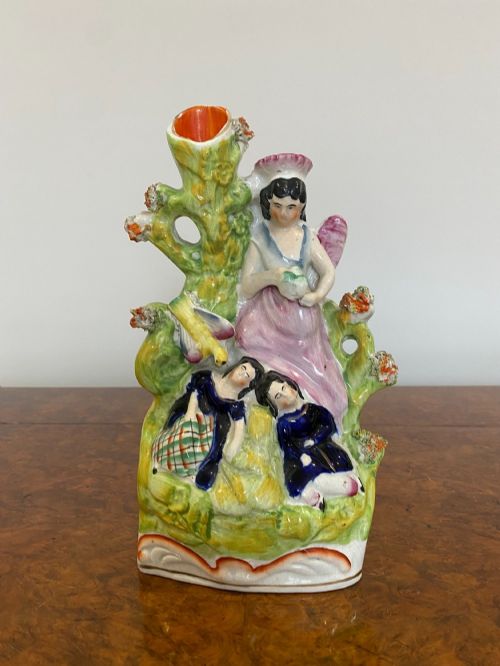
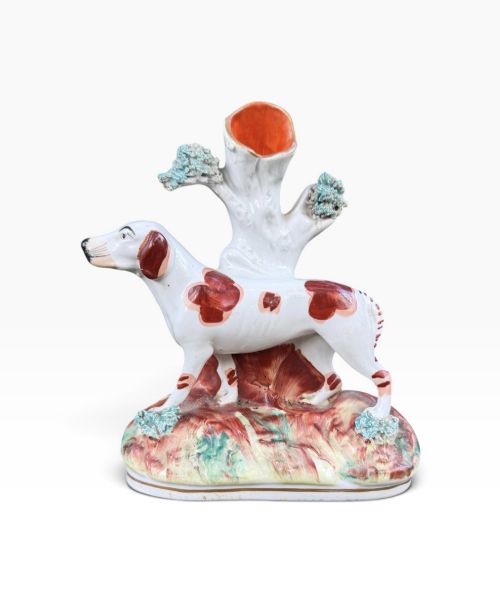
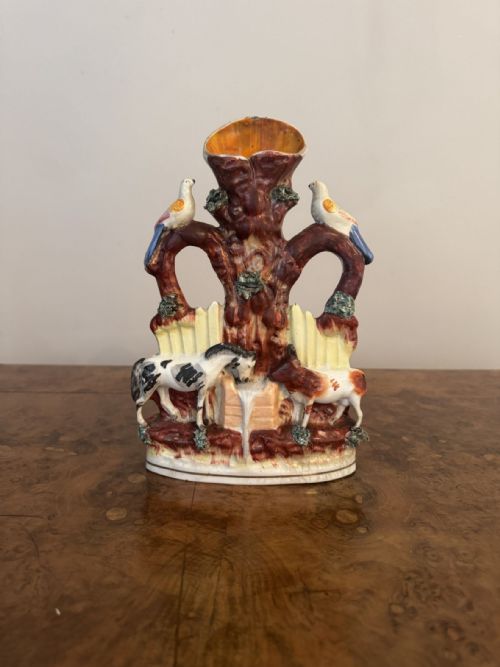
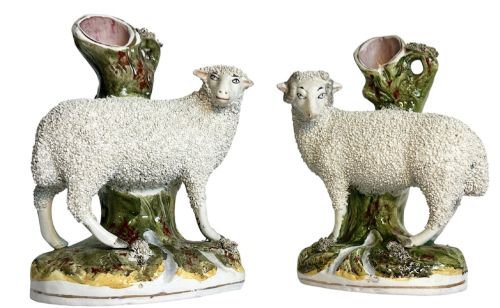
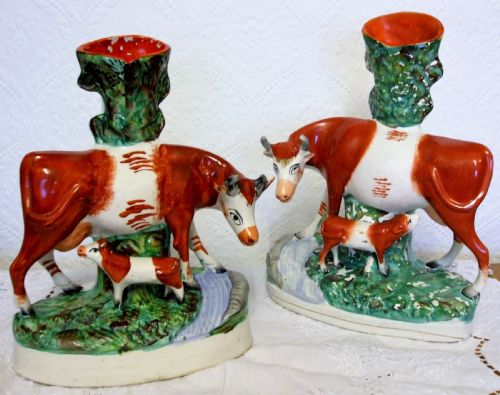
When you examine an antique spill vase figurine, you find ceramic sculptures designed with an integrated tubular socket intended to hold wooden matches or spill lights. These pieces predominantly originate from the nineteenth century, with Victorian Staffordshire potteries providing the vast majority of pairs and single figures.
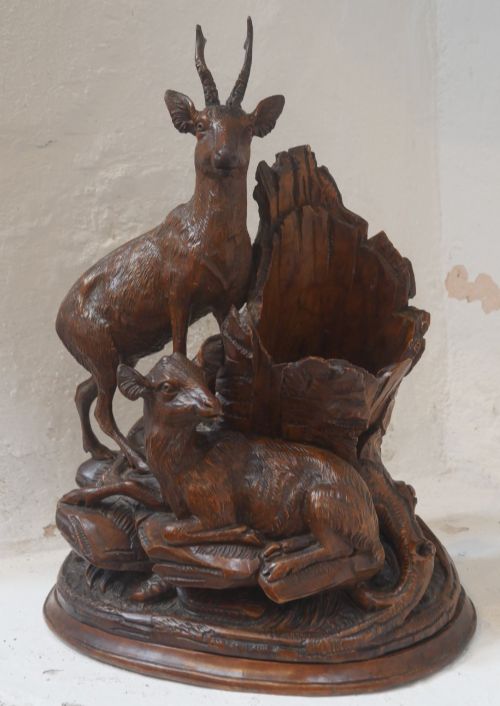
The subjects range widely across pastoral and domestic themes, including sheep, cows, lions, deers, swans, and human figure groups such as Scots harvesters or figures titled 'Band of Hope'. Pairs frequently mirror each other symmetrically, intended for display on mantelpieces flanking a central clock or ornament.
Alongside Staffordshire earthenware, the selection includes continental bisque porcelain and early twentieth-century earthenware from makers such as Ernst Wahliss. These variations offer distinct sculptural profiles while retaining the dual function of figure and spill holder.
Assessing quality in ceramic figures
Proportion and stability also dictate worth, as well-modelled pairs maintain balanced weight distribution and clean flat-back construction typical of nineteenth-century earthenware methods. Lesser examples suffer from heavy, clumsy moulding and crude, rushed application of surface pigments.
Antique Spill Vase Figurine Retail Price Guide 2026
Typical asking prices for spill vase figurine among the pieces listed under this phrase on Sellingantiques today, from the lower quarter to the upper quarter. They describe what is for sale here now, not the wider market.
Mischievous sheep and stout cows gaze out patiently from the mantelpiece, doubling as cheerful fire-lighters for the Victorian parlour.
Thomas Parr factory·Ernst Wahliss
The Antique Spill Vase Figurine Glossary
- Spill vase
- A hollow cylindrical container designed to hold wooden spill tapers for transferring a flame from hearth to candle. This form sits directly behind or beside the main decorative figurine.
- Flatback
- A style of ceramic figure moulded with a detailed front and a mostly unglazed, flattened rear intended to stand flush against a wall. This construction method saved material and weight for mantelpiece display.
- Bisque
- Unglazed porcelain fired once to a porous, matte finish that resembles marble in texture and tone. It appears frequently on nineteenth-century continental figural pieces.
- Staffordshire pottery
- Earthenware produced in the industrial potteries of Staffordshire, England, famous for utilitarian and decorative figures during the Victorian era. These pieces form the core of nineteenth-century figurine production.
- Earthenware
- A porous ceramic body fired at lower temperatures than stoneware or porcelain, requiring an impermeable glaze to hold liquids or resist moisture. It serves as the primary material for English spill vase figures.
Antique Spill Vase Figurine: Frequently Asked Questions
What is a spill vase figurine?
A spill vase figurine is a ceramic sculpture that incorporates a small hollow tube designed to hold wooden tapers. These tapers were used to carry a flame from the fireplace to candles or oil lamps before matches became common.
Victorian makers combined this practical household item with popular animal or human subjects, creating decorative ornaments for the mantelpiece. The figure itself provides the visual appeal while the integrated cylinder holds the spills upright and ready for use.
How do I date a Staffordshire figure?
Dating these ceramic pieces relies on examining the clay body, glaze characteristics, and the style of the modelling and painting. Most nineteenth-century examples feature earthenware bodies with hand-painted enamel colours over a lead glaze.
Earlier pieces from the mid-nineteenth century often display simpler, robust moulding with direct hand-finishing, while later Victorian items can show finer detail or different base markings. Comparing the subject matter and flatback construction style against documented periods helps narrow down the decade of production.
Were these figures made in pairs?
Many Staffordshire spill vase figures were produced as mirrored pairs to flank a fireplace clock or ornament on a Victorian mantelpiece. Common subjects for pairs include sheep, cows, lions, and pastoral human figures.
Single figures were also common, often depicting specific moral scenes, literary characters, or popular animals. When matching pairs survive together, they offer a complete decorative arrangement intended by the original potters.
How do I care for antique ceramics?
Caring for antique earthenware and porcelain involves gentle dusting with a soft, dry brush to prevent the accumulation of dirt on glazed and painted surfaces. Avoid using water or cleaning solutions, as nineteenth-century enamel paints and gold leaf can be delicate and prone to flaking.
Display the pieces away from direct sunlight and areas of high temperature fluctuation to protect the glaze and ceramic body from stress. Handling them securely from the base rather than by protruding spill holders prevents accidental breakage.