




Antique Small Centre Table
An antique small centre table brings architectural presence and surface utility to smaller rooms without dominating the floor plan.
Antique Small Centre Table
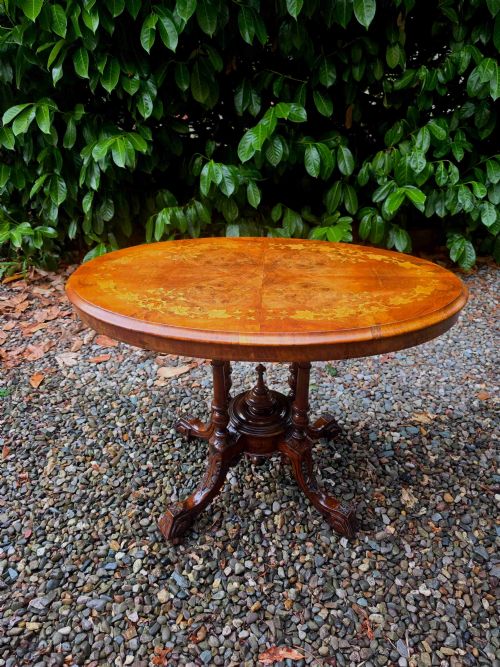
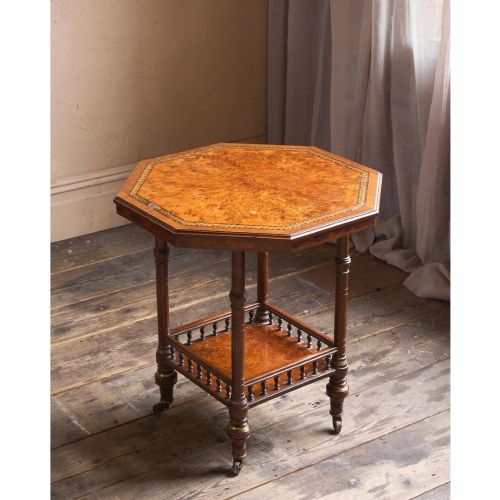
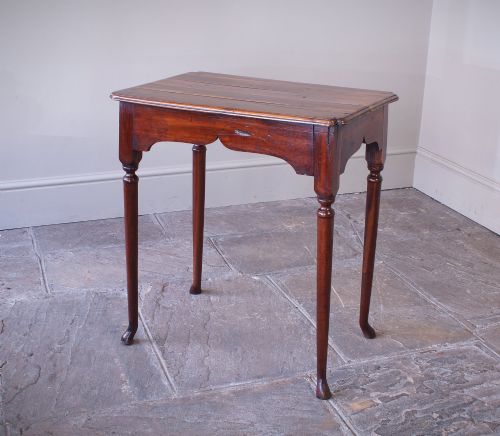
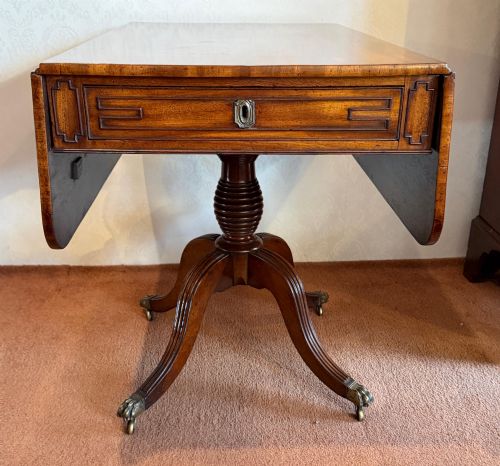
An antique small centre table functions as a versatile freestanding piece designed to sit in the middle of a room or serve as an occasional surface. These compact tables appear across Georgian, Regency, and Victorian periods, taking forms such as round wine tables, drop-leaf breakfast tables, and intricate marquetry pieces.
Materials and construction
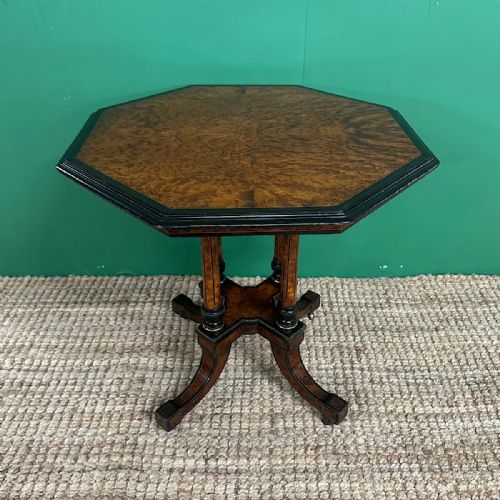
Cabinet makers utilised dense hardwoods like mahogany, walnut, and rosewood, often applying burr veneers, satinwood, and amboyna to create striking geometric or floral surface patterns. Inlaid brass, parcel gilt, and ebonised wood details frequently accent the primary timber structures.
Construction techniques include traditional joinery adapted for pedestal bases, tripod supports, and drop-leaf mechanisms. Marquetry and parquetry tops demonstrate meticulous hand-cutting of contrasting veneers set directly into the wooden substrate.
Current listings feature timber selections spanning mahogany, walnut, burr walnut, amboyna veneer, rosewood, satinwood, and ebonised wood across the nineteenth century.
Distinctions in quality
The standard of an antique small centre table depends on the choice of timber figure, such as richly grained burr walnut or figured mahogany, and the precision of its marquetry or brass inlay. Superior examples display seamless veneer matching and stable, well-balanced pedestal or leg assemblies.
Makers such as Gillows contributed exceptional craftsmanship, evident in the crispness of carved details, thoughtful proportions, and durable hardware. Finer pieces maintain structural integrity while retaining crisp detailing across mouldings and inlaid motifs.
Gillows·Elkington
The Antique Small Centre Table Glossary
- Marquetry
- Decorative veneer work forming pictorial or geometric patterns using various coloured woods. It requires immense skill to cut and fit each tiny wooden segment precisely.
- Amboyna
- A highly prized exotic burl wood yielding rich amber tones and complex swirling patterns. Cabinet makers reserved this timber for elite Victorian and Regency occasional pieces.
- Drop leaf
- A table top featuring hinged flaps that fold down to save space or lift up to extend the surface area. Supporting brackets swing out to secure the leaves when raised.
- Parcels gilt
- Partially gilded with thin gold leaf or powder to highlight specific carved details or mouldings. This technique adds subtle contrast against dark hardwoods like mahogany.
- Pedestal
- A central column supporting a table top, frequently resting on tripod or quadraphole scrolled feet. This form allows maximum legroom around the perimeter of small tables.
Antique Small Centre Table: Frequently Asked Questions
Where should I place a small centre table?
These compact tables suit entrance halls, drawing rooms, or empty corners where a freestanding surface adds balance. Their finished appearance from all sides allows them to occupy the middle of a room rather than hugging a wall.
Ensure adequate clearance for foot traffic around the perimeter. A round pedestal version works particularly well in square spaces to soften angular lines.
How do I identify a Regency centre table?
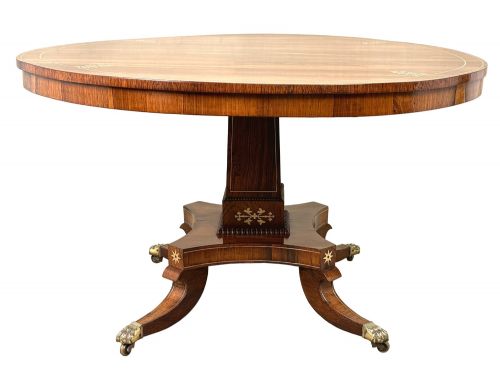
Regency tables often display classical architectural influences, featuring rosewood or mahogany paired with brass inlay or ebony stringing. Look for robust pillar pedestals, trilateral or circular bases, and clean, restrained lines.
Dates generally span the early nineteenth century, reflecting classical revival tastes influenced by French and English design trends of the era.
Can I use an antique centre table daily?
Most pieces handle everyday domestic use, provided you protect the wood from excessive moisture, heat, and direct sunlight. Using coasters and mats preserves delicate French polish or waxed finishes.
Tables with intricate marquetry or amboyna veneer warrant gentler care than robust oak or mahogany dining variants.
What is the difference between an occasional and a centre table?
Centre tables are designed to be viewed from all angles in the middle of a room, often featuring finished backs and all-round detailing. Occasional tables tend to be lighter and more easily moved to wherever a surface is temporarily needed.
Many antique forms overlap, serving multiple functions as wine tables, lamp tables, or small dining surfaces depending on their scale.