
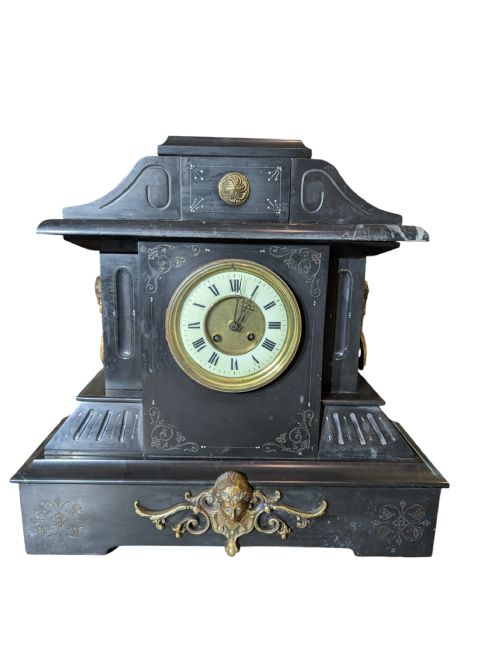


Antique Slate Mantel Clock
These antique slate mantel clocks are substantial household timepieces built from heavy stone and marble, offering striking architectural presence for any mantelpiece.
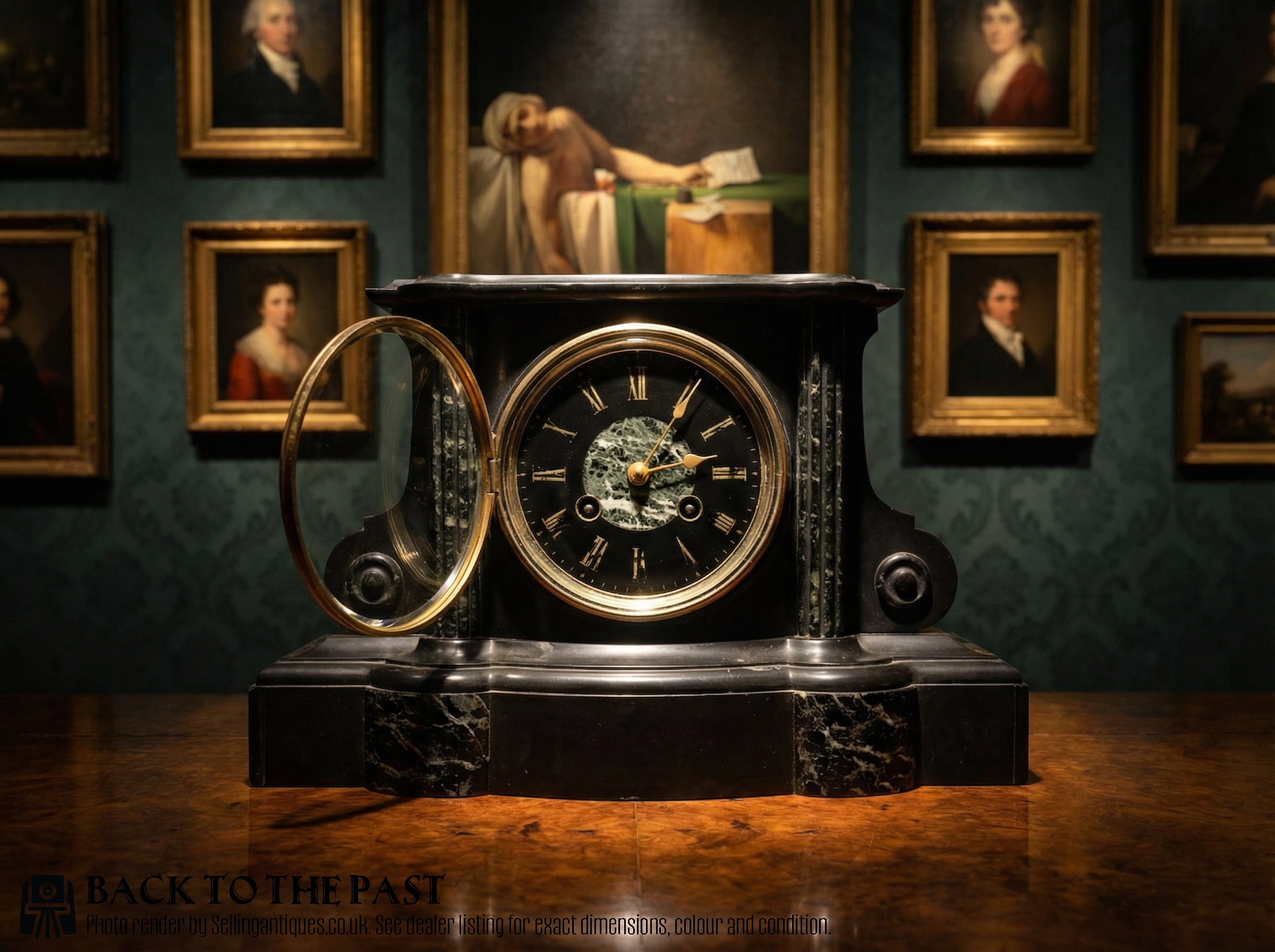
Antique Slate Mantel Clock
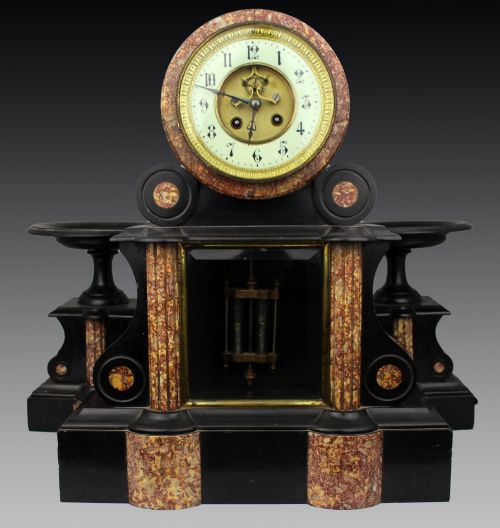
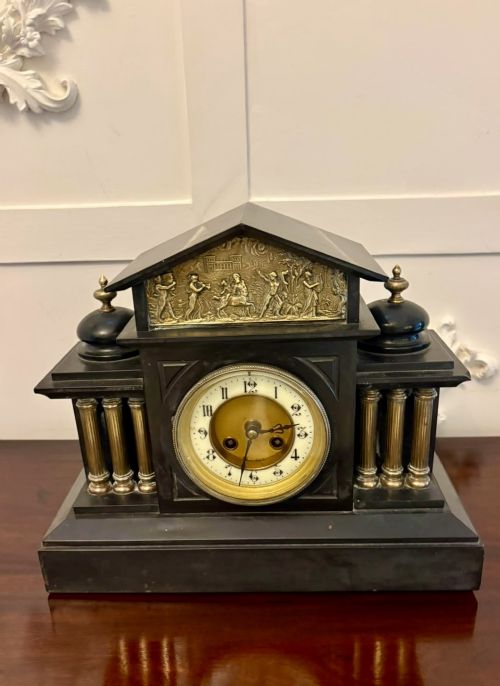
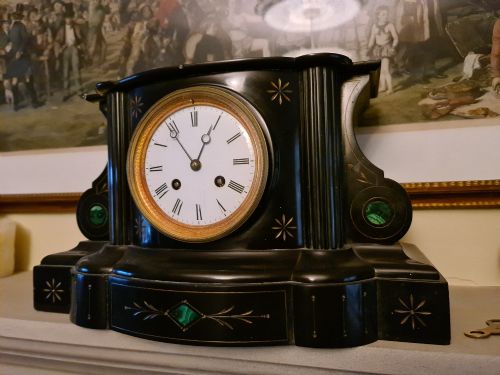
An antique slate mantel clock is a heavy timekeeping device constructed predominantly from black slate or black marble, frequently paired with contrasting coloured marble inlays, brass, and bronze. These architectural objects were designed to sit solidly upon fireplace mantels during the nineteenth century, reflecting the tastes of the Victorian era and continental European workshops.
The versions most commonly met on this page belong to the Victorian period, spanning decades from 1860 to 1890, alongside French and Belgian productions. They typically take the form of architectural structures, drumhead shapes, or complete garniture sets accompanied by matching side ornaments.
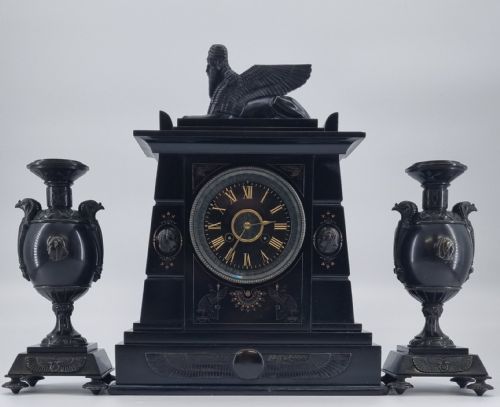
Makers drew upon diverse stylistic influences, producing pieces in the Classical Revival, Egyptian Revival, and Louis XVI styles. Buyers encounter both simple domestic timepieces and complex eight-day movements with perpetual calendars or striking mechanisms.
Materials and Construction
The primary structural material is heavy black slate or marble, shaped into robust architectural cases that mimic temple facades, architectural blocks, or drumhead profiles. Workshops utilised contrasting coloured marbles, often inlaid into the dark stone surfaces to create geometric patterns or decorative borders.
Metal components formed a vital part of the construction, incorporating gilt brass, bronze, and enamel dials. Many movements were imported from French makers such as Japy Frères or housed by prominent London and provincial retailers.
One extraordinary nineteenth-century slate clock even recorded service aboard the steamship Ethiopia.
Judging Quality and Execution
Quality in these timepieces rests upon the architectural ambition of the case and the precision of its stone-cutting and inlay work. Finer examples display meticulous marble inlay, crisp cast bronze or brass mounts, and substantial weight rather than simulated finishes.
The sophistication of the movement distinguishes high-end productions from standard domestic clocks. Eight-day movements, fusee mechanisms, perpetual calendars, and complete garniture sets elevate the status of the piece significantly.
Philippes Paris·Sacre·Baby and Jannings·D. Munsey·Achille Brocot·Barraud and Lund·Japy Frères·Vulliamy London
The Antique Slate Mantel Clock Glossary
- Garniture
- A set consisting of a central clock flanked by matching decorative ornaments such as urns or sidepieces designed to sit together on a mantelpiece.
- Fusee
- A conical pulley used in clock movements to ensure even power delivery as the mainspring unwinds.
- Drumhead clock
- A timepiece featuring a circular clock case mounted atop a rectangular or stepped stone base.
- Egyptian Revival
- A nineteenth-century decorative style incorporating motifs, hieroglyphs, and architectural forms inspired by ancient Egypt.
- Eight-day movement
- A mechanical clock movement that requires winding only once every eight days.
Antique Slate Mantel Clock: Frequently Asked Questions
How do I wind an antique slate mantel clock?
Winding typically involves inserting a key into the dial winding holes and turning it gently until resistance is felt. Care must be taken not to over-wind the mainspring.
Most nineteenth-century movements require weekly attention if they house standard eight-day mechanisms, while fusee models operate on similar winding principles.
Why are these clocks so heavy?
The substantial weight comes from the solid blocks of black slate, marble, and Belgian stone used to build the architectural cases. These dense materials provided a stable platform for heavy mechanical movements.
Because of this mass, positioning them requires a strong mantelpiece capable of supporting significant stone weight safely.
What is a clock garniture set?
A garniture set comprises a central mantel clock accompanied by two matching side pieces, often shaped as urns or architectural vases. These matched groups were designed to create a balanced decorative display across a fireplace.
They share the same slate, marble, and bronze materials as the main clock body.
How can I tell Victorian pieces from French ones?
French pieces often display maker stamps on the movement backplates, such as Japy Frères, alongside distinct continental styling like Egyptian Revival or Louis XVI motifs. English and Victorian examples frequently reflect domestic retail signatures or local architectural preferences.
Both traditions utilised heavy black slate and marble, making movement signatures and decorative details the primary clues to origin.