
Antique Six Light Pendant
An antique six light pendant brings dramatic presence to a high ceiling through disciplined brass, bronze and crystal arrangements.
Antique Six Light Pendant
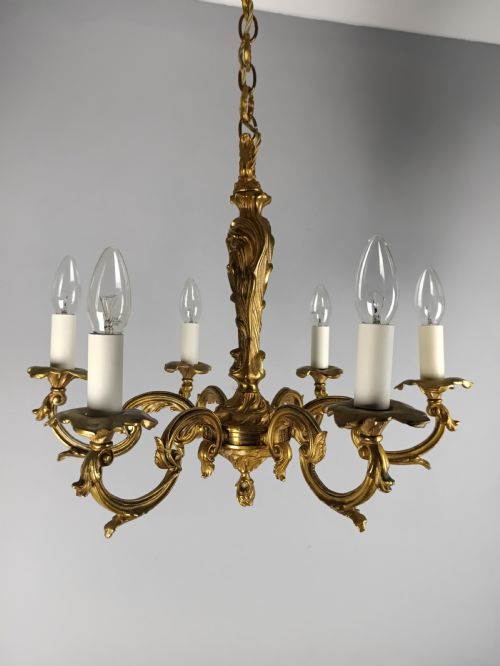
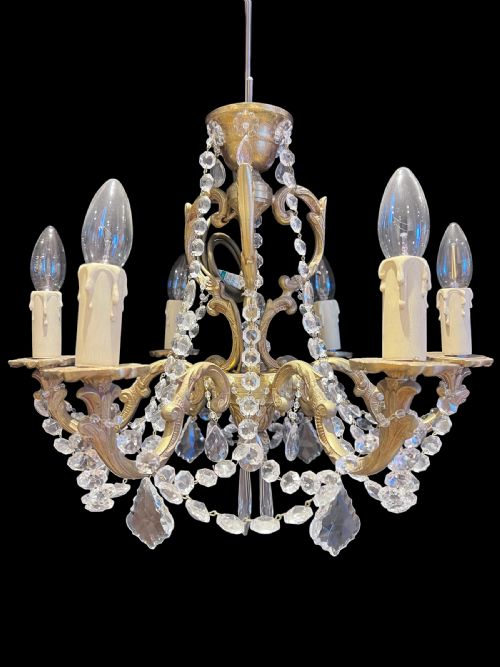
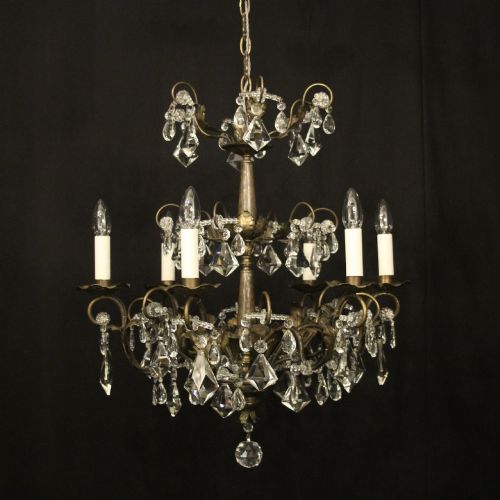
When you search for an antique six light pendant, you encounter grand ceiling fixtures and chandeliers originating primarily from French and Italian workshops across the nineteenth and early twentieth centuries. These pieces balance symmetrical illumination with ornamental metalwork, forming the visual anchor of a principal room.
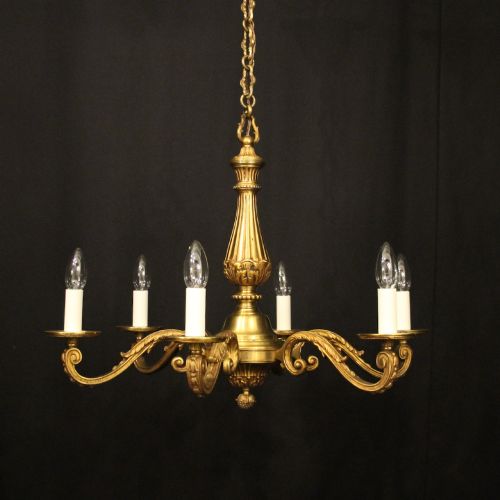
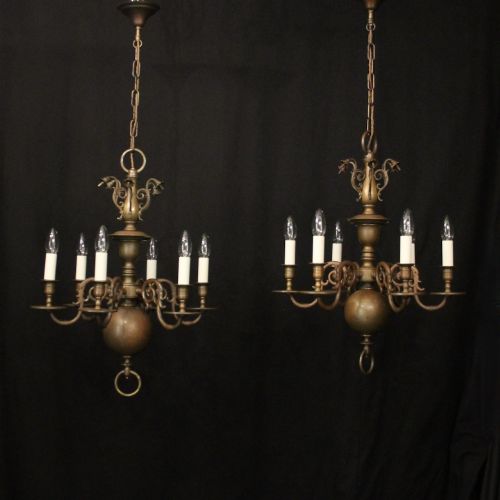
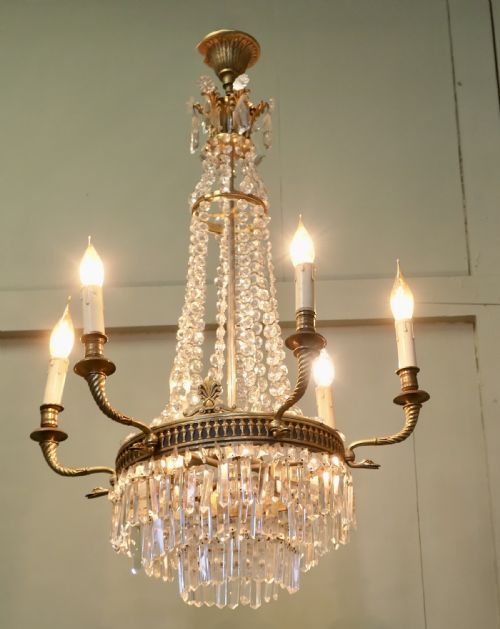
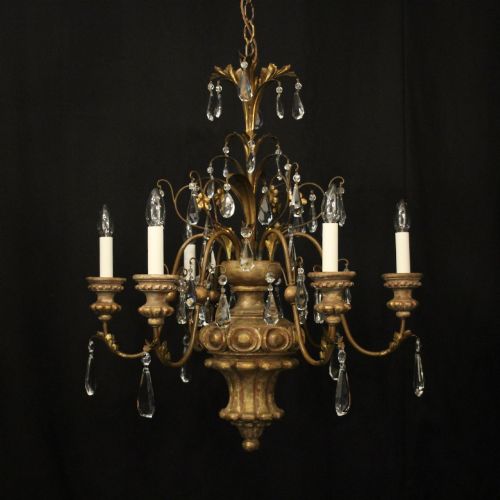
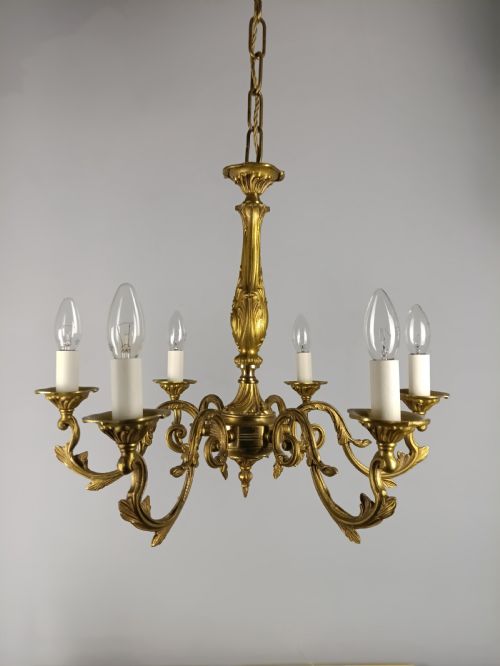
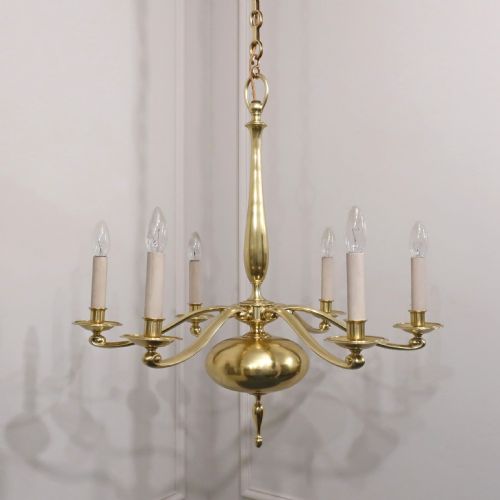
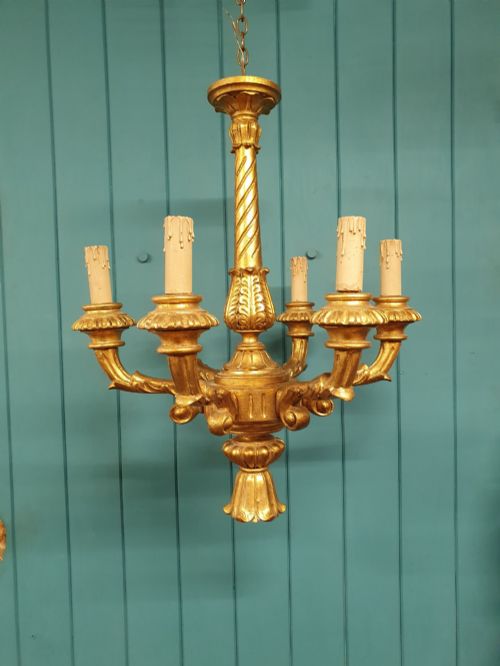
The selections span distinct regional aesthetics, from French Empire tent and waterfall configurations to ornate Italian Florentine designs and simple British brass frames. Most examples rely on six arms or branches to distribute light evenly across a space.
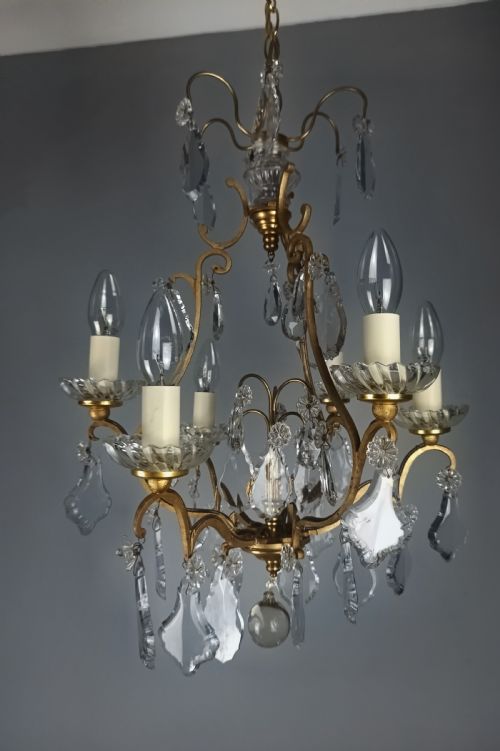
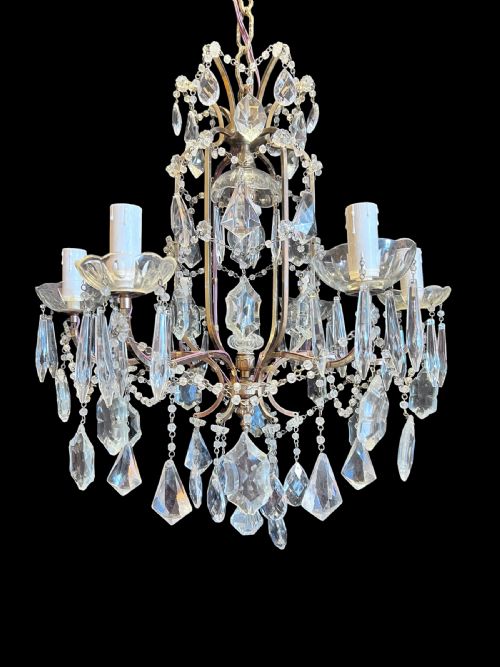
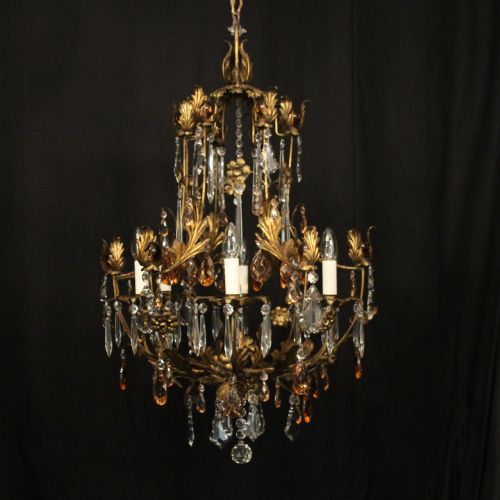
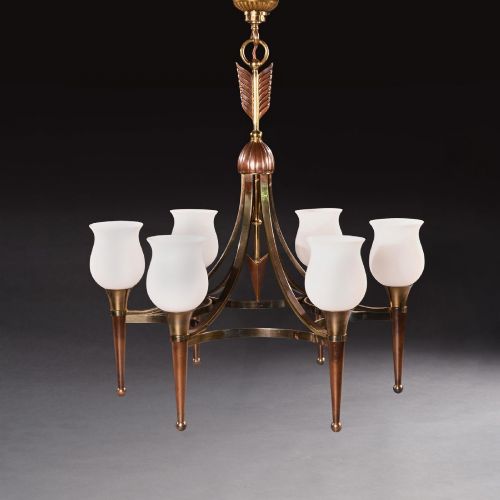
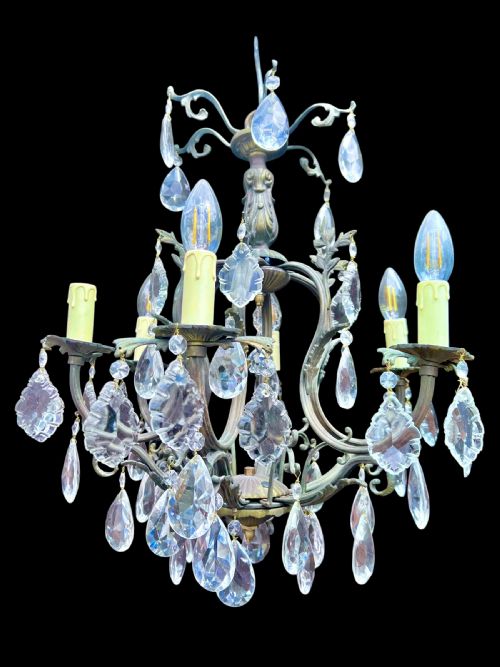
Victorian and Edwardian iterations sit alongside robust Art Deco variations, offering a continuum of metal and glass craftsmanship. Buyers find everything from restrained dark brass frames to elaborate birdcage structures heavy with crystal drops.
Materials and Construction Methods
Foundational frames rely on cast bronze, brass, wrought iron or carved giltwood, shaped into arms and central stems that support the weight of the fixture. Metal components often receive a gilded, silvered or polychrome finish to enhance their reflective quality.
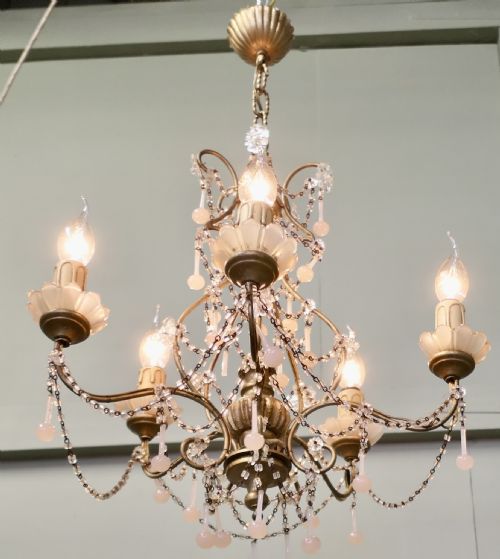
Cut glass and crystal elements, including amethyst and coloured varieties, are suspended from the metal armature using wire bindings or pinned settings. These transparent additions refract light outward from the six ignition points.
Construction techniques combine traditional foundry casting for bronze and brass components with hand-cut glass manufacturing. Skilled artisans assembled each chandelier to ensure structural balance across all six branches.
Listings feature French and Italian chandeliers spanning from the nineteenth century through the Art Deco era.
Distinctions in Quality and Execution
The refinement of the cast metalwork separates standard production pieces from exceptional creations, visible in the crispness of leaf scrolls and figurative details on bronze or brass frames. Superior examples display meticulous hand-chasing on the metal surfaces after casting.
The quality and cut of the crystal drops dictate how brilliantly the fixture refracts light, with hand-polished facets producing sharp prismatic effects absent in pressed glass alternatives. Original patination and intact mercury gilding further elevate the status of a piece.
Structural integrity of the arm junctions and the uniformity of the six branches determine the overall harmony of the design. Master workshops ensured balanced proportions that maintain grace even under heavy crystal loads.
Maison Jansen·G.E.C·Andre Arbus
The Antique Six Light Pendant Glossary
- Birdcage Chandelier
- A central framework of metal hoops resembling a birdcage, densely hung with crystal drops and swags. This specific silhouette became popular during the nineteenth century for formal reception rooms.
- Tent and Waterfall
- A lighting configuration featuring an upper tent of strung crystals dropping down into a wider cascade around the perimeter. It creates a layered, volumetric display of light.
- Gilt Bronze
- Bronze metal treated with a thin layer of gold or gold amalgam, providing a durable and luminous surface finish. It is frequently calledormolu in French decorative arts.
- Chasing
- The manual process of refining cast metal details with small punches and chisels. This technique restores crispness and texture to the surface after the casting stage.
- Polychrome
- The application of multiple colours to a surface, often seen on Italian Florentine and wrought iron frames. It introduces painted floral or tonal accents to the metalwork.
Antique Six Light Pendant: Frequently Asked Questions
How do I hang a heavy antique chandelier?
Suspension requires locating a structural ceiling joist and installing a rated steel hook capable of supporting the combined weight of the metal frame and crystals. Professional electricians should handle the load-bearing assessment and wiring.
Most fixtures connect via a matching ceiling canopy that conceals the electrical box and hanging chain. Adjusting the chain length lets you position the lowest point of the pendant at the correct height above the floor.
Can I clean crystal drops safely at home?
Crystal pendants and chains can be cleaned in place using a specialised spray solution and a soft cloth beneath to catch drips. Alternatively, removing each crystal allows for gentle washing in warm soapy water.
Avoid harsh chemical cleaners that can strip gilt finishes from the metal frame. Ensuring every crystal is completely dry before reattachment prevents water spots and corrosion on the wire mounts.
What rooms suit a six light pendant?
Six light configurations provide substantial illumination, making them well suited for dining tables, entrance halls and high-ceilinged drawing rooms. The spread of six arms fills medium to large spaces effectively.
Ceiling height dictates the appropriate drop length to maintain clearance for movement underneath. In dining spaces, hanging the fixture centrally over the table establishes a clear focal point.
How do I date a brass and crystal chandelier?
Dating relies on examining the assembly methods, wiring holes, and casting characteristics of the metal frame. Hand-cut crystals and pinned metal joints generally point to nineteenth-century manufacture.
Twentieth-century examples often incorporate standardised electrical components and machine-cut glass elements. Stylistic cues such as Art Deco geometric lines or French Empire neoclassical motifs help narrow the manufacturing decade.