




Cast Brass Ceiling Fitting
A cast brass ceiling fitting delivers period weight and structural presence to a room, anchoring the overhead space with undeniable metalwork.
Cast Brass Ceiling Fitting
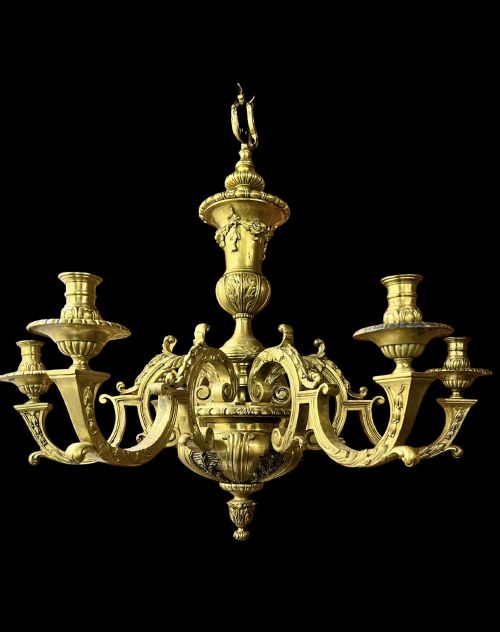
A cast brass ceiling fitting encompasses heavy lighting hardware and architectural mounts designed to suspend or anchor from overhead points. When you search for a cast brass ceiling fitting, you encounter multi-branch chandeliers and ornate ceiling roses spanning the Victorian era through to the early twentieth century.
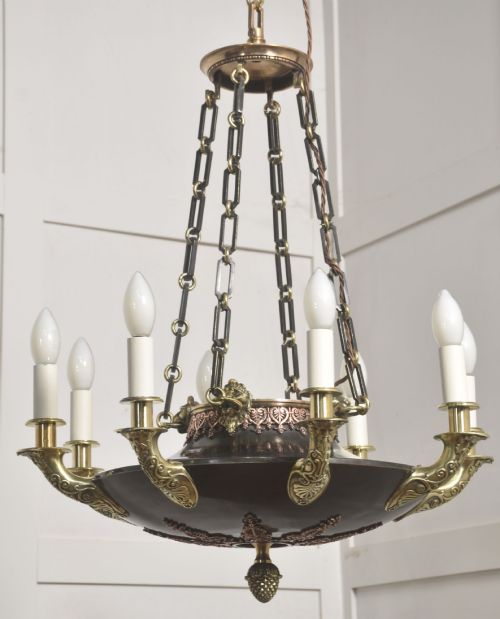
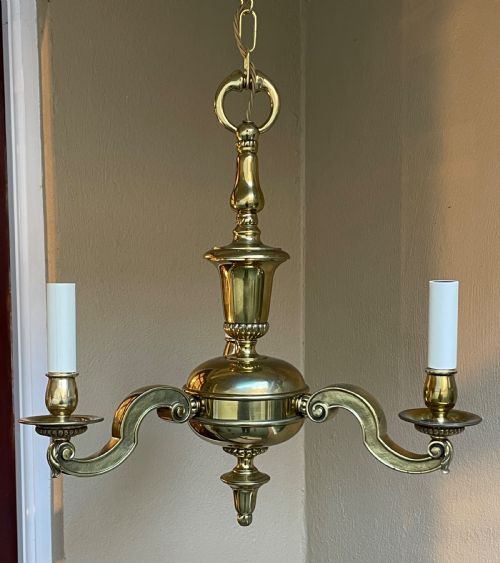
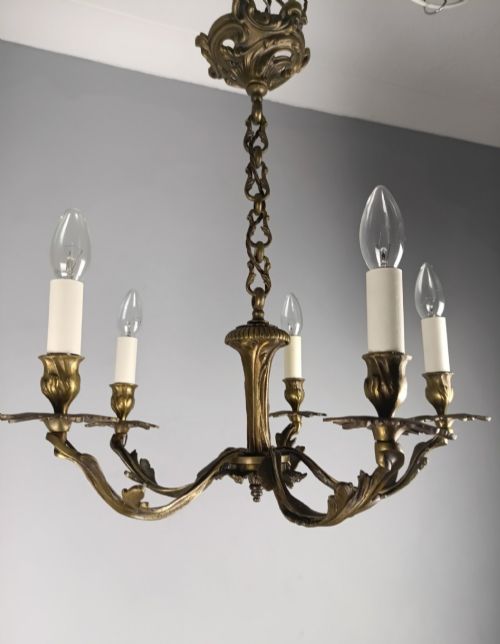
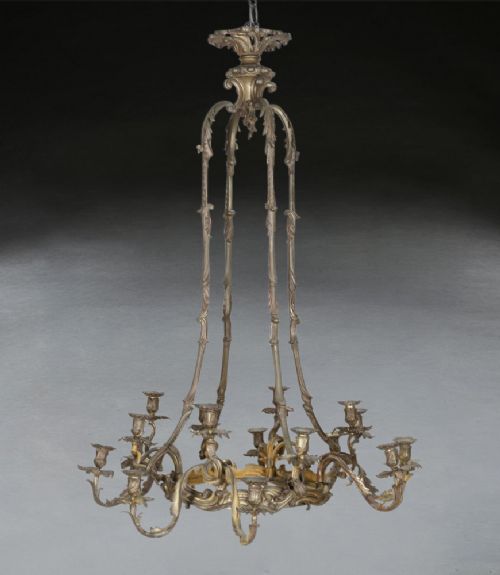
The selection here draws heavily on continental influences, particularly French Rococo, Empire Revival, and French Neoclassical styles. Chandeliers dominate the current offerings, ranging from intimate three-branch configurations up to sixteen-light showpieces, alongside detailed gilt brass ceiling roses.
How they were made
Foundries utilised traditional sand casting methods to shape thick brass, bronze, and copper into rigid structural components and decorative mounts. Artisans then worked the metal surfaces manually, applying finishes such as dark bronze patination or bright gilding.
Detailing on these fixtures often incorporates cast acanthus leaf mounts and gothic motifs, requiring skilled chasers to sharpen the definition of the metalwork after casting.
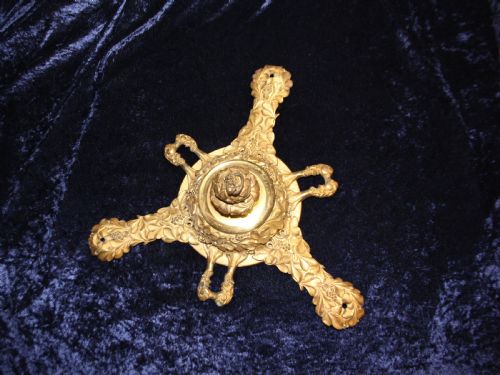
One listed ceiling rose even comes in gilt brass, proving that heavy metalwork was once considered entirely appropriate for protecting plaster.
What varies in quality
Quality rests entirely in the thickness of the metal casting and the crispness of the chased ornamentation. Superior examples display deep, three-dimensional acanthus leaves and heavy structural members rather than thin, pressed metal substitutes.
The refinement of the surface finish further distinguishes the tiers, where carefully patinated bronze or genuine gilt brass maintains its visual depth across multiple branches and heavy hanging lights.
The Cast Brass Ceiling Fitting Glossary
- Cast brass
- An alloy of copper and zinc poured into a mould to create solid, heavy decorative or structural hardware. This method allows for complex, high-relief ornamentation.
- Chandelier
- A branched ceiling-mounted lighting fixture designed to hold multiple light sources. These range from modest three-branch iterations to grand sixteen-light installations.
- Ceiling rose
- An ornamental circular moulding fixed to the ceiling from which a light fitting is suspended. Gilt brass and cast brass versions provide a metallic alternative to traditional plaster.
- Acanthus
- A classic decorative leaf motif derived from Mediterranean flora, frequently cast onto the mounts and arms of period light fittings. It adds sculptural relief to the brass surface.
Cast Brass Ceiling Fitting: Frequently Asked Questions
Can I clean nineteenth-century brass fittings?
Light dusting with a dry microfibre cloth preserves the historical patination accumulated on antique bronze and brass surfaces over decades of domestic use. Avoid aggressive chemical metal polishes that strip away the original aged appearance and dull the subtle variations in tone.
What is an Empire Revival chandelier?
Empire Revival lighting draws on the neoclassical military and classical motifs popular during the early nineteenth century and later replicated in the Victorian era. These pieces emphasise symmetry, heavy cast brass construction, and restrained architectural dignity.
They stand apart from flowing Rococo designs through their more formal geometric lines and reliance on classical architectural references.
Where did ceiling roses get used?
Ceiling roses originally functioned as decorative centerpieces on ceilings to mask suspension points and protect plasterwork from heat and soot generated by early lighting sources. Metal versions made of gilt or cast brass offered a more opulent alternative to standard plaster mouldings in formal reception rooms.