
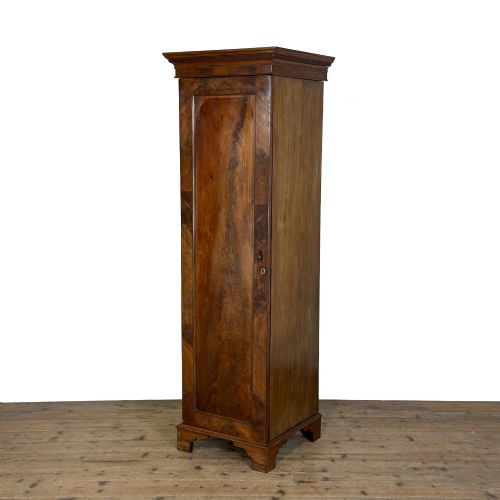
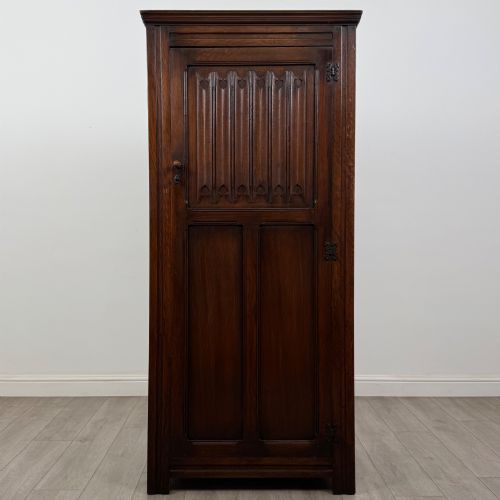
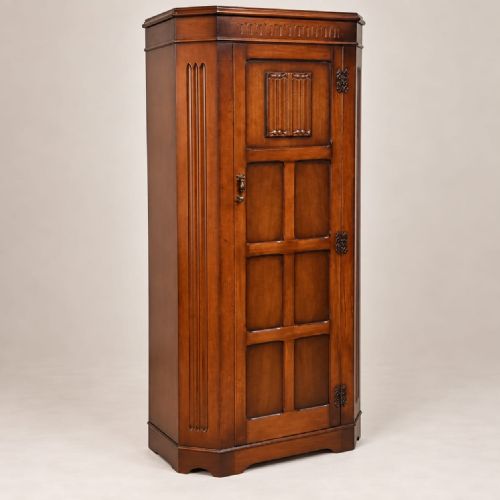
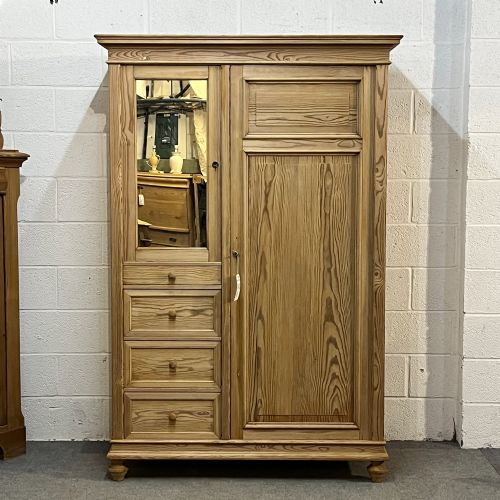
Antique Single Armoire
When you search for an antique single armoire, you are looking at tall, single-door storage pieces originating from periods spanning the Georgian era through to the 1930s.
Antique Single Armoire
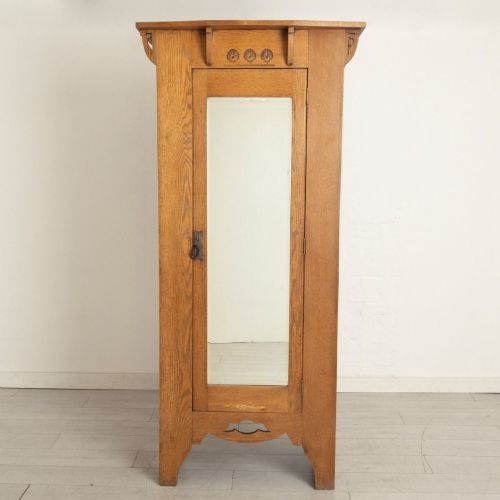
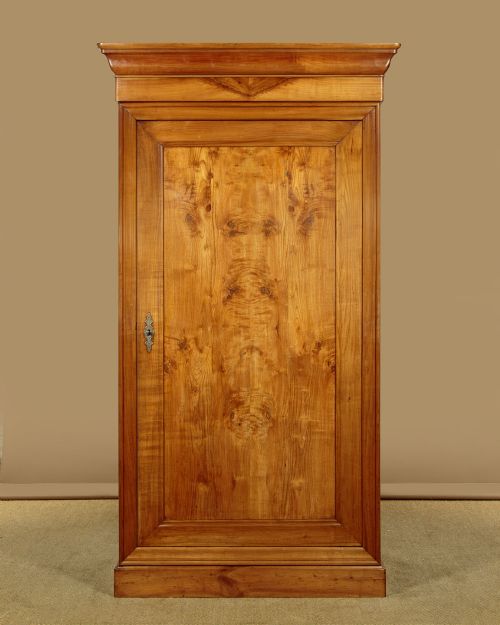
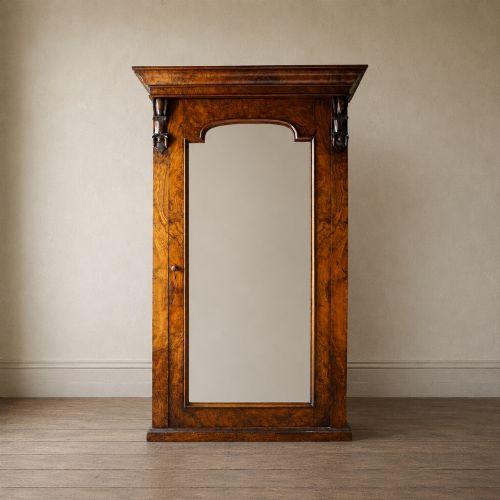
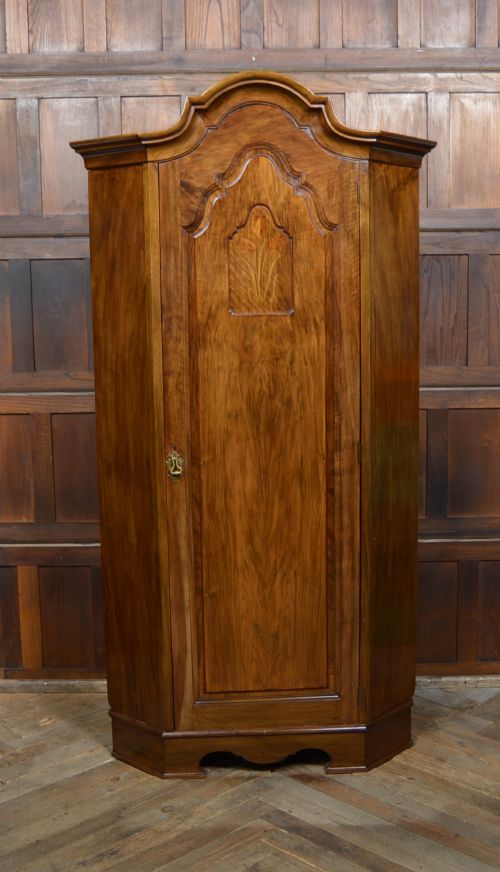
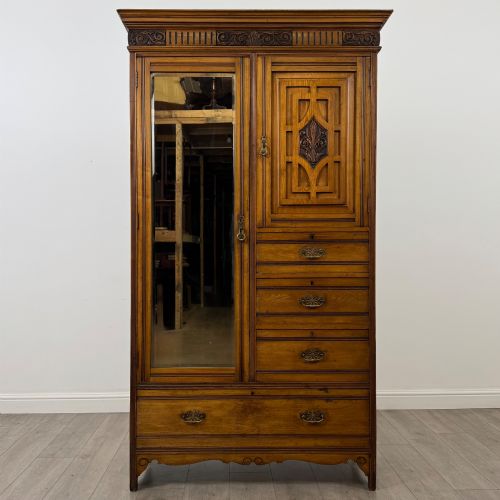
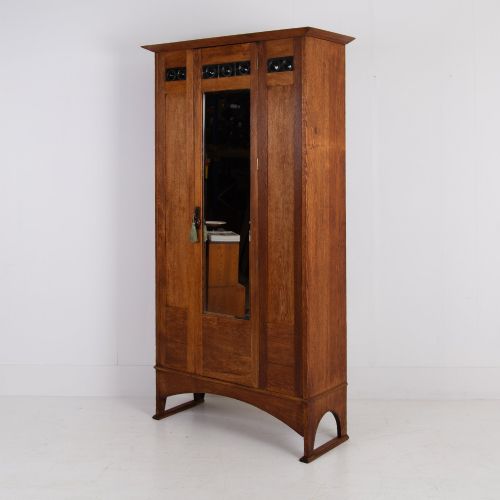
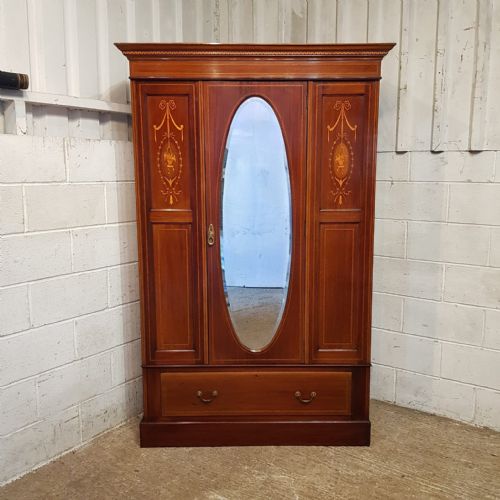
An antique single armoire serves as a compact storage solution, frequently appearing as a single-door wardrobe, hall robe, or compactum. These pieces emerge across the Georgian, Victorian, and Edwardian periods, extending into the 1920s and 1930s.
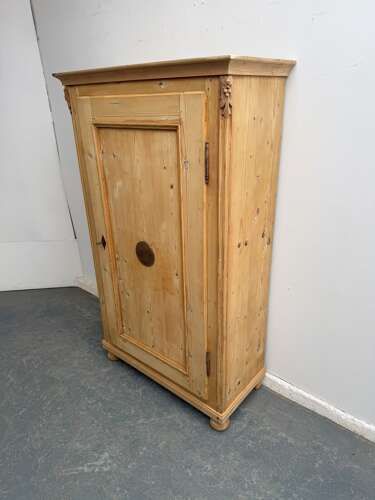
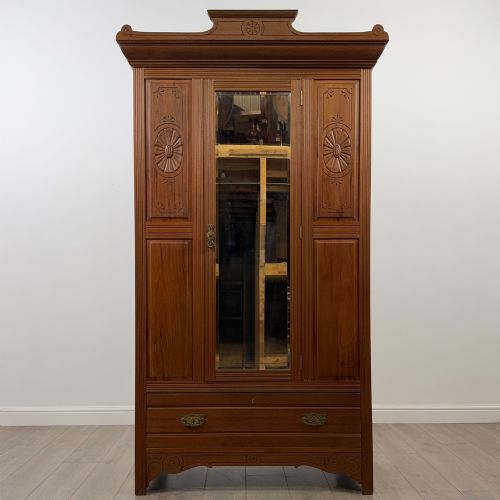
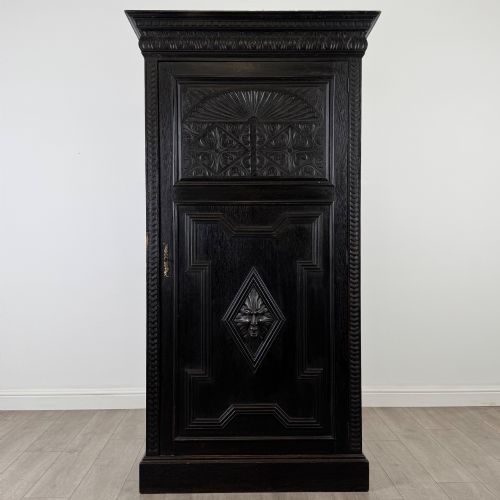
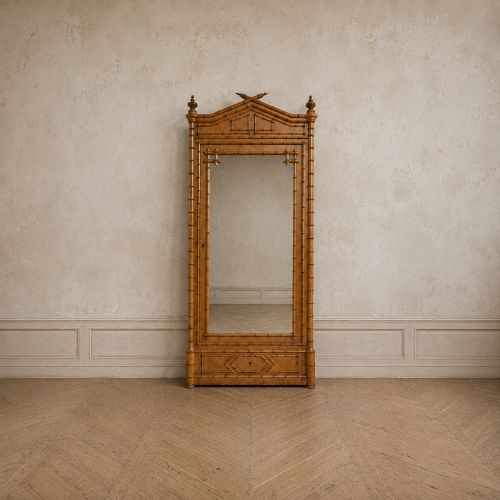
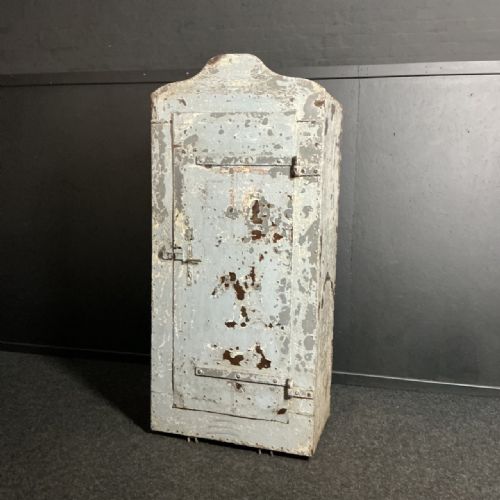
The selections on this page encompass various regional styles, ranging from British oak and mahogany hall robes to French fruitwood and walnut armoires, alongside versatile pine cupboards.
Buyers encounter forms that include mirrored doors, panelled pine construction, and specialised internal fittings designed for hanging garments or storing linen in smaller domestic spaces.
How they were made
Joiners and cabinetmakers utilised solid hardwoods such as oak, walnut, mahogany, cherry, and fruitwood, alongside native pine for utility pieces. Construction often involved pegged mortise and tenon joints, hand-cut dovetails on drawers, and panelled doors.
Surface finishes vary widely across the inventory, including polished wood grains, clear wax treatments, and polychrome painted decoration. Decorative elements frequently incorporate carved panels, brass hardware, inset glass mirrors, and occasional inlay.
Listings feature pieces spanning the Georgian, Victorian, and Edwardian periods, constructed primarily from pine, oak, mahogany, and walnut.
What varies in quality
The standard of an antique single armoire depends upon the selection of timber and the precision of the cabinetwork. Pieces built with figured walnut, finely carved mahogany, or select oak demonstrate superior workshop execution compared to simpler utility items.
Proportion and decorative restraint dictate the desirability of a piece. Armoires that retain original brass fittings, clear mirrors, uncompromised structural integrity, and well-executed surface patination represent the upper tier of the range.
The Antique Single Armoire Glossary
- Armoire
- A tall cupboard or wardrobe, traditionally used for storing clothes. French examples often feature single doors and detailed provincial carving.
- Compactum
- A multi-functional wardrobe that combines hanging space with interior drawers and shelving. This form maximises storage within a reduced footprint.
- Fielded panel
- A wooden panel with bevelled or recessed edges set within a heavier frame. This technique accommodates natural wood movement while adding depth to the door front.
- Bonnetiere
- A tall, narrow single-door cupboard originally designed for storing bonnets and headwear. These originate primarily from French provincial traditions.
- Linen fold
- A carved wood motif resembling folded linen cloth. This decorative style frequently appears on oak panels of the revival and Arts and Crafts periods.
Antique Single Armoire: Frequently Asked Questions
What is a single armoire used for?
These single-door pieces provide vertical storage for bedrooms and hallways where floor space is limited. They function as wardrobes for hanging garments or as linen presses with internal shelving.
Historically, homeowners relied on them for personal apparel before built-in closets became standard in domestic architecture.
How do I date an antique armoire?
Dating relies on examining the timber species, construction methods, and stylistic indicators such as carved motifs or hardware. Georgian and early Victorian pieces often feature hand-sawn timber and simpler internal layouts.
Later Edwardian and 1920s examples introduce machine-processed elements, mirrored doors, and distinct revival styles like Arts and Crafts.
Are antique armoires easy to dismantle?
Many larger wardrobes were designed to knock down for transport, though single armoires are often constructed as single solid units. It is essential to check whether a specific piece separates into sections before attempting movement through narrow doorways.
Those made of solid oak or pine can be particularly heavy and require careful handling during relocation.
How do I maintain a waxed pine finish?
Waxed surfaces benefit from periodic application of a quality beeswax to nourish the wood and maintain a soft sheen. Avoid placing wooden furniture in direct sunlight or near heat sources to prevent timber shrinkage.
Regular dusting with a dry cloth keeps the surface clean without damaging the historic patina.