


Antique Silvered Cigarette Box
When you search for an antique silvered cigarette box, you find practical smoking vessels and decorative containers crafted in sterling silver, wood, and enamel.
Antique Silvered Cigarette Box
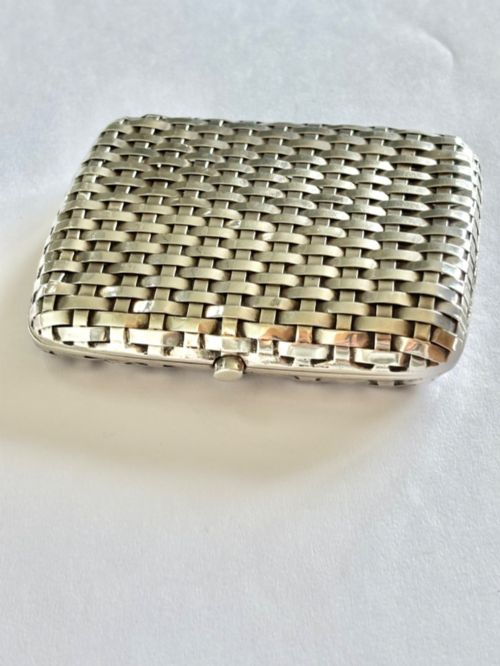
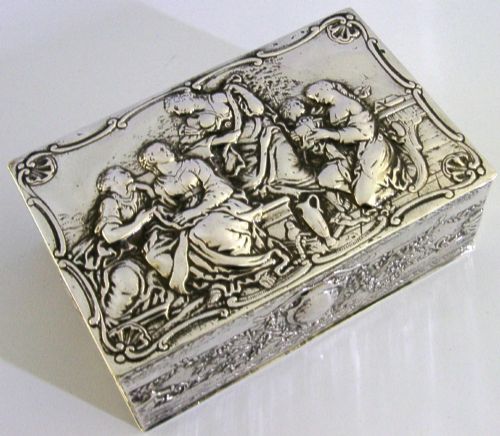
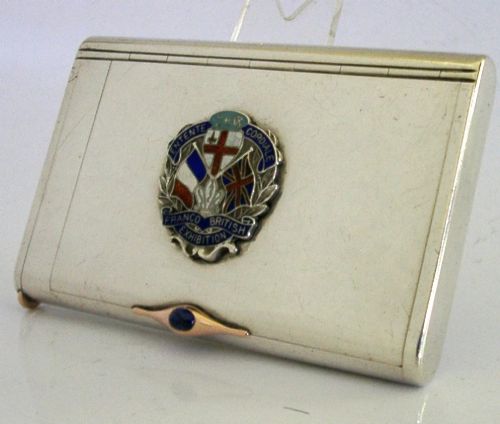
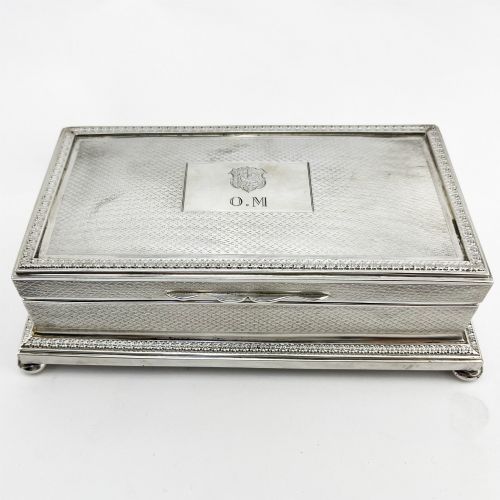
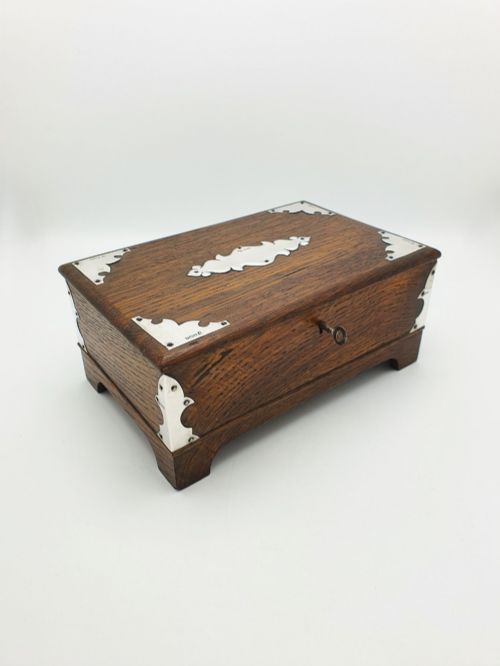
An antique silvered cigarette box encompasses table boxes, pocket cases, and wooden humidors fitted with silver mounts, spanning the Victorian period through the mid-twentieth century. The selection ranges from English sterling desk pieces to Continental enamel designs and Eastern export silver boxes.
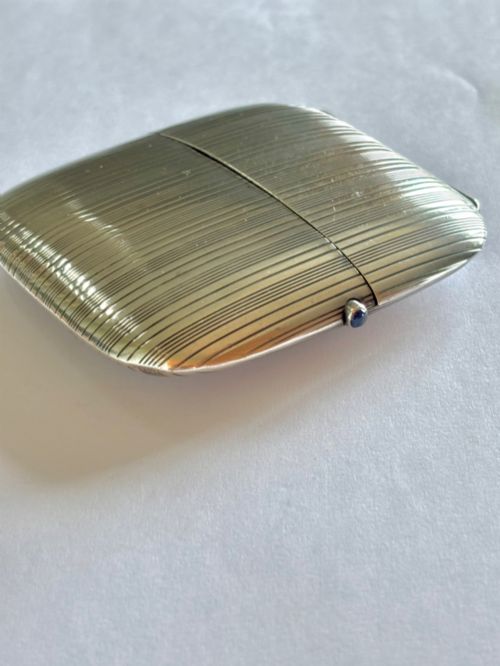
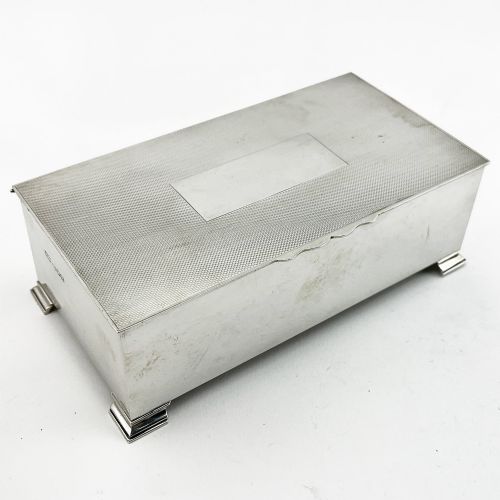
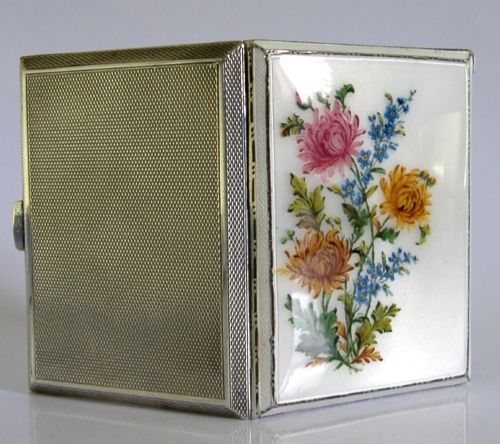
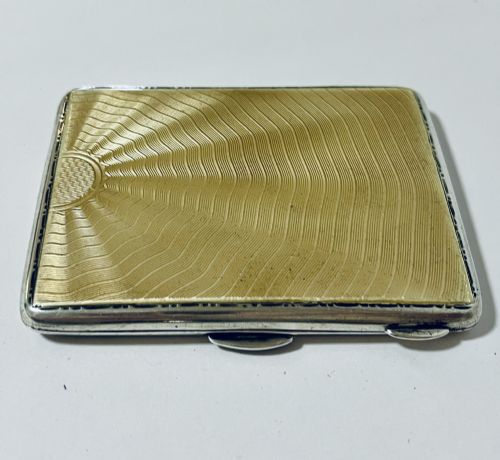
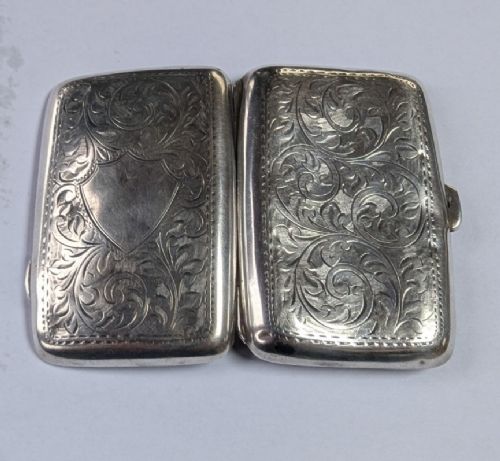
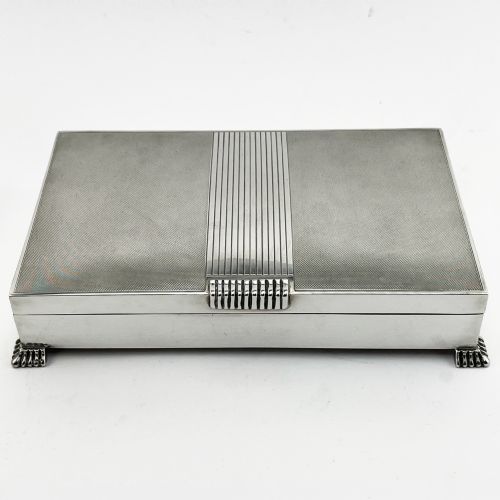
Many items survive from the Art Deco era, featuring geometric lines and engine-turned patterns, alongside Edwardian floral engraved examples and heavy Victorian table caskets. Buyers encounter both compact pocket carriers and large heavy table boxes designed for domestic use.
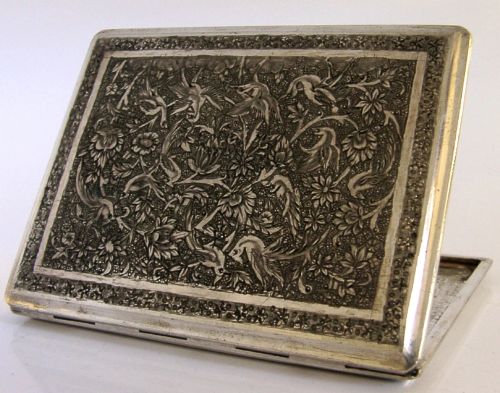
Makers from various regions contribute to the selection, including English firms, Russian workshops, and Chinese export artisans. These objects reflect the changing social habits of smoking across different decades and international markets.
Materials and Technique
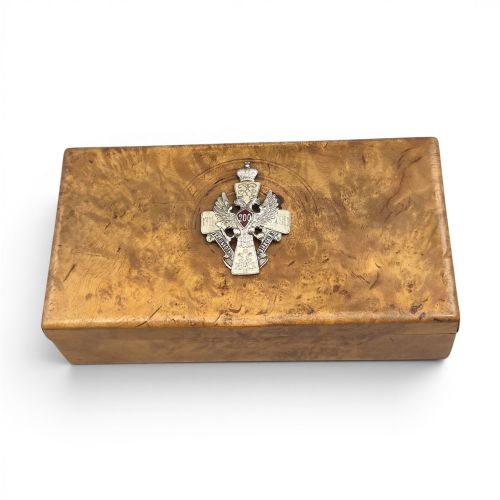
Craftsmen utilised solid sterling silver and silver plate, frequently pairing metal with organic materials such as oak, Karelian birch, and shagreen. Interiors often retain cedar wood linings designed to preserve tobacco moisture in larger table humidors.
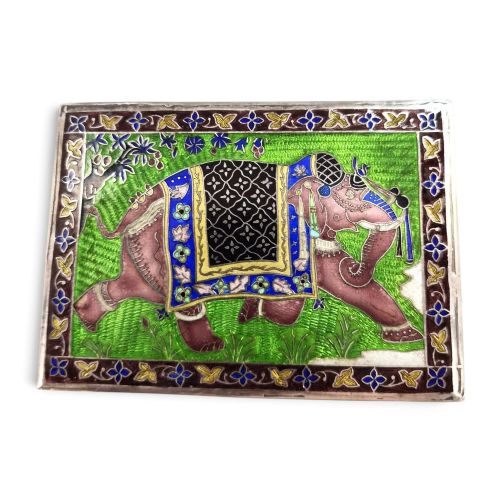
Decoration relied on specialised techniques including vitreous enamel, hand-painted floral motifs, niello work, and detailed chasing or engraving. Structural elements involved hinge construction and secure clasp mechanisms tailored for daily handling.
Listings feature materials spanning sterling silver, enamel, oak, Karelian birch, and shagreen across the Victorian and Art Deco periods.
Design and Execution
Superior examples distinguish themselves through crispness of chased detail, the weight of the metal, and the intact survival of delicate enamel work. Master silversmiths achieved precise geometric symmetry in Art Deco pieces and fluid depth in floral scrolls.
The integration of secondary materials defines the upper tier, where fitted wooden interiors, undamaged shagreen, and clear hallmarks elevate the piece. Maker attribution and unusual regional styles further separate standard production items from distinguished studio works.
Mappin & Webb·Sampson Mordan·Wang Hing & Co·Liberty & Co·A & J Zimmerman Ltd·Jane Brownett Alexander Jones·Hermes
The Antique Silvered Cigarette Box Glossary
- Sterling silver
- An alloy containing 92.5 percent silver by mass, forming the primary metal standard for British and international table boxes.
- Vitreous enamel
- Glass powder fused to metal through firing at high temperatures, creating smooth coloured decorative surfaces on cigarette cases.
- Niello
- A black metallic alloy used as an inlay on engraved metal, common in Siam and Russian pieces to highlight contrasting designs.
- Engine-turning
- A mechanical technique that etches precise geometric patterns into metal surfaces using a rose engine lathe.
- Humidor
- A moisture-controlled box designed to keep cigars and cigarettes fresh, often lined with cedar wood inside silver or wooden outer shells.
Antique Silvered Cigarette Box: Frequently Asked Questions
How do I clean an antique silver box?
Use a soft cloth specifically designed for silver to gently remove tarnish without disturbing engraved details or enamel surfaces.
Avoid liquid dips entirely, as harsh chemicals ruin wooden interiors and degrade vulnerable enamel work on vintage pieces.
Were these boxes only used for cigarettes?
While manufactured primarily for cigarettes, cigars, and cheroots, many owners repurposed them as trinket or card boxes.
Their substantial construction and lidded compartments suited the storage of small personal items on dressing tables and desks.
How can I date an English silver box?
Look for the assay office hallmarks stamped into the metal, which include date letters corresponding to specific years of manufacture.
Stylistic indicators such as Art Deco geometry or Edwardian floral scrolls also help narrow down the period of production.
Why do some boxes have wooden linings?
Wood linings, particularly cedar, helped regulate humidity to keep tobacco products fresh before the widespread use of cellophane packaging.
Table humidors and cigar boxes utilised these organic interiors to protect the contents from drying out.