


Antique Silver Tea Piece
An antique silver tea piece brings the weight and craft of past drawing rooms directly to the modern table.
Antique Silver Tea Piece
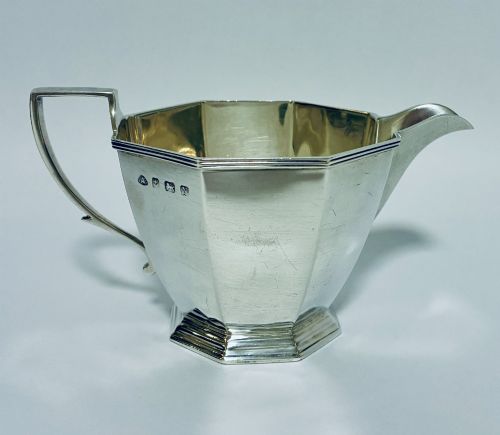
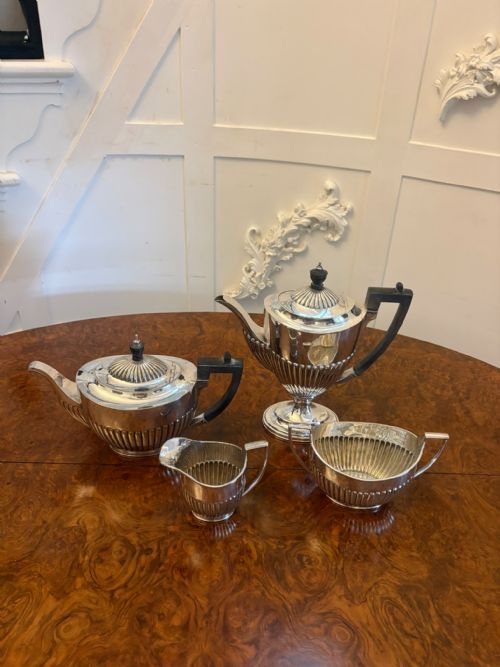
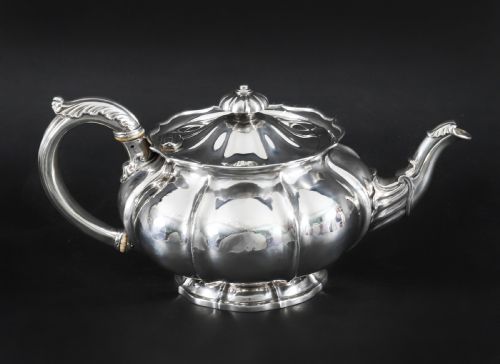
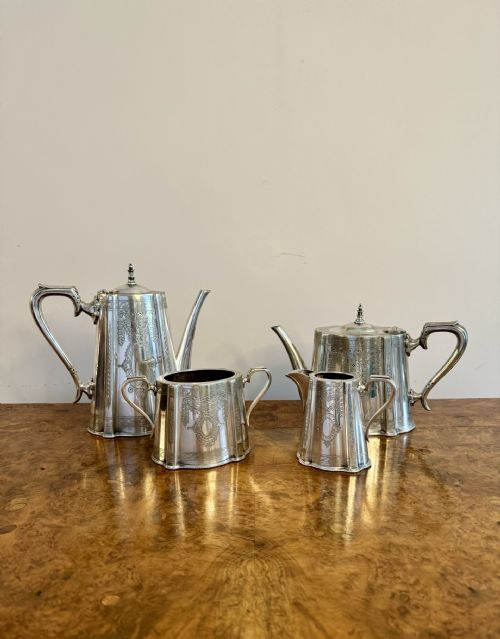
An antique silver tea piece encompasses everything from a solitary milk jug or caddy spoon to a sprawling five-piece service complete with a matching kettle and tray. When exploring this category, a buyer encounters individual vessels and coordinated sets spanning the Georgian, Victorian, and Edwardian eras, alongside later Art Deco designs.
Materials and Construction
Silversmiths formed these vessels from sterling silver or applied silver plate over base metals like electroplated nickel silver, incorporating insulating handles of ebonised wood, bone, or ivory. The heavy services often relied on hammering, casting, and spinning to shape the main bodies of teapots and coffee pots.
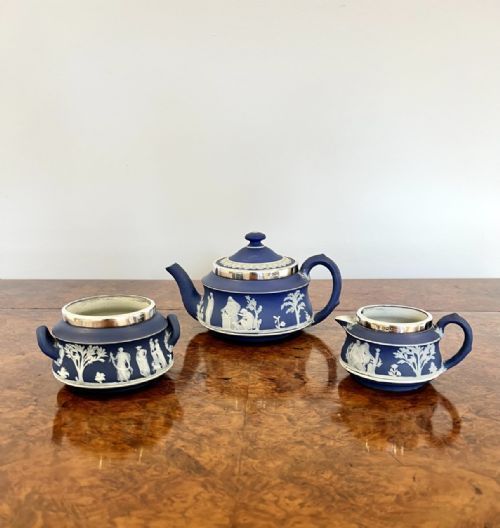
Decorative surface techniques included hand-chasing, repoussé work, and applied cast borders featuring grapevine or rococo motifs. Makers also integrated ceramic elements, as seen in pieces combining silver mounts with Jasperware.
Materials appearing across the archive include bone, ebony, mother-of-pearl, and Jasperware alongside traditional silver and wood.
Markers of Quality
The standard of an antique silver tea piece rests upon the crispness of its chased detail, the structural integrity of its hinged lids, and the balance of its handles. Superior examples maintain thick walls that resist dents and feature well-fitted insulators that prevent heat transfer.
Complete, matching services housed in their original fitted cases represent the upper tier of the discipline. Maker attribution also plays a role, with established silversmiths commanding attention for heavier gauges of metal and superior proportion.
Paul Storr·Walker and Hall·Robert Pringle and Sons·Joseph Craddock·George Unite·Charles Stuart Harris·Elkington and Company·Barnard and Sons·Atkin Brothers
The Antique Silver Tea Piece Glossary
- Sterling silver
- A silver alloy containing 92.5 percent pure silver and 7.5 percent other metals, usually copper, ensuring durability for functional vessels.
- Silver plate
- A layer of silver bonded to a base metal core, widely utilised for large tea services produced from the Victorian period onwards.
- Repoussé
- A metalworking technique where the silversmith hammers the design from the reverse side to form raised ornamentation on the surface.
- Caddy spoon
- A small specialised spoon designed for measuring loose tea leaves from a caddy into the pot.
- Bachelor tea set
- A scaled-down service intended for one or two drinkers, typically comprising a small teapot, creamer, and sugar basin.
Antique Silver Tea Piece: Frequently Asked Questions
How many pieces make a full tea set?
A standard antique tea set typically comprises a teapot, a milk or cream jug, and a sugar basin. Larger services often expand to four or five pieces by adding a dedicated coffee pot and matching waste bowl.
Matching trays also accompany some services, though many sets were sold originally without them. Collectors frequently assemble services piece by piece when matching sets are incomplete.
How do I care for antique silver?
Regular, gentle dusting and occasional washing in warm soapy water keep silver tea pieces in stable condition. Avoid harsh abrasive cleaners that wear away thin silver plate or soften hand-chased details.
Store pieces in dry environments away from direct sunlight and high humidity. Using specialised tarnish-preventing cloths helps maintain the finish without excessive polishing.
Can I still use these for daily tea?
Many solid silver and silver-plated tea pieces remain fully functional for serving hot beverages. Checking the interior for cleanliness and ensuring the insulating handle joints are secure is essential before use.
Users should avoid boiling water poured directly into unheated fragile pots to prevent thermal shock. Hand washing is mandatory, as dishwashers damage antique metals and organic handle materials.