
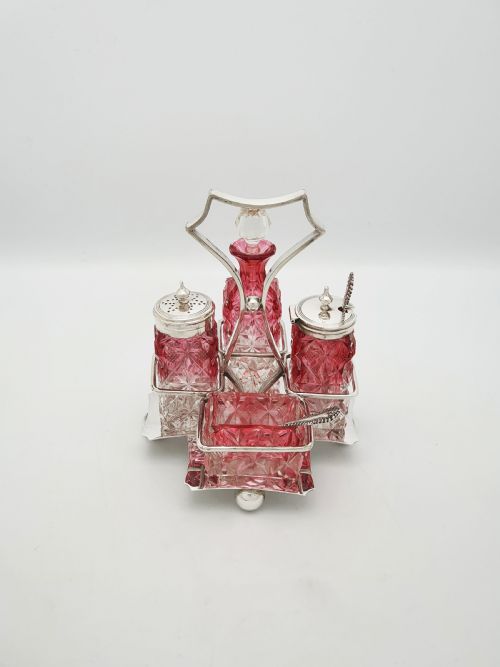


Antique Silver Table Condiment Stand
An antique silver table condiment stand holds the mustard, pepper and oil on the dining table with orderly grace.
Antique Silver Table Condiment Stand
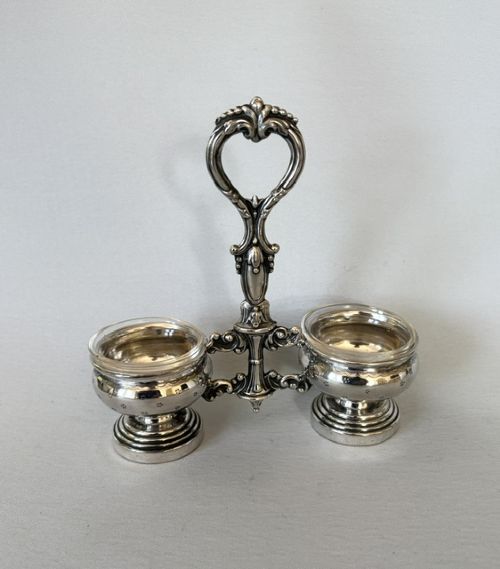
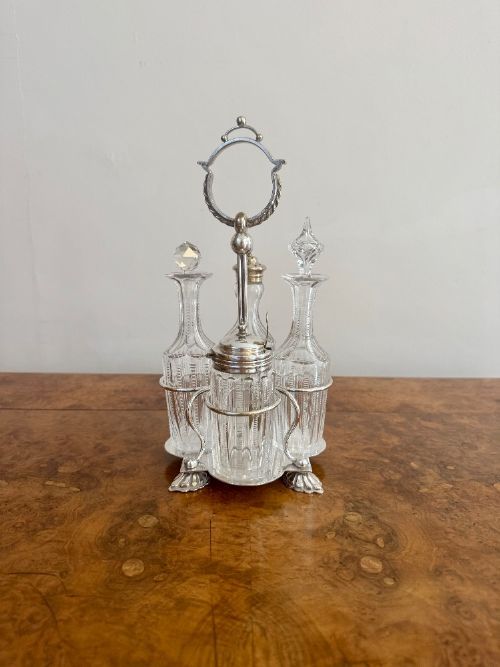
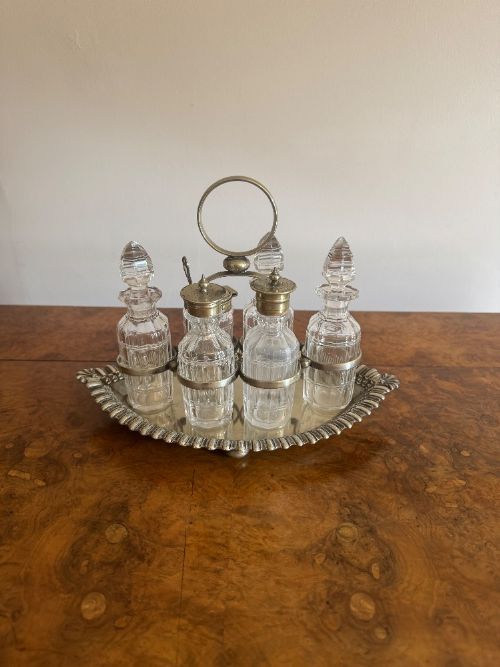
An antique silver table condiment stand organises sauces, seasonings and oils for formal dining. You will most frequently meet Edwardian silver plated frames holding multiple cut glass bottles, alongside earlier Georgian silver stands and Victorian novelty designs.
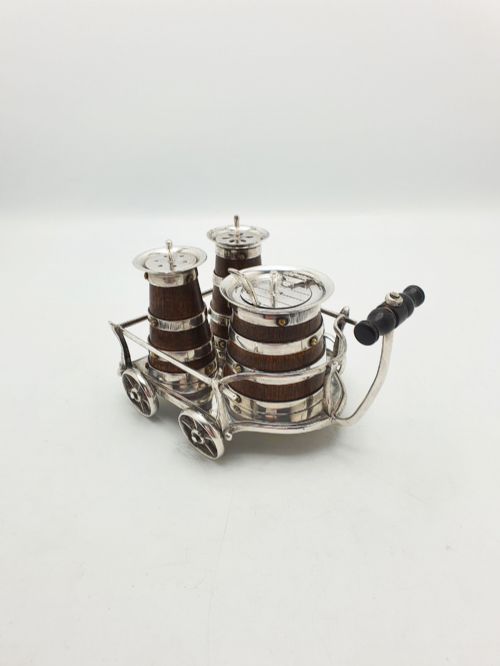
The form developed to serve multiple bottles or casters within a single handled frame, allowing servants or diners to pass them around the table. Frames range from simple silver plate holders to elaborate revolving caddies and oak barrels.
Examples span from eighteenth century Georgian frames to early twentieth century Art Deco sets. They bring traditional dining room organisation into domestic use today.
Materials and technique
Silversmiths and manufacturers formed the primary frames from sterling silver or silver plate over a base metal, utilising casting and wirework techniques. Many frames combine wood elements such as oak or walnut with metal mounts and carrying handles.
The fitted bottles and cruets utilise heavy cut glass, occasionally flashed with cranberry colour or mounted with matching silver collars and pierced caps.
Some Victorian diners seasoned their meals from miniature farmyards and horse-drawn carriages.
What varies in quality
Quality rests upon the crispness of the cast mounts, the weight of the silver or plating, and whether the set retains its original matching bottles. Sets with complete, undamaged cut glass inserts and fully legible hallmarks or maker marks command greater regard.
The complexity of the frame design also separates standard tableware from superior pieces, particularly where novelty elements like carriages, farmyards or walnut sauce holders are executed with fine detail.
Mappin Brothers·Hester Bateman·Mappin & Webb·Wade Wingfield Wilkins·Viners Sheffield·William Hutton And Sons
The Antique Silver Table Condiment Stand Glossary
- Cruet set
- A collection of glass bottles or ceramic jars for holding vinegar, oil, mustard and other seasonings, fitted into a standing frame. These sets formed an essential centrepiece of the formal dining table.
- Caster
- A small jar with a pierced top used for shaking dry seasonings like sugar or pepper over food. They frequently accompany larger bottles within the main stand.
- Silver plate
- A layer of pure silver fused to a base metal core such as copper or Britannia metal, widely utilised for Victorian and Edwardian stands. This technique allowed makers to produce elaborate frames at a lower cost than solid sterling silver.
- Cut glass
- Glassware shaped and patterned through wheel cutting to create faceted designs that catch the light. The bottles and cruets within condiment stands often feature deep geometric cuts.
- Novelty cruet
- A condiment stand shaped to resemble an everyday object, animal or scene, such as a farmyard, a carriage or a butler's tray. These whimsical Victorian and Edwardian pieces combined practicality with amusing table conversation.
Antique Silver Table Condiment Stand: Frequently Asked Questions
What is an antique silver table condiment stand?
An antique silver table condiment stand is a fitted metal frame designed to hold glass bottles, jars and casters containing seasonings, oils and sauces for the dining table.
These pieces typically feature a central carrying handle and rests for multiple vessels, keeping table condiments organised and easy to pass during meals.
How were condiment stands used at the table?
Diners used them to keep essential liquids and powders within reach during multi-course meals, allowing guests to season food to taste.
Servants would place the stand centrally or pass the frame around the table so guests could access the mustard, pepper, oil and vinegar bottles.
How do I date an antique condiment stand?
Dating relies on identifying silver hallmarks, manufacturer marks, style periods and material combinations like oak or cranberry glass.
Georgian stands often show neoclassical lines and Warwick frames, whereas Victorian and Edwardian pieces frequently employ heavy silver plating, elaborate wirework or novelty forms.
How do I live with a condiment stand today?
They serve as decorative centrepieces on sideboards, dining tables or open shelving, where their cut glass and silver frames catch the light.
You can also utilise the individual bottles for small flower stems, herbs or everyday dining oils.