


Cut Glass Silver Condiment Stand
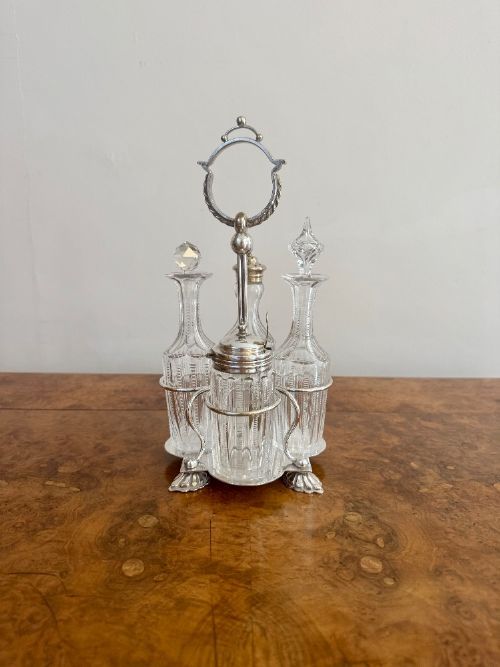
These cut glass silver condiment stand pieces bring period dining tables to life, offering a practical centrepiece that collectors prize for their intricate bottle work.
Cut Glass Silver Condiment Stand
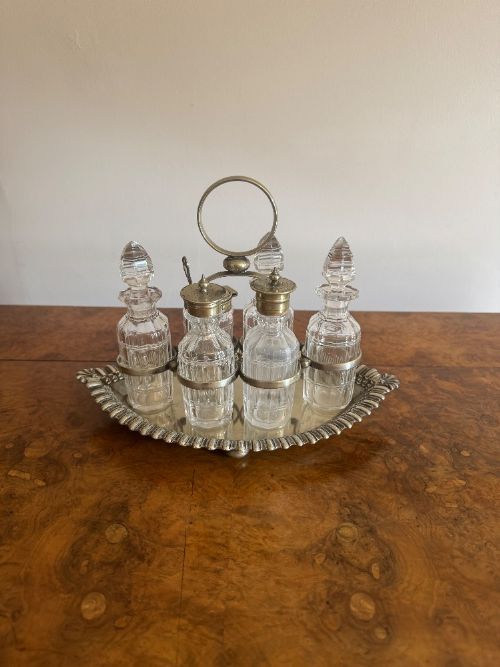
A cut glass silver condiment stand serves as a tabletop frame holding bottles and jars for oils, vinegars, and sauces during formal dining. When you search for a cut glass silver condiment stand, you encounter multi-bottle frames designed to organise dining accompaniments with elegance.
The Edwardian and Victorian versions dominate the available selections, frequently taking the form of silver-plated frames fitted with six or seven glass bottles. Georgian iterations also appear, showing simpler lines and solid silver construction alongside older Sheffield plate examples.
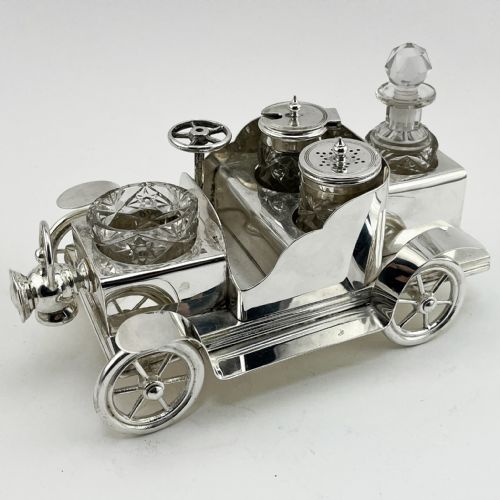
Beyond standard multi-bottle frames, variations include bachelor sets, relish caddies, jam pots, and novelty items shaped like vintage cars or carriages. These smaller iterations served specialised table duties while retaining the characteristic combination of heavy glass and metal stands.
How they were made
Makers shaped the stands using sterling silver, Old Sheffield plate, or silver plate over a base metal, frequently employing casting and piercing techniques to create openwork frames. Glass bottles were mouth-blown and wheel-cut to produce deep geometric patterns that caught the candle or gas light.
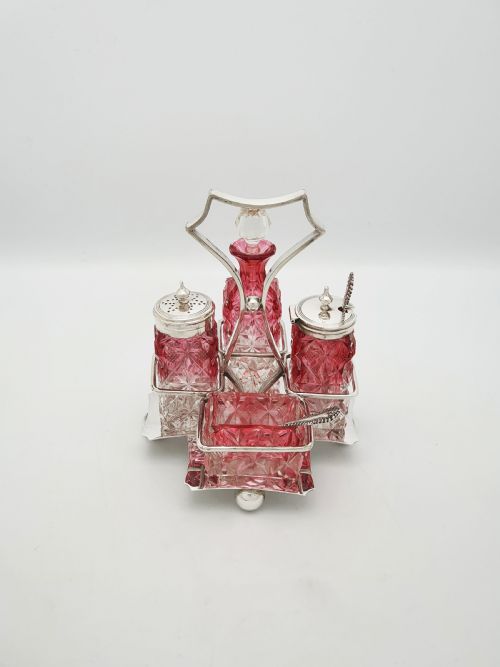
Coloured glass variants, such as cranberry flashed pieces, involved fusing layers of glass before cutting through the outer stratum to expose the contrasting tone beneath. Mounts, handles, and collars were then secured to the glass components using cork or specialised adhesives.
Listings feature pieces spanning the Georgian, Victorian, and Edwardian eras, utilising cut glass, sterling silver, silver plate, and cranberry glass.
What varies in quality
The distinction between ordinary and superior pieces rests on the weight of the metalwork, the depth of the glass cutting, and whether the set retains its original matching bottles. Heavier silver plating and crisp, sharp facets on the cut glass indicate a higher standard of manufacture.
Sets that include complete, undamaged bottle complements with matching stoppers command greater regard than those assembled from mismatched replacements over time. The presence of clear hallmarks or maker stamps adds documentary weight to the physical execution of the stand.
Mappin Brothers·Walker And Hall·Charles Thomas Fox·Elkington And Co·Hester Bateman·Wade Wingfield Wilkins·William Hutton And Sons
The Cut Glass Silver Condiment Stand Glossary
- Cruet set
- A collection of glass bottles or cruets mounted on a stand, intended for holding condiments at the dining table. These frames often include handles for passing around the board.
- Sheffield plate
- A composite material made by fusing a thin sheet of sterling silver to a thicker copper base. This technique preceded modern electroplating.
- Cranberry glass
- A rich red glass produced by adding gold chloride to the molten batch. It is frequently seen in Victorian tableware and flashed glass items.
- Bachelor set
- A smaller scale cruet or condiment arrangement designed for single diners or small households. They typically feature fewer bottles than standard dining table sets.
- Caster
- A small container with a perforated top used for sprinkling sugar or dry spices. Casters often form part of larger Georgian and Victorian frame sets.
Cut Glass Silver Condiment Stand: Frequently Asked Questions
How were condiment stands used at the table?
These stands sat at the centre of the dining table during meals, holding essential liquids and seasonings for guests to serve themselves. Servants also used the central handle to pass the entire collection between diners.
As dining habits changed towards the end of the nineteenth century, smaller bachelor sets emerged for intimate meals or breakfast service, keeping fewer bottles close at hand.
How do I clean the cut glass and silver?
Wash the glass bottles in warm soapy water using a soft brush to clear residue from the cut facets, avoiding harsh abrasives that scratch the surface. Dry them thoroughly before placing them back into the frame.
Clean the silver or silver-plated stand with a gentle proprietary polish and a soft cloth, taking care not to let polish residue gather in openwork crevices or touch the glass mounts.
Are all the bottles in a set original?
Many surviving sets contain replacement bottles gathered over decades of use, because individual glass pieces frequently suffered chips or breaks. Inspecting the glass colour, weight, and cut patterns helps determine if the bottles share a common origin.
Matched sets show consistent wear patterns across the base of the frame and the bottoms of the glass inserts, whereas assembled sets often display slight variations in tint or fit.
How do I tell Victorian sets from Edwardian ones?
Victorian stands tend to feature heavier, more ornate decoration with elaborate floral engraving, figural bases, or Gothic revival motifs. The metalwork feels substantial and often displays deep casting relief.
Edwardian examples generally lean towards lighter constructions, cleaner Edwardian styling, and simpler geometric piercing inspired by earlier Georgian designs, reflecting changing domestic fashions.