




Antique Silver Serviette Bands
Antique silver serviette bands bring formal dining history to the table, offering tactile silver rings that organise cloth napkins with enduring domestic charm.
Antique Silver Serviette Bands
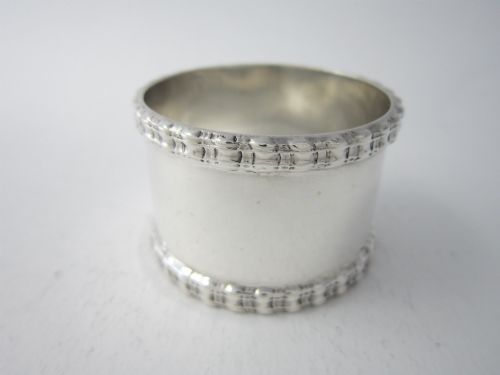
These antique silver serviette bands are solid circular domestic accessories designed for holding individual table napkins during formal meals. Most examples seen here date from the Victorian, Edwardian, and George V periods, reflecting the height of elaborate dining traditions.
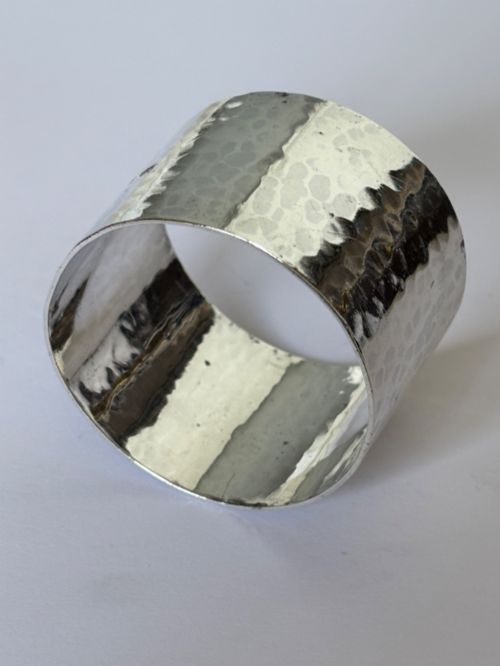
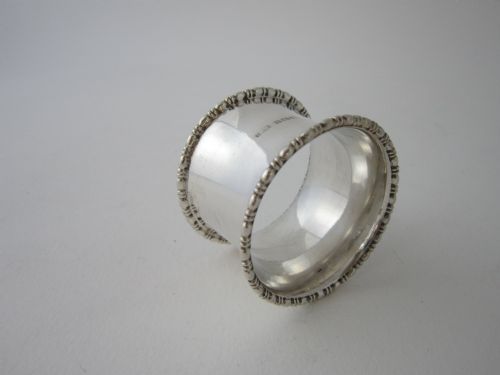
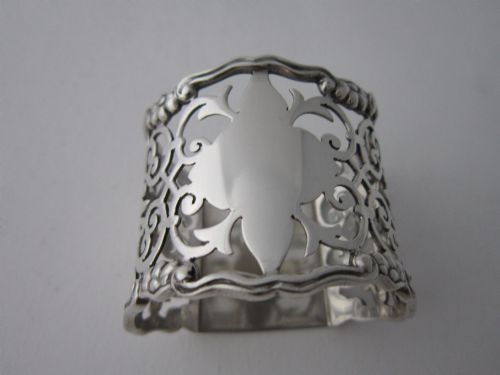
The objects take the form of plain, hammered, or belt-shaped rings, occasionally appearing as matched pairs or complete sets of six. Buyers frequently encounter sterling silver pieces alongside silver-plated, pewter, and continental 800 silver variants.
Makers ranged from large Birmingham workshops to renowned houses such as Liberty & Co, incorporating decorative elements like enamel and fitted leatherette cases. Each piece serves as a direct link to early twentieth-century and late nineteenth-century household rituals.
Materials and construction methods
Makers shaped sterling silver, pewter, and silver plate into tight cylinders through sheet-metal working and soldering, often applying hand-hammered textures across the outer surface. Specific examples feature applied enamel panels or integrated belt motifs that mimic leatherwork in solid metal.
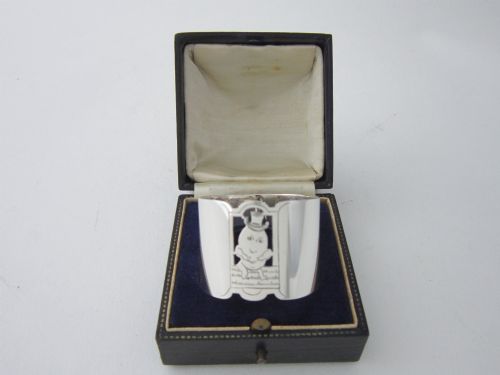
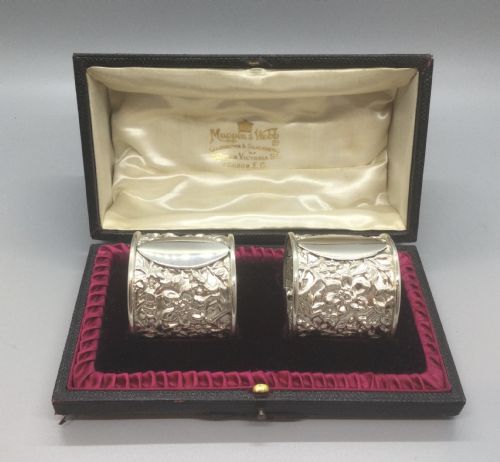
Continental pieces utilise 800 silver standards alongside detailed figural reliefs, whilst fitted presentation boxes employ materials like silk and velvet interiors paired with leatherette outer shells to protect the metal.
Listings feature sterling silver, silver plate, pewter, and continental 800 silver, spanning Victorian, Edwardian, and George V periods.
Assessing quality and craftsmanship
Quality rests primarily on the gauge of the metal, where heavier sterling silver rings maintain their structural integrity and crisp hallmarks far better than thin plated alternatives. The presence of distinguished workshop marks, such as those from Liberty & Co or named silversmiths, elevates the standing of an individual band.
Artistic execution also separates standard production items from superior works, particularly when hand-hammered texturing or vitreous enamel decoration is applied with precision and care.
Albert Edward Jones·Liberty & Co
The Antique Silver Serviette Bands Glossary
- Hallmark
- An official stamp applied to precious metals indicating the assay office, metal purity, and date letter. These marks allow collectors to date silver serviette bands precisely.
- Sterling silver
- A silver alloy containing 92.5 percent pure silver by mass, with the remainder consisting of other metals like copper. This standard represents the predominant material for British dining accessories.
- Silver plate
- A base metal object coated with a thin layer of silver through electroplating or older fusion methods. Sets of plated rings offered an accessible alternative to solid silver.
- Enamel
- A decorative glassy substance fused to metal through high-temperature firing. Coloured enamel accents add vibrant contrast to the polished silver surfaces.
- Pewter
- A malleable metal alloy composed mainly of tin with copper and antimony. Pewter serviette bands present a duller, tactile grey finish compared to bright silver.
Antique Silver Serviette Bands: Frequently Asked Questions
How do I know my serviette band is sterling silver?
Look closely for stamped hallmarks on the outer or inner rim of the metal band. British sterling pieces typically display a walking lion symbol alongside assay office marks and date letters.
Items lacking these official stamps may be silver-plated, pewter, or continental silver such as German 800 standard pieces. Comparing the weight and examining the wear patterns also helps determine the base material.
Why are some serviette bands sold in pairs?
Many dining accessories were originally manufactured and retailed as matched pairs or larger sets for couples and families. Surviving pairs often retain their original fitted presentation cases lined with silk and velvet.
Households purchased these sets to maintain a uniform appearance across the dining table during formal entertaining. Finding them intact today preserves the original presentation intended by the silversmith.
How should I clean antique silver bands?
Clean antique silver gently using a specialised soft cloth and mild, non-abrasive silver polish to preserve the underlying metal and hallmarks. Avoid harsh scrubbing that can wear away thin plating or delicate hand-hammered details.
Enamelled or pewter pieces require even greater care, using only a dry microfibre cloth to remove dust without damaging the surface. Proper storage in dry conditions prevents rapid tarnishing between uses.