



Silver Plated Tableware Set
A silver plated tableware set gathers dining pieces for everyday use or formal hosting, bringing historic shine to the modern table.
Silver Plated Tableware Set
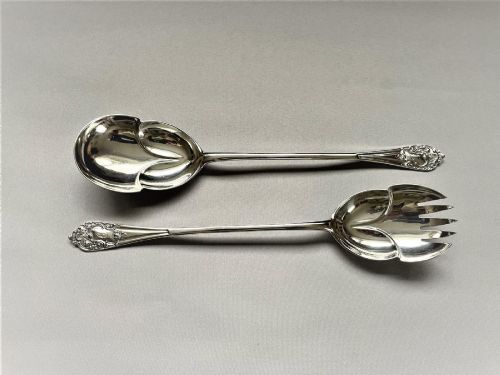
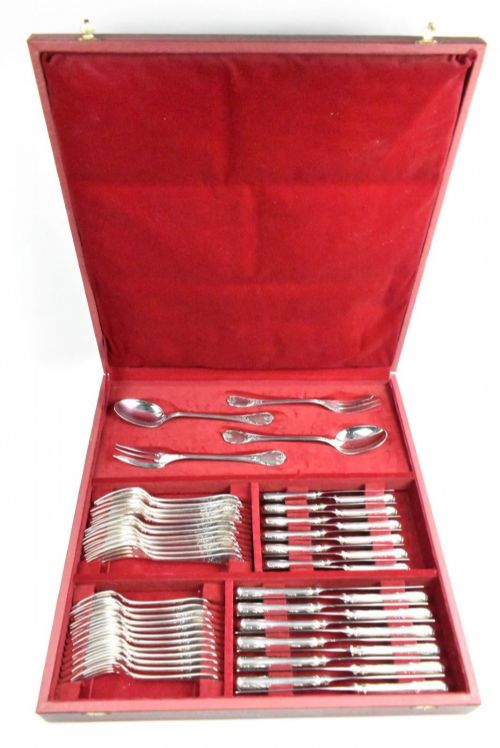
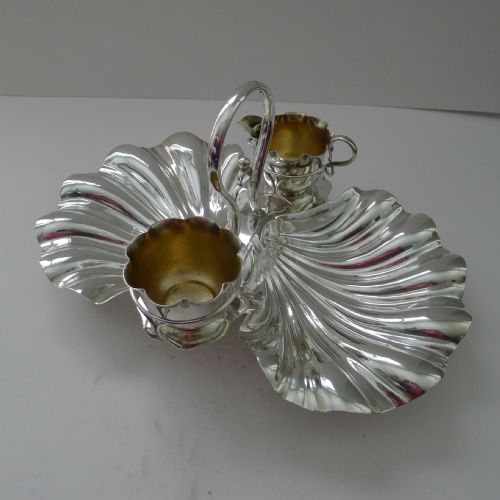
A silver plated tableware set brings together matched or complementary vessels for dining, tea, and condiments. The search phrase covers functional groupings ranging from small morning sets to large dining service collections.
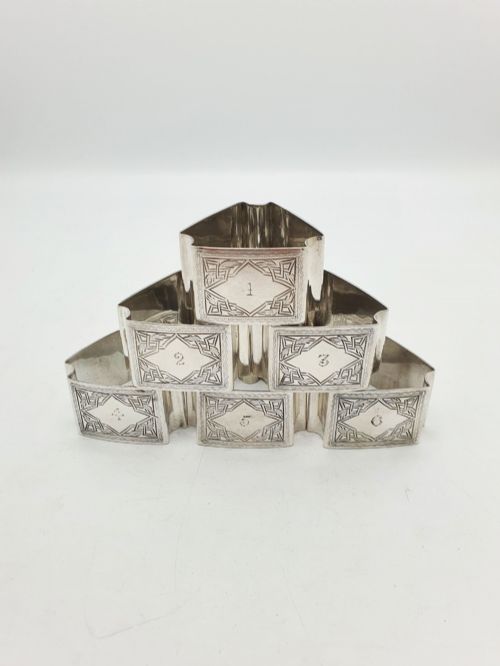
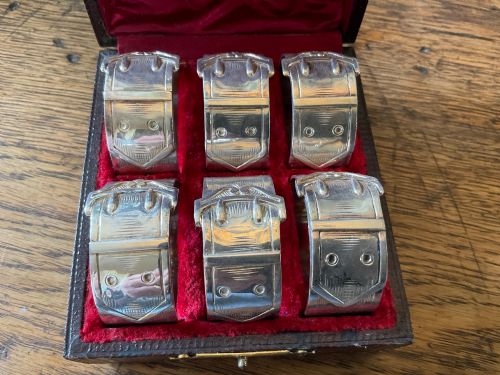
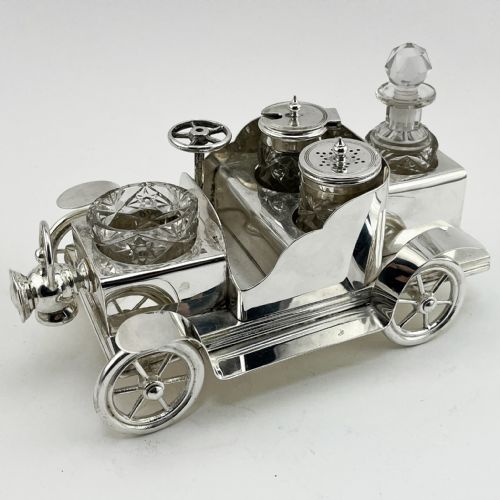
Edwardian and Victorian iterations dominate the selections, alongside Art Deco and twentieth century examples. Common formats include cruet sets, tea services, napkin ring groupings, and specialised dessert services.
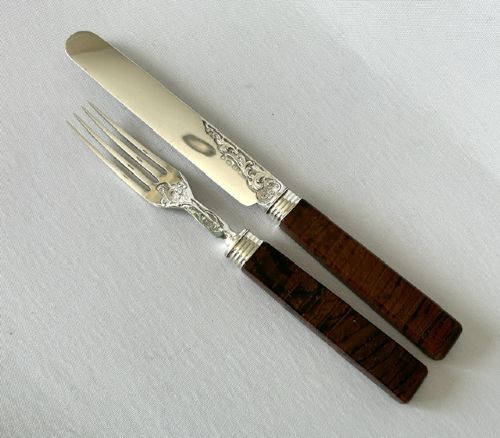
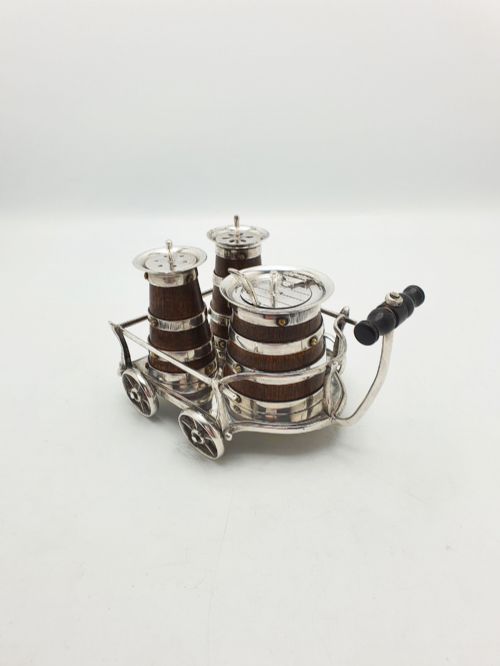
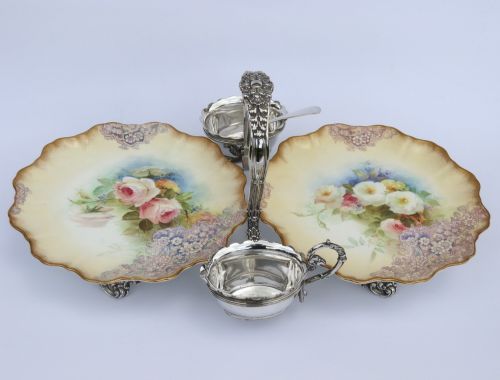
The materials paired with the plating shape the character of each set, including cut glass inserts, oak barrels, walnut frames, and ceramic plates. These combinations reflect the dining habits of nineteenth and early twentieth century households.
Materials and Construction
Makers deposited thin layers of silver onto base metals such as electroplated nickel silver, supported by frameworks of oak, walnut, or cast metal. This technique allowed elaborate forms without the cost of solid silver.
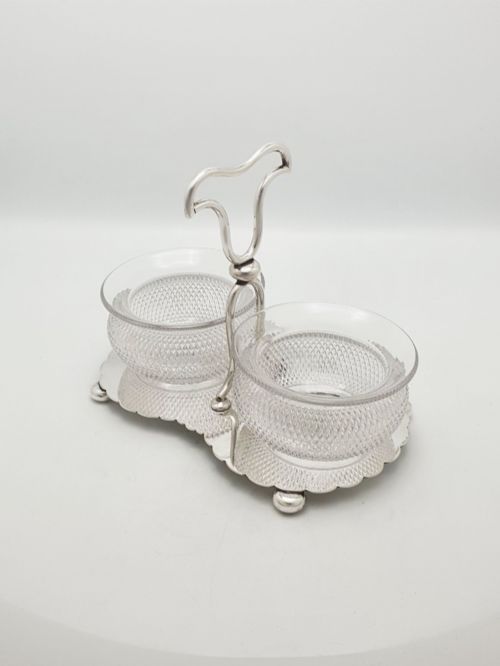
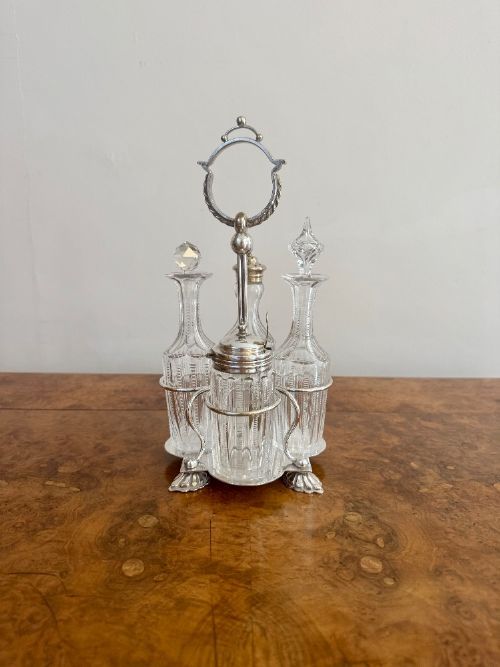
Decorative work combined embossing, wirework, and cast mounts, frequently paired with cut glass, cobalt glass liners, or hand-painted ceramic plates. Frames utilised turned wood and fitted compartments to secure the vessels.
Individual items often incorporated hallmarks or registry marks stamped into the metal base, indicating the manufacturing method or the plating house responsible for the piece.
Materials appearing across the inventory include silver plate, cut glass, oak, walnut, cobalt glass, and majolica ceramics.
Markers of Quality
Quality rests in the crispness of the cast mounts, the retention of the original silver layer, and the integrity of any fitted wooden bases or glass inserts. Substantial weight in the metal components points to superior construction.
The harmony of matched sets and the presence of original makers' stamps or numbered components distinguish standard domestic wares from workshop-produced or retailer-branded items.
Intricate detailing, such as embossed cruet frames or hand-painted ceramic elements, separates simpler utilitarian sets from more ambitious dining accessories.
Christofle·Daniel Arter·Walker and Hall·Harrods·Asprey and Co·Doulton Burslem
The Silver Plated Tableware Set Glossary
- Cruet set
- A stand holding condiment bottles, salt cellars, mustard pots, or pepper shakers for the dining table. These frequently featured fitted silver plated frames with glass bottles.
- Electroplated nickel silver
- A base metal alloy of copper, nickel, and zinc coated with a thin layer of silver through an electrolytic process. This method became widespread in the nineteenth century.
- Sheffield plate
- An earlier technique fusing a sheet of silver to a copper core before forming into objects. Pieces produced this way display a distinct sandwich edge upon close inspection.
- Condiment stand
- A portable frame designed to carry sauce bottles, relish jars, or mustard pots during a meal. They often included carrying handles and specific slots for each vessel.
Silver Plated Tableware Set: Frequently Asked Questions
How do I clean a silver plated tableware set?
Clean pieces gently using a dedicated silver cloth or mild specialised polish to preserve the underlying plating layer. Avoid abrasive cleaners that can wear away the thin silver coating over time.
Wash glass inserts and ceramic components separately in warm soapy water. Ensure all wooden or fabric elements remain dry during the cleaning process.
What is an egg cruet set used for?
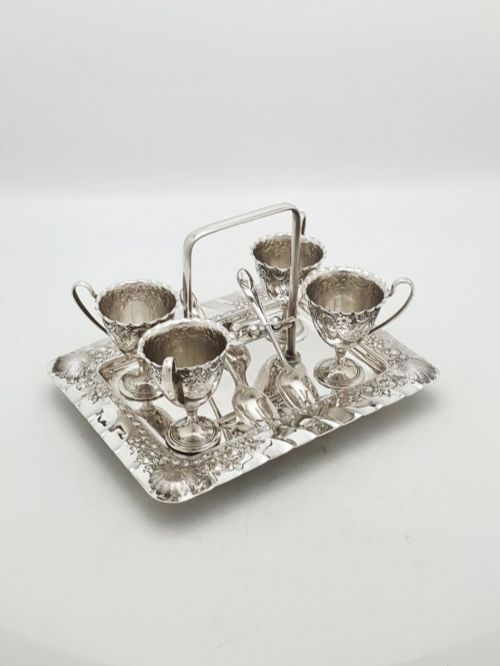
An egg cruet set holds soft-boiled eggs alongside matching spoons, salt cellars, and toast racks. These were popular breakfast table accessories in Victorian and Edwardian households.
Many examples feature numbered cups and dedicated slots for spoons, allowing individual service for family members or guests.
How can I tell the period of my tableware?
Dating relies on stylistic clues, manufacturing marks, and associated materials such as oak frames, cut glass, or cobalt liners. Victorian pieces often display ornate Rococo Revival or naturalistic motifs.
Later Edwardian and Art Deco sets shift towards geometric lines, cleaner forms, and streamlined cruet frames. Maker stamps and registry numbers stamped on the base offer further chronological clues.
Are these sets suitable for daily use?
Many sets remain robust enough for regular dining, provided they receive careful hand washing and gentle storage. The durability depends on the thickness of the original electroplated layer and the condition of any wooden or glass parts.
Using soft utensils and storing pieces away from direct moisture helps protect the metal and fitted components during everyday enjoyment.