
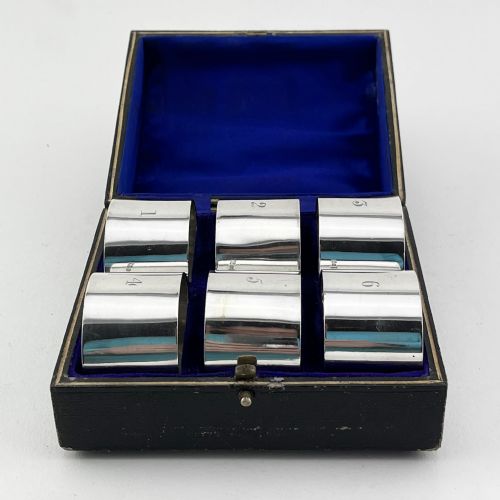


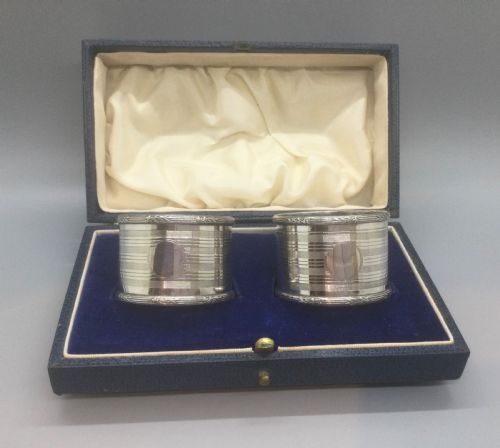

Boxed Edwardian Serviette Rings
These boxed edwardian serviette rings combine silver and fitted cases for the dining table.
Boxed Edwardian Serviette Rings
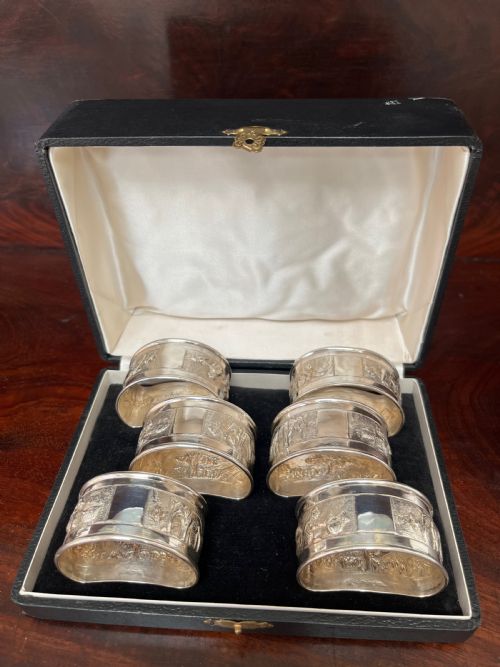
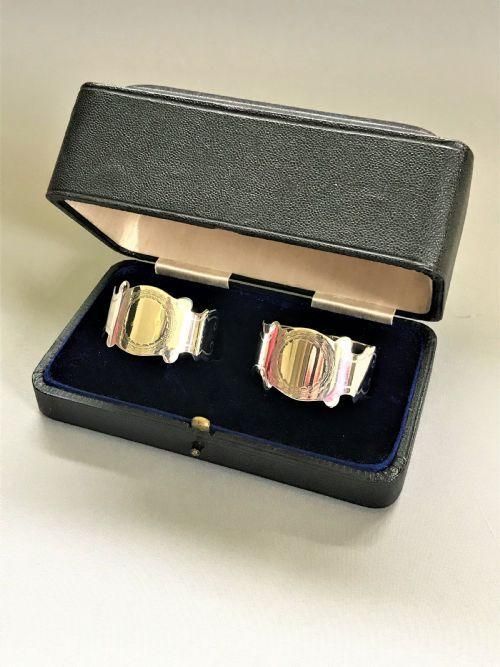
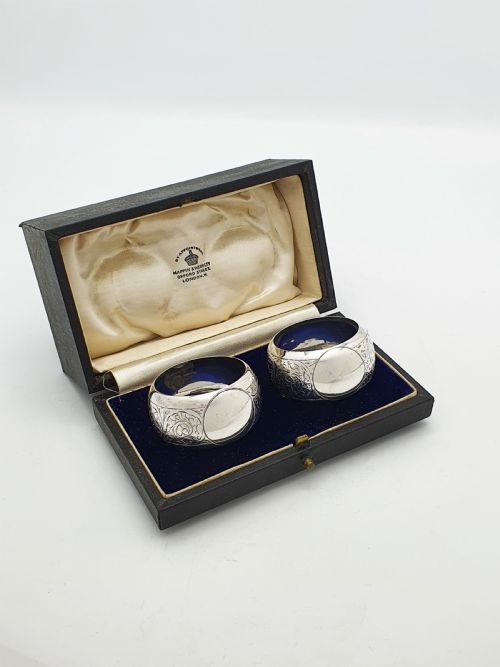
When you examine boxed edwardian serviette rings, you are looking at dining accessories housed in protective cases lined with silk or velvet. These sets typically appear in pairs or sets of six, designed for family dining or formal entertaining.
The pieces on this page span the Edwardian period alongside George V, Victorian, and mid-century examples. You will most frequently encounter sterling silver and silver-plate iterations enclosed in leatherette or wooden boxes.
How they were made
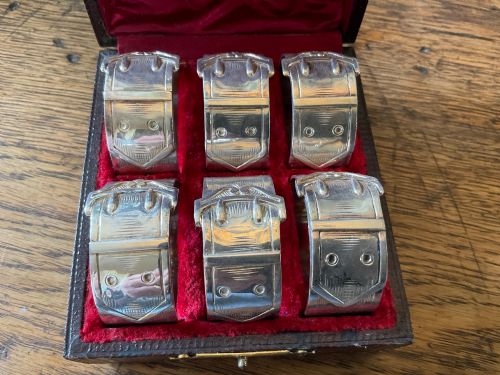
Makers utilised sterling silver and silver-plate, shaping the metal into plain bands or decorative forms such as belt buckles. These rings were finished with hallmarks indicating the assay office and date.
The fitted presentation cases required skilled work, utilising materials like leather, wood, silk, and velvet to cradle each individual ring securely within the box.
Some napkin rings are modelled specifically as belt buckles, allowing your table linen to be securely belted into place.
What varies in quality
Quality rests in the weight of the metal and the crispness of any engraved or moulded detail, such as the imitation buckle designs found on Victorian examples. Substantial gauge silver maintains its shape better through decades of use than thinner plated alternatives.
The condition of the original presentation case dictates value significantly. Boxes retaining intact silk linings and sound exterior leatherette or wood provide the proper context for the silver inside.
C.T. Burrows & Sons·Mappin & Webb
The Boxed Edwardian Serviette Rings Glossary
- Serviette ring
- A small ring used to hold an individual diner's table napkin between meals. They are often found in matched pairs or larger sets.
- Sterling silver
- An alloy containing ninety-two point five percent silver by mass, with the remainder consisting of other metals. It is the standard material for higher quality pieces.
- Silver-plate
- A base metal coated with a thin layer of silver. This technique offered a more affordable option during the Edwardian era.
- Leatherette
- A form of simulated leather made by covering a fabric base with plastic or similar substance. It was commonly used for the outer shell of presentation cases.
Boxed Edwardian Serviette Rings: Frequently Asked Questions
What materials are these rings made from?
The listings show items created from sterling silver and silver-plate. These metals provide the durable structure required for daily use at the dining table.
Protective cases involve supplementary materials including leatherette, wood, velvet, and silk. These fabrics line the interior to cushion the metal rings.
How many rings come in a set?
Sets vary in size depending on their original purpose and manufacture. You will find individual pairs alongside larger assemblies of six rings.
Each set is housed in a dedicated fitted case designed to hold the exact number of pieces. This keeps the collection together safely.
Are all the boxes original to the rings?
Original presentation cases feature fitted interiors lined in silk or velvet tailored to the specific dimensions of the rings. These fitted slots prevent movement during storage.
Cases are constructed from materials such as leather, leatherette, or wood. They bear the contours necessary to secure each individual piece.
How do I identify an Edwardian piece?
Edwardian items date from the reign of King Edward VII, spanning the early years of the twentieth century. Hallmarks on the silver often provide specific assay office and year markers.
Stylistic elements also point to the period, though styles from the late Victorian and subsequent George V eras appear alongside them.