

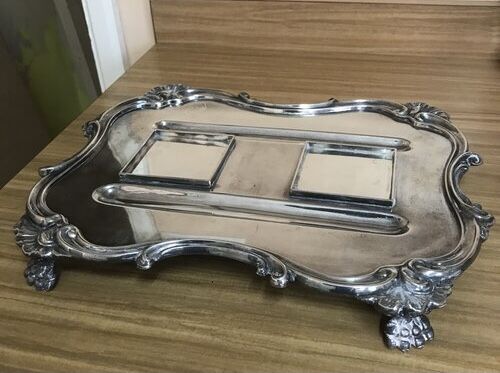


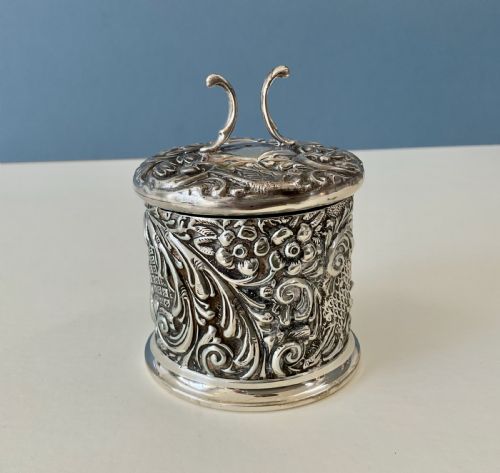
Antique Silver Organiser
These antique silver organiser pieces combine practical utility with period craftsmanship, offering a refined solution for desk and table management.
Antique Silver Organiser
When searching for an antique silver organiser, buyers encounter a diverse selection of desk accessories, stationery boxes, inkstands, and toast racks spanning the eighteenth, nineteenth, and early twentieth centuries. These objects served distinct administrative or dining purposes in period households, ranging from correspondence management to breakfast table service.
Edwardian and Victorian iterations form the core of the selection, reflecting the high period of domestic desk and table accessory production. Buyers will find both utilitarian silver-plated pieces and finer sterling silver items mounted on timber bases or paired with glass inkwells.
How they were made
Construction relies heavily on the combination of silver or silver plating with structural substrates such as oak, satinwood, and cast iron. Silversmiths formed mounts, frames, and toast rack bars through casting, piercing, and soldering techniques.
Mixed media pieces integrate organic materials like horn and leather, requiring specialised joinery to secure silver mounts to wooden box bodies and desk stands. Glass inkwells were typically heavy-moulded and fitted with hinged silver collars or lids.
Antique Silver Organiser Retail Price Guide 2026
Typical asking prices for silver organiser among the pieces listed under this phrase on Sellingantiques today, from the lower quarter to the upper quarter. They describe what is for sale here now, not the wider market.
Listings incorporate desk accessories made from sterling silver, silver plate, oak, satinwood, glass, and leather across Victorian and Edwardian periods.
What varies in quality
Quality separates through the weight of the silver metal used, the crispness of cast decorative details like Rococo Revival scrolls, and the structural integrity of fitted wooden or glass components. Maker involvement, evidenced by established firms such as Elkington or retailer marks like Harrods, elevates the distinction of a piece.
The refinement of secondary materials also dictates standard, where figured satinwood or heavy Scottish oak demonstrates superior craftsmanship compared to simpler utility items. Preservation of original glass liners, inkwells, and working mechanisms like extending frames or calendar wheels further defines the upper tier of the range.
Elkington·Harrods
The Antique Silver Organiser Glossary
- Inkstand
- A desk stand designed to hold one or more inkwells, pen rests, and sometimes a sander or wafer box. These desk accessories served as the central writing apparatus in a period study.
- Toast rack
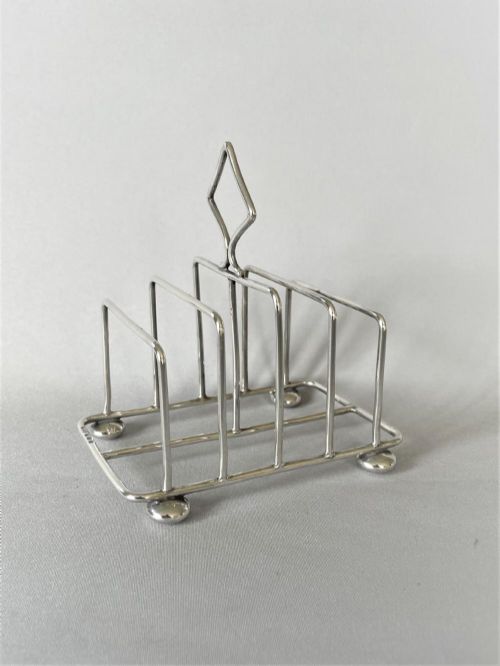
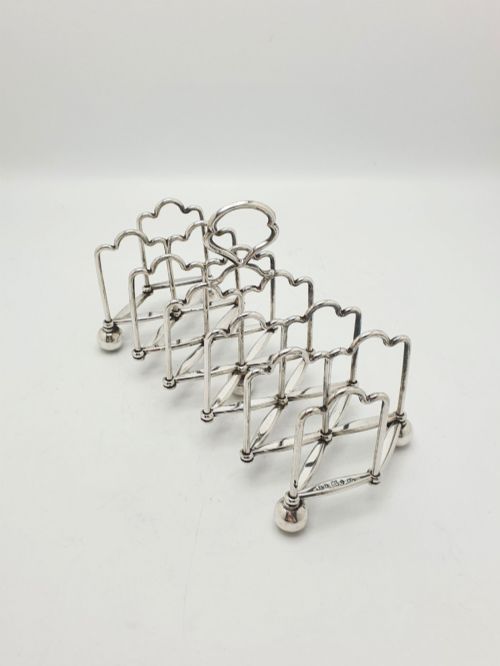
- A table accessory featuring parallel metal loops designed to hold slices of toast upright. They were typically produced in silver or silver plate during the Victorian and Edwardian periods.
- Stationery box
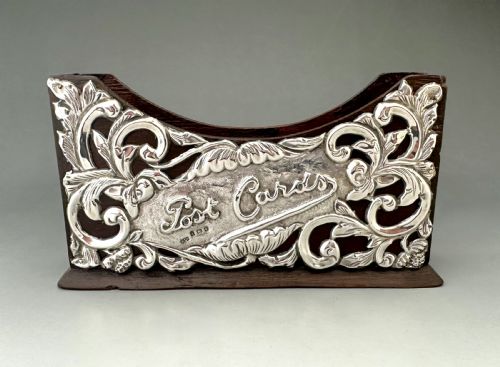
- A desk box constructed to hold writing paper and envelopes upright in internal partitions. Many surviving examples feature sloping lids and silver mounts.
- Standish
- An elaborate desk stand, often incorporating inkwells and compartments for writing implements. The term derives from the seventeenth century and denotes a portable writing equipment stand.
- Guilloche enamel
- A decorative technique where a precise geometric pattern is mechanically engraved beneath a translucent enamel layer. It appears frequently on Art Deco desk accessories.
Antique Silver Organiser: Frequently Asked Questions
What is an antique silver organiser used for?
These objects were primarily designed for organising correspondence, writing materials, and desk stationery in period studies or offices. Items like toast racks served a domestic function on the breakfast table.
Today, they adapt easily to modern desk spaces for holding letters, cards, and small accessories.
How do I identify an Edwardian silver piece?
Edwardian items date from the reign of King Edward VII between 1901 and 1910. They often exhibit lighter, more graceful proportions influenced by earlier decorative revivals.
Assay office marks and date letters stamped into the silver provide exact verification of the manufacturing year.
Are silver plated items durable?
Silver plated pieces feature a thin layer of silver bonded to a base metal core, such as copper or nickel silver. When produced by quality makers, they withstand regular handling and use over generations.
Careful cleaning preserves the plated surface without wearing through to the base metal underneath.
What is a Victorian desk tidy?
A desk tidy is a compact stand or tray incorporating compartments for pens, stamps, and small stationery items. They kept writing implements organised on the desktop.
Victorian examples often combine silver mounts with heavy wood bases like oak or mahogany.