




Antique Silver Name Holders
These antique silver name holders graced formal dining tables with miniature sculpture and practical elegance, helping guests find their seats.
Antique Silver Name Holders
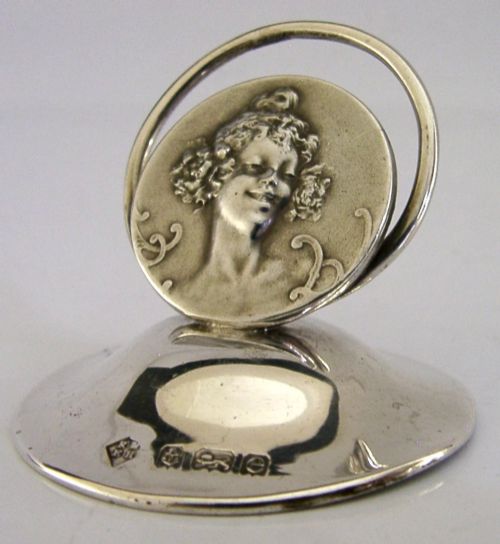
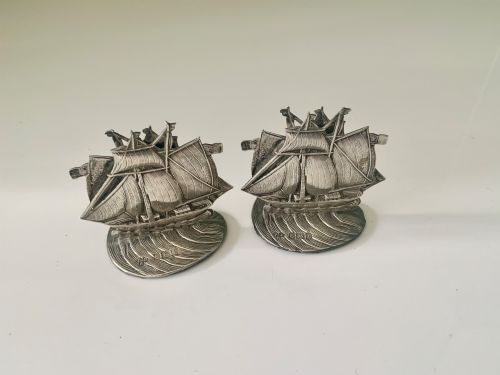
When searching for antique silver name holders, you examine small tabletop accessories designed to display menu cards, place cards, or table numbers during formal meals. The examples found here span the Victorian, Edwardian, George V, and George VI periods, stretching into the mid-twentieth century.
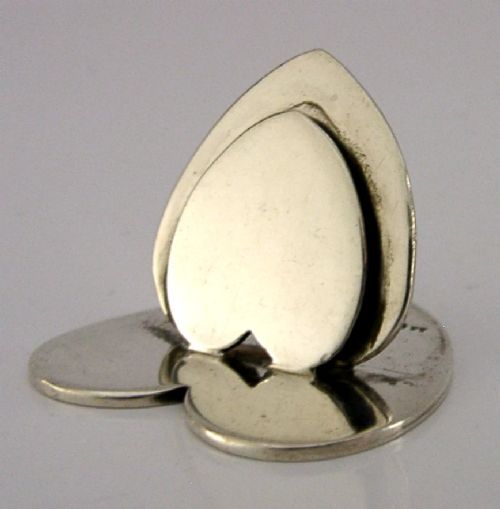
The origins of these items reach across British silversmithing centres, including London, Birmingham, and Chester, alongside regional variations such as Anglo-Indian Madras silver. Makers embraced diverse aesthetics, moving from Victorian naturalism through Art Nouveau curves to clean Art Deco geometry.
Materials and construction methods
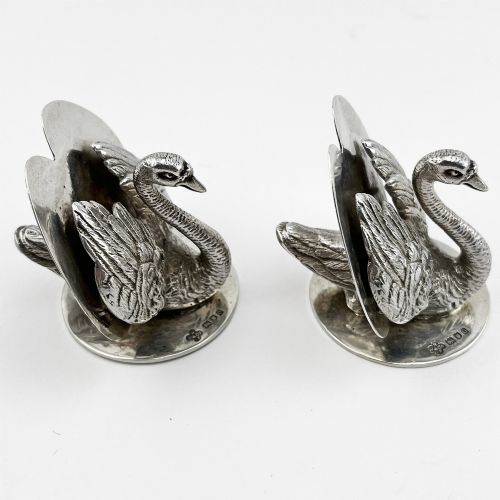
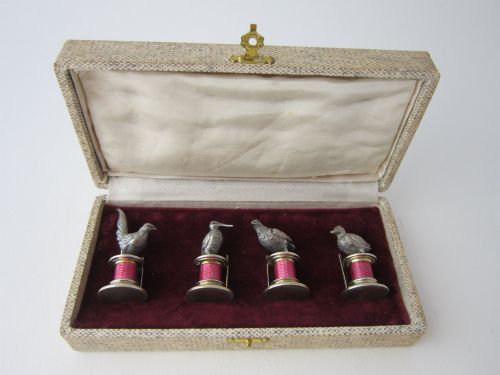
Silversmiths constructed these table accessories primarily from sterling silver or silver plate, utilising casting and stamping techniques to shape intricate figures and bases. Many pieces incorporate applied details, such as colourful enamel or guilloche enamel work, to highlight specific motifs like birds, animals, or heraldic subjects.
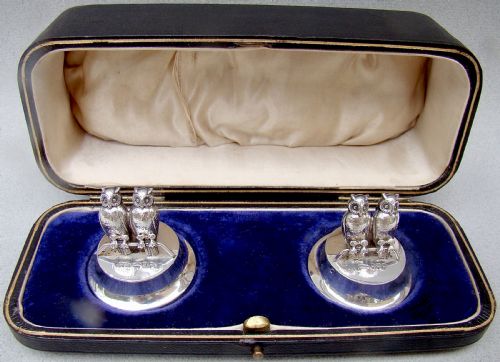
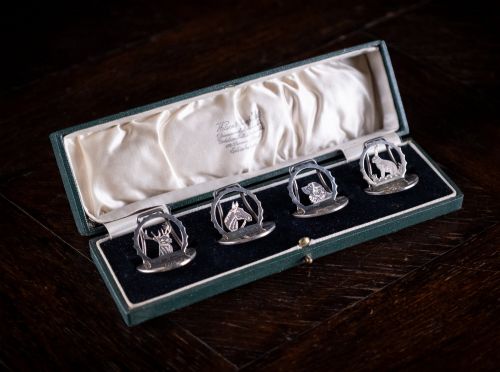
Some sophisticated examples combine solid silver frameworks with delicate interior elements, while cased sets often feature fitted boxes lined with velvet, silk, or leather. This careful combination of precious metal and textile presentation reflects the high standards of early twentieth-century table service.
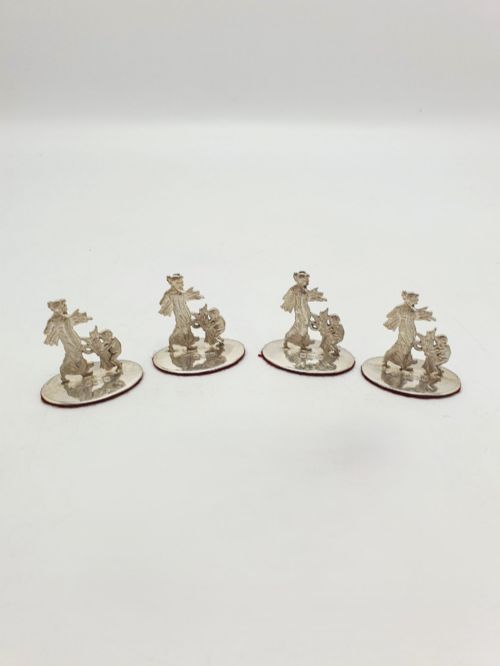
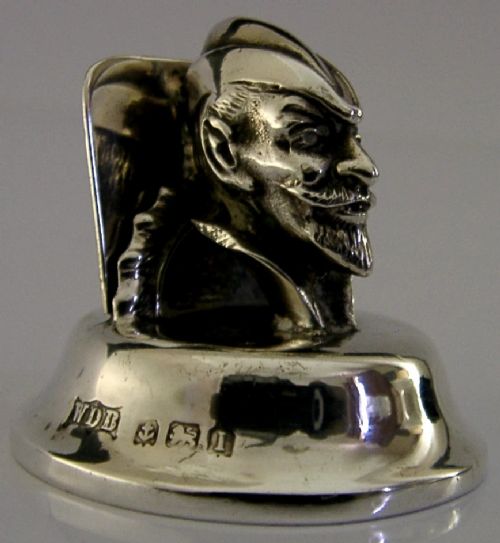
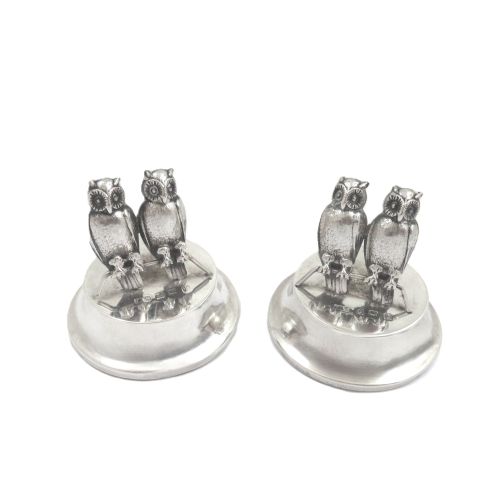
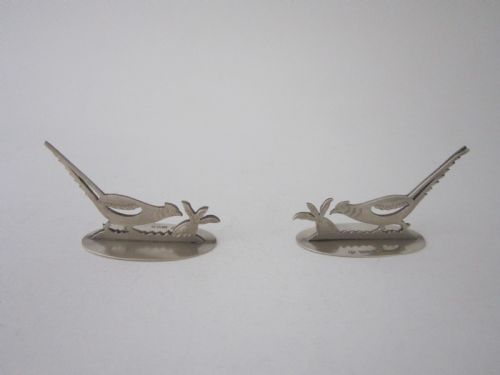
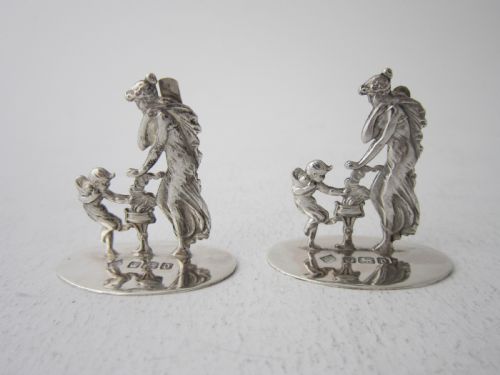
Dining guests once navigated their seating arrangements guided by miniature silver owls, foxes, sentry boxes, and characters from Alice in Wonderland.
Distinctions in quality
The presence of crisp hallmarks from notable makers adds considerable weight to a piece, as does the survival of original fitted boxes lined in silk or velvet. Sets that remain complete and matched, rather than assembled piecemeal over time, represent the upper tier of what is available.
Levi & Salaman·A. Wilcox·Sampson Mordan·Asprey·Liberty
The Antique Silver Name Holders Glossary
- Sterling silver
- A silver alloy containing 92.5 percent pure silver and 7.5 percent other metals, usually copper, ensuring durability for functional tableware.
- Guilloche enamel
- Decorative enamel applied over a mechanically engraved metal surface, creating intricate geometric patterns beneath a translucent coloured layer.
- Hallmark
- An official stamp applied by an assay office to indicate the purity of the metal, the maker, and the year of manufacture.
- Place card holder
- A small weighted stand designed to hold a stiff card bearing a guest's name at a formal dining table.
- Menu holder
- A tabletop stand that keeps a menu card upright for diners to read during a formal meal.
Antique Silver Name Holders: Frequently Asked Questions
What are antique silver name holders?
These small decorative objects were placed on dining tables to hold place cards, name cards, or menu cards for guests during formal dinners.
They combine miniature sculpture with a functional clip or slot, reflecting the elaborate table settings of the Victorian, Edwardian, and later twentieth-century periods.
How were these table accessories used?
Hosts placed them beside each setting or shared them between guests to indicate seating arrangements and present the evening's menu.
They served both a practical purpose and a decorative function, often matching the theme of the meal or the host's interests.
How do I date a silver name holder?
You examine the hallmarks stamped on the silver, which reveal the assay office, the maker's mark, and a date letter corresponding to a specific year.
The overall style, such as Art Nouveau curves or Art Deco geometry, also provides strong clues to the decade of manufacture.
Are these pieces usually found in sets?
They appear both as individual pieces and in matched pairs, quartets, or larger sets intended for full dining tables.
Complete boxed sets with their original velvet or silk linings are particularly valued by collectors for their survival intact.