
Antique Silver Link Chain
When an antique silver link chain catches the eye, it brings the tactile weight and craftsmanship of the late nineteenth and early twentieth centuries straight to the hand.
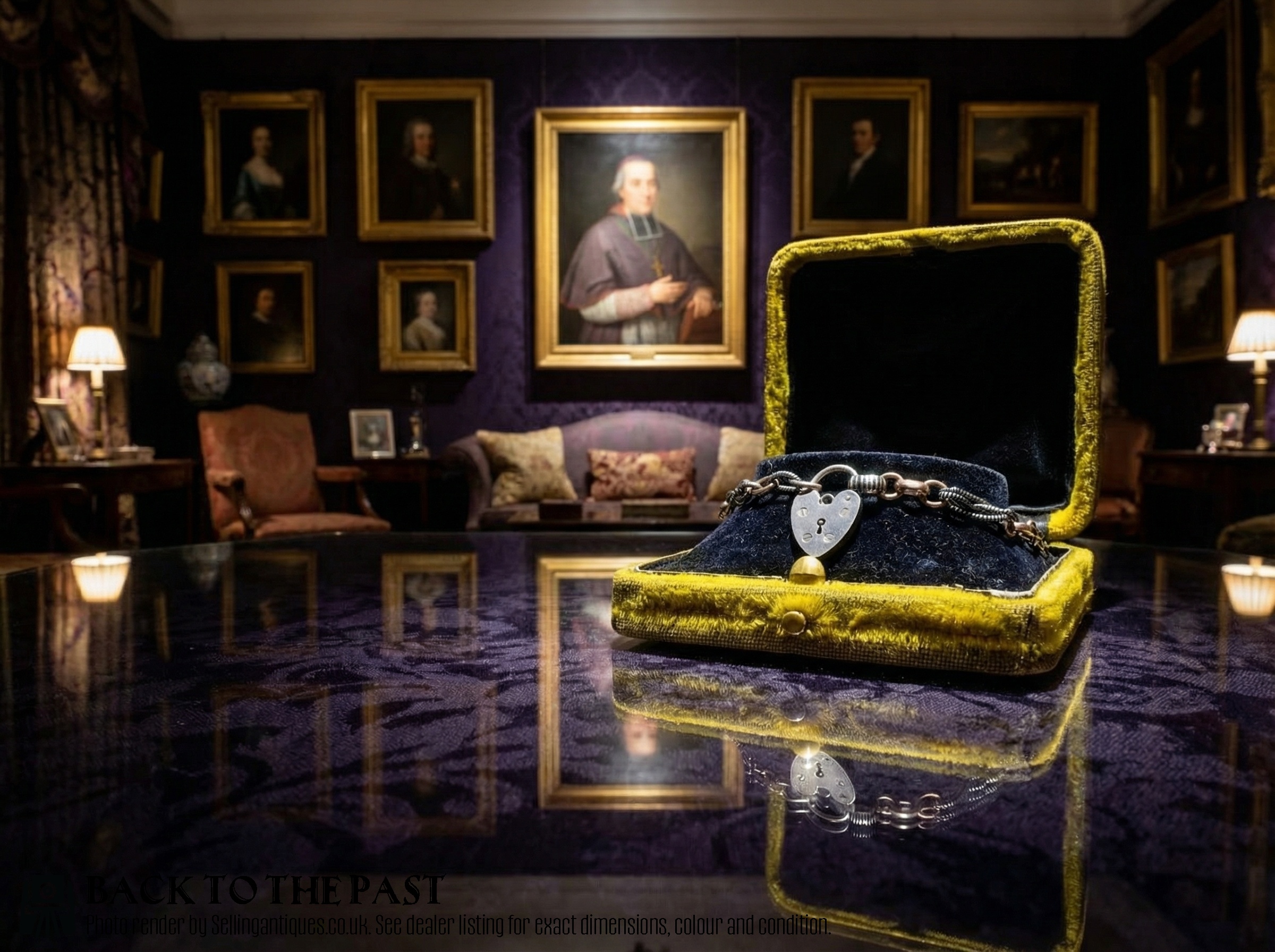
Antique Silver Link Chain
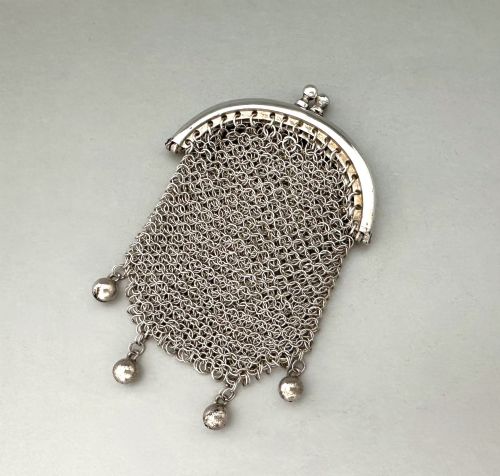
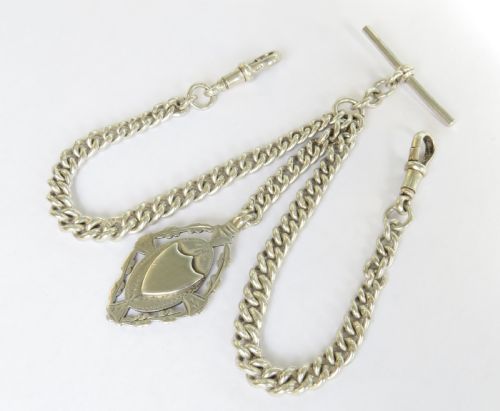
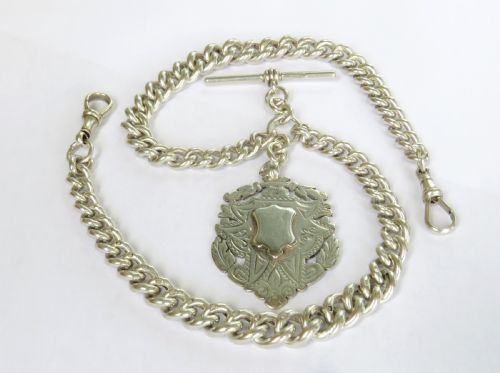
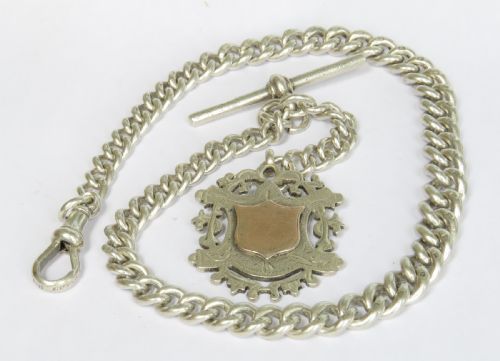
An antique silver link chain encompasses robust pocket watch albert chains, substantial curb necklaces, delicate bracelets, and fitted cocktail purses spanning from the Victorian era through the Art Deco period.
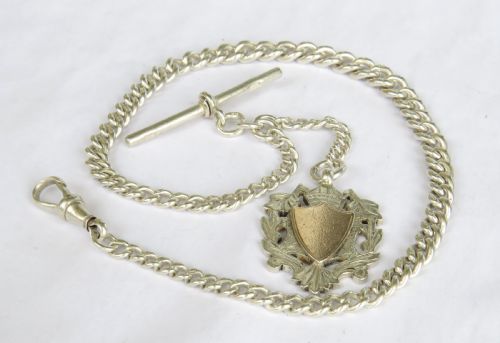
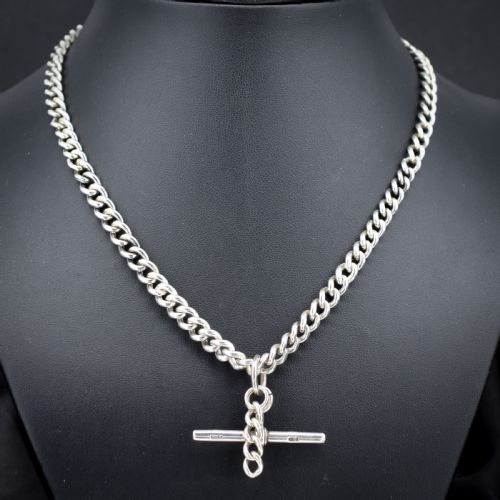
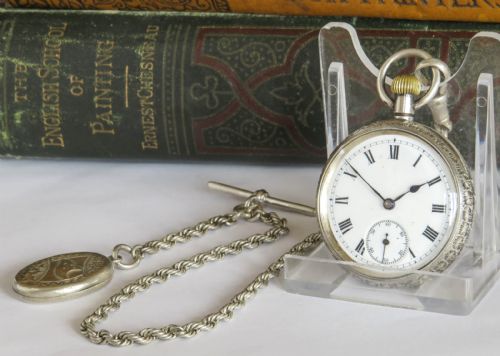
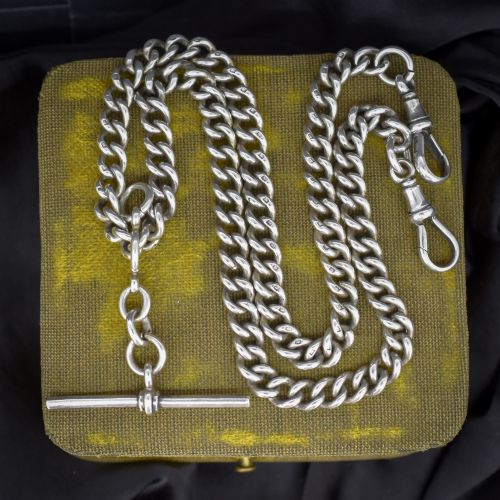
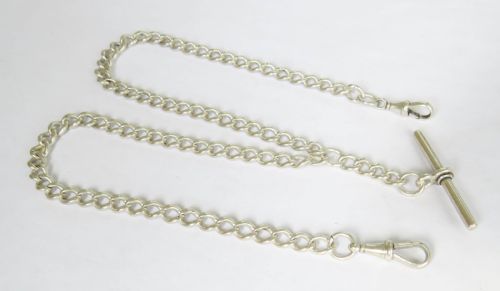
The pieces on this page are most commonly solid sterling silver watch chains, often featuring traditional T-bars and dog clips designed originally for timepieces but worn today as necklaces.
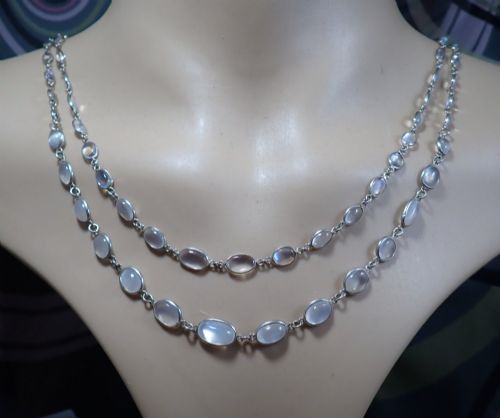
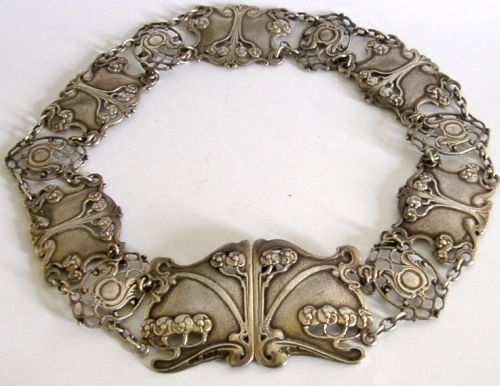
Alongside functional watch chains, buyers will encounter decorative panel link bracelets, Arts and Crafts pieces set with moonstone or blue enamel, and regional variants incorporating niello or gold accents.
How they were made
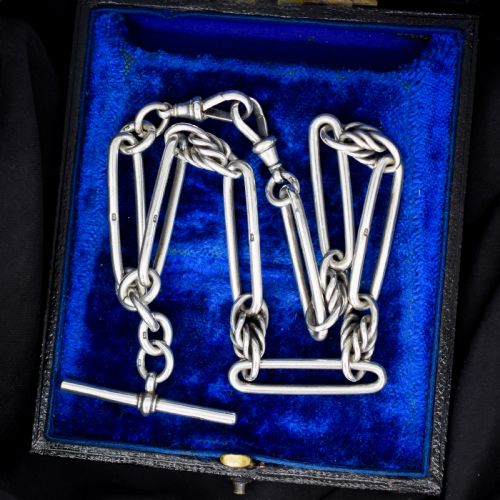
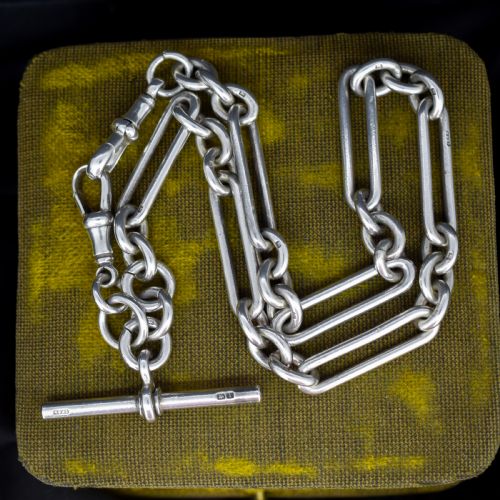
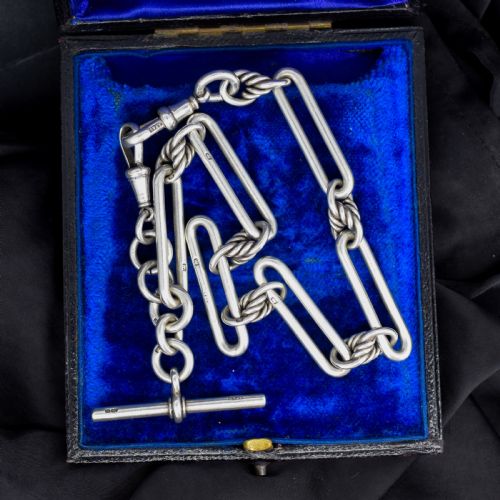
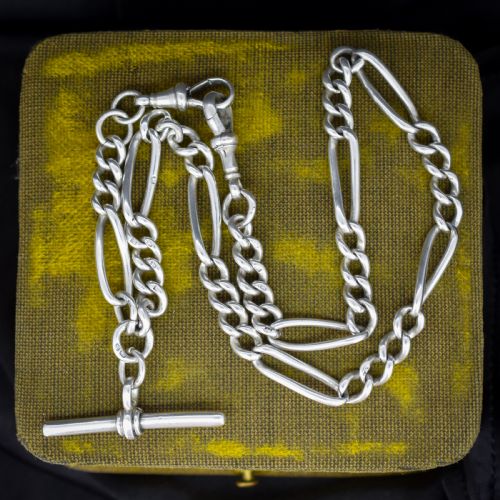
Metalsmiths constructed these pieces primarily from solid sterling silver, shaping individual uniform, curb, trombone, or fancy links by hand or with early mechanical assistance before assembling them into flexible strands.
Makers integrated functional components such as dog clips, swivel fobs, and T-bars directly into the design, employing techniques like chasing, engraving, and enamel work to embellish specific links and lock mechanisms.
Listings feature sterling silver across Victorian, Edwardian, Art Nouveau, and Art Deco styles, alongside gold accents, niello, and moonstone.
What varies in quality
Quality rests upon the crispness of the original link stamping or hand-forming, the secure tension of the dog clips, and the overall integrity of the silver surface without excessive thinning from wear.
Finer examples retain clear hallmarks, intact swivel mechanisms, and balanced proportions across every individual link and attached fob or pendant.
Robert Cawley
The Antique Silver Link Chain Glossary
- Albert chain
- A short watch chain designed to secure a pocket watch in a waistcoat pocket, typically featuring a T-bar at one end and a swivel clasp at the other. These are frequently worn today as necklaces.
- Dog clip
- A spring-loaded snap hook used to attach a watch or charm to a chain, common on Victorian and Edwardian albert chains.
- T-bar
- A short transverse bar attached to the centre of a watch chain, slipped through a buttonhole to anchor the chain securely.
- Niello
- A black metallic alloy of sulphur, silver, lead, and copper used as an inlay on engraved metal surfaces to create contrasting designs.
- Fob
- A small ornament or seal attached to a pocket watch chain, often cast in metal or set with hardstones like bloodstone.
Antique Silver Link Chain: Frequently Asked Questions
How do I wear a pocket watch chain as a necklace?
Many people remove the pocket watch and fasten the dog clip directly to the T-bar or to an opposing link to wear the albert chain around the neck.
This method displays the varied link patterns and keeps the historical fastenings visible as decorative elements.
What is the difference between a curb link and a trombone link?
A curb link consists of identical twisted links that lie flat when interlocked, creating a uniform and heavy appearance. Trombone links alternate between elongated oval bars and small circular connecting rings.
Both styles were widely utilised in Victorian and Edwardian watch chains for their strength and distinctive visual rhythm.
Can I attach charms to these chains?
The existing dog clips and swivel fobs on these chains make them ideal for hanging additional antique seals, lockets, or small pendants.
Ensure the jump rings on your charms match the gauge and scale of the original links to maintain visual harmony.
How do I date an antique silver chain?
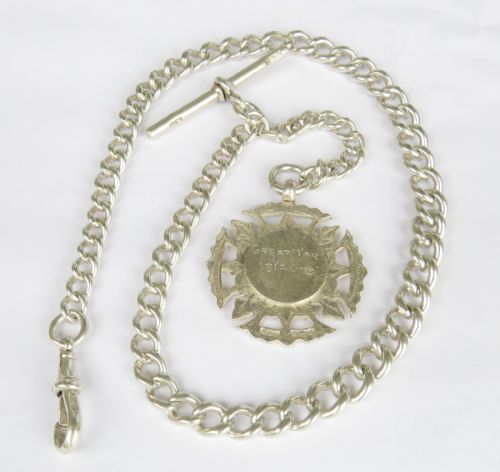
Dating relies on British hallmark stamps, which indicate the assay office, metal standard, and precise year of production. stylistic cues like Arts and Crafts enamel work or Art Deco geometry also help narrow down the period.
Many pieces carry legible date letters stamped onto individual links or the accompanying T-bar and dog clips.