

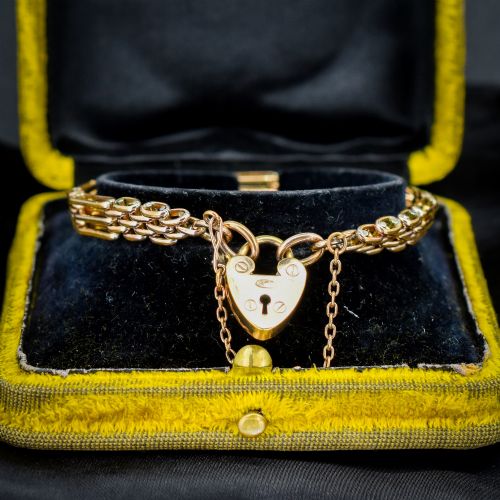
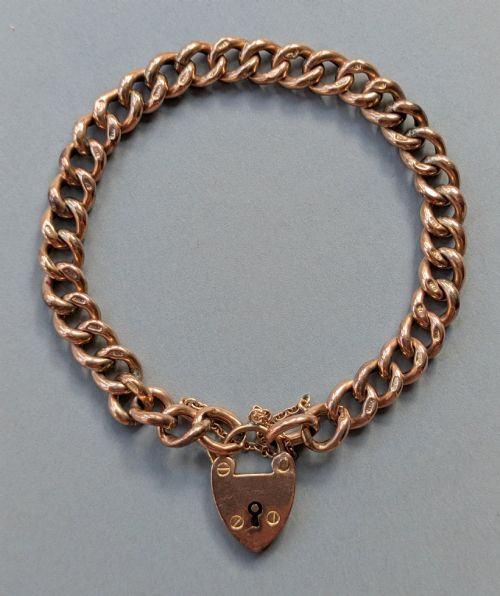
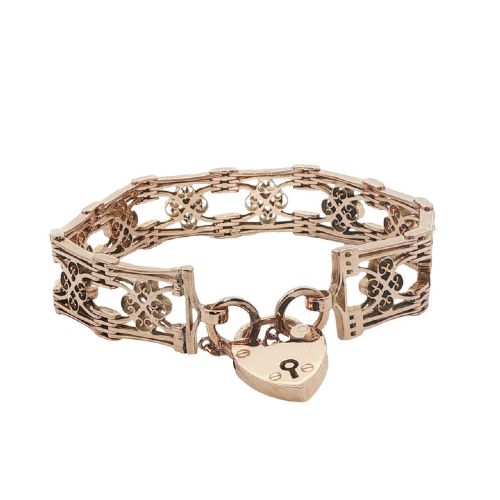
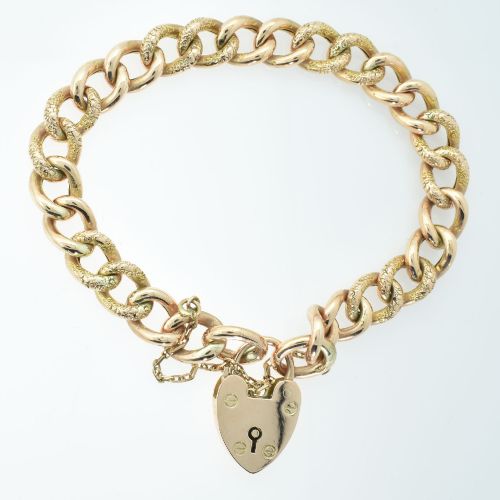
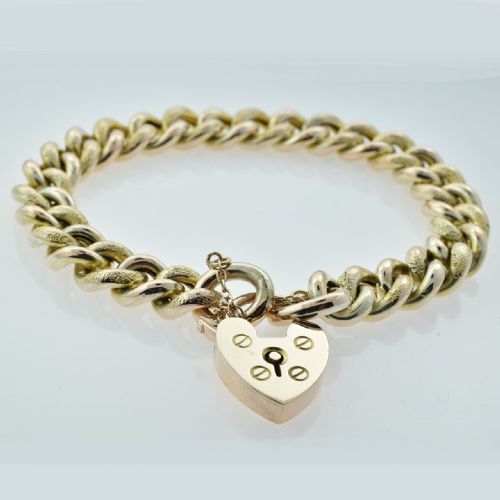
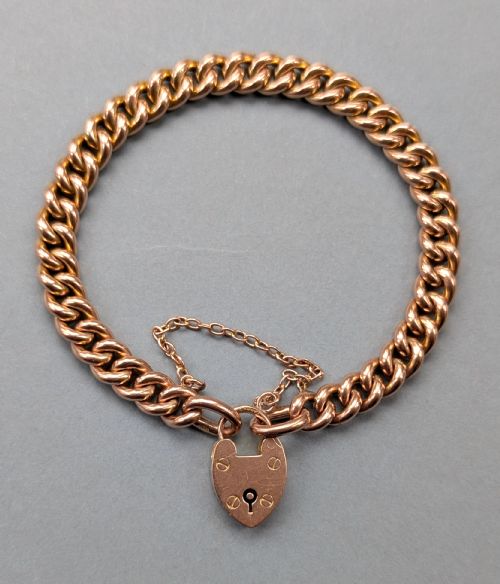
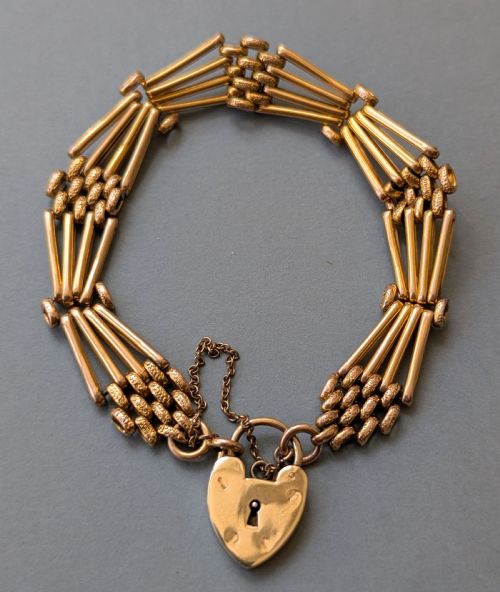


Heart Padlock Chain Bracelet
These heart padlock chain bracelet pieces combine security and sentiment, offering durable links and functioning lock clasps that collectors prize.
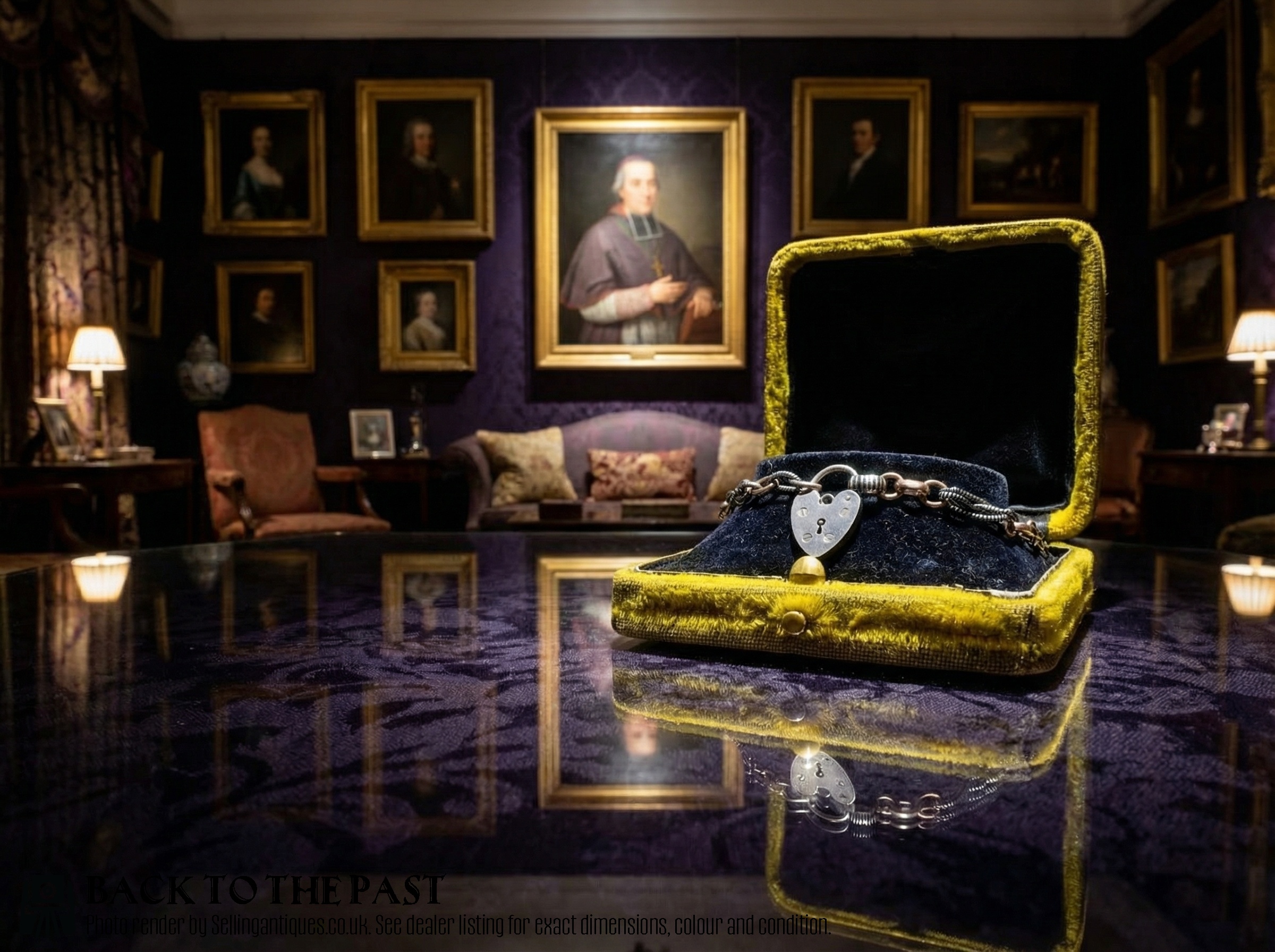
Heart Padlock Chain Bracelet
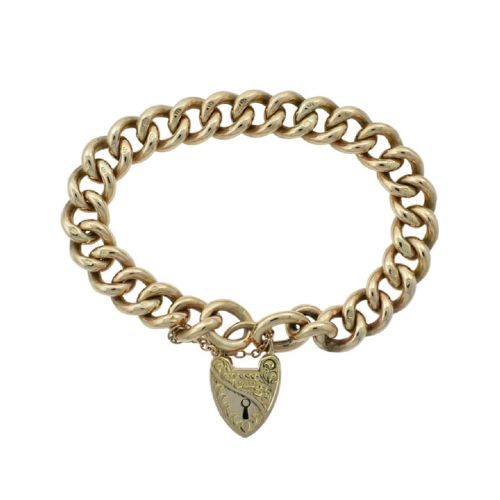
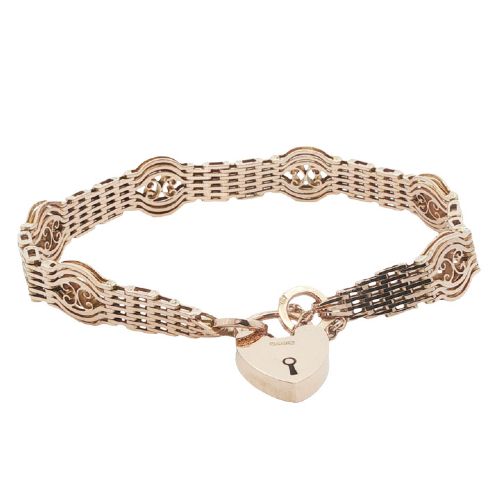
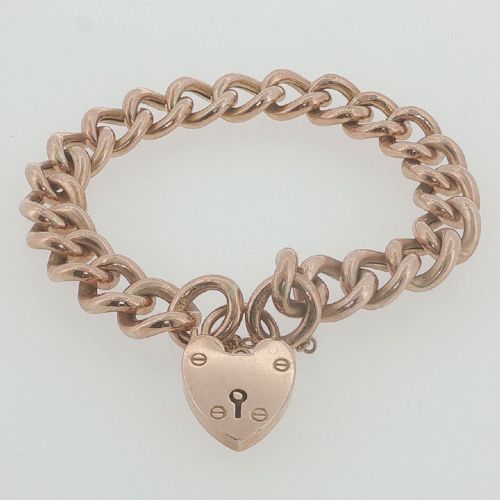
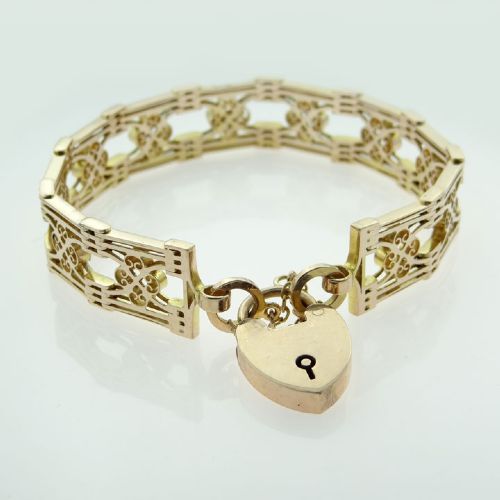
A heart padlock chain bracelet is a classic arm ornament typically formed of heavy curb links or gate links secured by a miniature padlock. These items emerge primarily from the Victorian and Edwardian eras, spanning the late nineteenth century into the early twentieth century.
The most common form on this page pairs a substantial 9ct rose gold curb or gate link chain with an operable heart-shaped padlock clasp. Many examples feature half-engraved detailing on the links alongside safety chains for extra security during wear.
How they were made
Goldsmiths constructed these chains predominantly from 9ct rose gold, yellow gold, and occasional 18ct gold or rolled gold substrates. Individual links were shaped by hand or stamped before being assembled into flexible curb and gate formations.
Surface ornamentation involved hand engraving, where artisans chased foliate or geometric motifs across the metal links and padlocks. Gemstone settings incorporated seed pearls, rubies, sapphires, chrysoberyl, and amethysts flush into gold mounts.
Heart Padlock Chain Bracelet Retail Price Guide 2026
Typical asking prices for heart padlock chain bracelet among the pieces listed under this phrase on Sellingantiques today, from the lower quarter to the upper quarter. They describe what is for sale here now, not the wider market.
What varies in quality
Quality rests in the heft of the metal and the crispness of the hand engraving on the links. Superior examples display deep, sharp chasing that remains unrubbed across the surface of the gold.
The sophistication of the mechanism and accompanying gemstones elevate certain items above standard production. Padlocks that click securely into place and integrate gemstones such as rubies, sapphires, or pearls show finer workshop origin.
The Heart Padlock Chain Bracelet Glossary
- Curb link
- A type of chain made of interlocking, uniform links that lie flat against the wrist. This sturdy construction forms the foundation of many traditional padlocked bracelets.
- Gate link
- A style composed of parallel vertical bars connected by small links, resembling miniature garden gates. It provides a wide, openwork design common in Victorian armwear.
- Rolled gold
- A material formed by fusing a thin sheet of gold to a base metal core under heat and pressure. It offers the appearance of solid gold while utilising lesser metal underneath.
- Seed pearl
- A very small, natural or saltwater pearl often utilised in clusters or crescents to decorate jewellery from the Victorian and Edwardian periods.
- Niello
- A black metallic alloy used as a fill for incised designs on metal. It creates a dark contrast against the surrounding polished surface.
Heart Padlock Chain Bracelet: Frequently Asked Questions
What is a heart padlock chain bracelet?
A heart padlock chain bracelet is a linked gold or rolled gold chain fastened with a miniature heart-shaped padlock.
These pieces date predominantly from the Victorian and Edwardian periods and often include safety chains.
How do you open the padlock?
Most padlocks on these bracelets operate via a small push-button or a hinged mechanism built into the side of the heart. Pressing this release allows the shackle to swing open.
Owners should handle the clasp gently to preserve the original spring tension.
Are these bracelets made of solid gold?
The materials vary between solid 9ct rose gold, yellow gold, 18ct gold, and rolled gold variants. Hallmarks or stamps on the links and padlocks often indicate the specific metal purity.
Listings specify whether an item is solid gold or rolled gold.
How do I date a padlock bracelet?
Dating relies on hallmarks, style characteristics, and construction methods typical of the Victorian and Edwardian eras. Pieces from this inventory date from the late nineteenth century through the early twentieth century.
Engraving styles and link formations provide further clues to the exact decade of manufacture.