


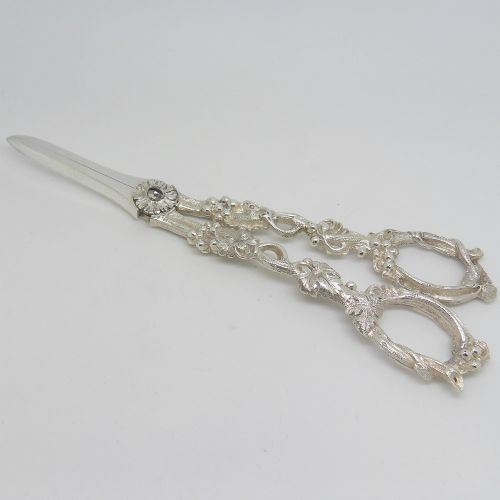
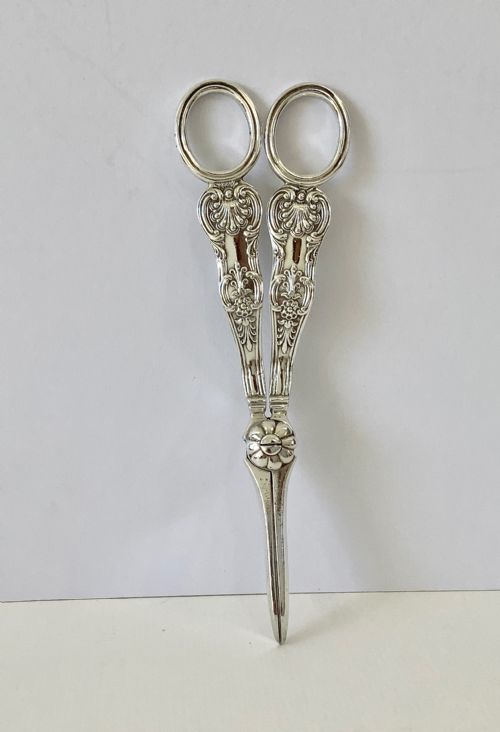

Antique Silver Grape Shears
Antique silver grape shears are purpose-built dining implements designed for cleanly snipping clusters of fruit at the table.
Identifying antique silver grape shears
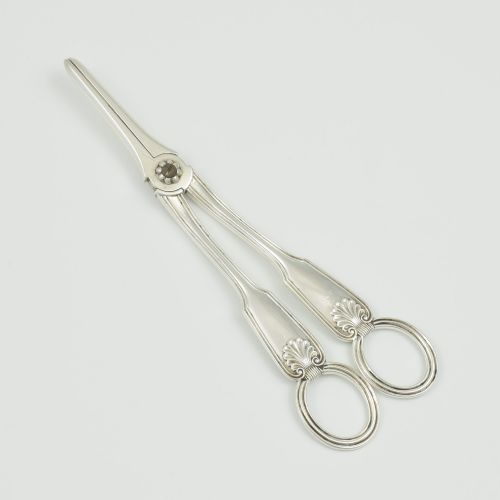
Antique silver grape shears are specialised serving cutlery created to portion bunches of fruit gracefully during formal dining. The pieces recorded here span the Georgian, Victorian, Edwardian and later twentieth-century periods, showing how domestic rituals evolved across generations.
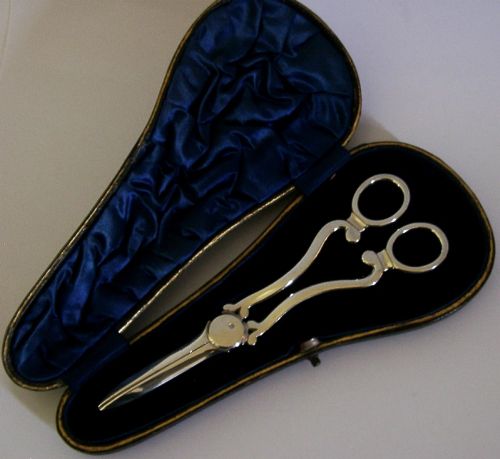
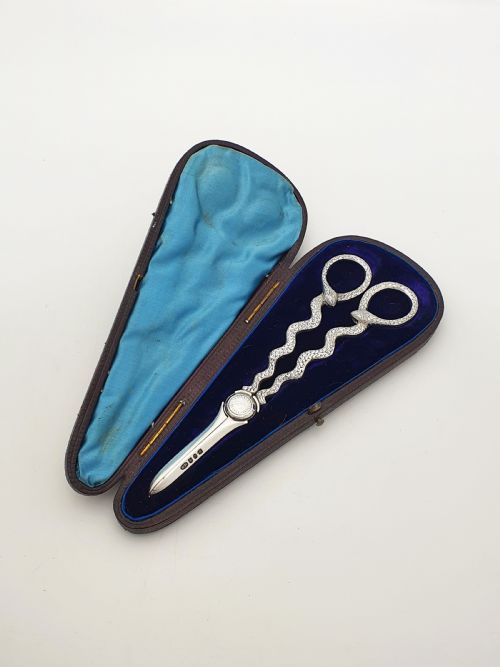
Victorian examples dominate the listings, frequently displaying ornate cast decoration and vine-leaf motifs. Buyers will also encounter Georgian, Edwardian and nineteen-thirties pieces, sometimes housed in original fitted cases lined with silk or velvet.
Materials and construction
Makers fashioned these implements primarily from solid sterling silver, alongside occasional examples in silver plate or silver gilt. Production techniques combined traditional silversmithing with detailed casting, allowing for intricate three-dimensional ornamentation.
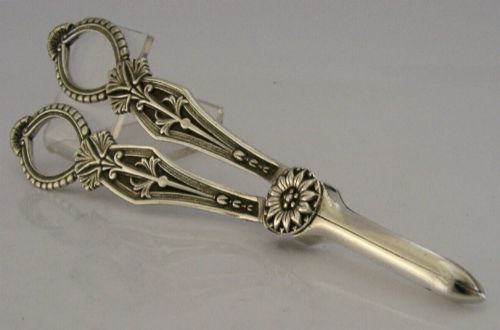
The heavy cast components often depict naturalistic foliage, scrolls, or figural masks, which were subsequently hand-chased and finished. Fitted storage boxes lined with velvet and silk provided protection for these delicate domestic tools.
Retail Price Guide 2026
Typical UK retail prices for silver grape shears, calculated from the Sellingantiques database of over a million retail prices indexed since 2003. This retail price guide relies exclusively on Sellingantiques data; no external sources or auction records are used, so the figures do not describe the wider market.
Victorian dining culture took fruit so seriously that silver scissors required dedicated vine-leaf handles.
Distinctions in quality
Quality rests upon the crispness of the cast decoration and the weight of the metal utilised in the handles and shanks. Pieces featuring deep relief work and naturalistic vine or acanthus leaf designs show superior craftsmanship.
The reputation of the maker and the presence of clear hallmarks significantly elevate an example. Complete survivals retaining their original fitted presentation cases also represent a higher tier of historic interest.
Goldsmiths & Silversmiths Co·Gibson & Langman·Chawner & Co·Reilly & Storer·Francis Higgins·Charles Boyton
The Antique Silver Grape Shears Glossary
- Hallmark
- The official stamp applied by an assay office certifying the metal standard, origin year and maker. These marks allow collectors to date pieces accurately.
- Silver Gilt
- Sterling silver that has been coated with a thin layer of gold. This technique provides a rich yellow surface finish.
- Chasing
- A metalworking technique where the smith pushes the silver from the front using hammers and punches to create raised surface decoration. It adds depth to floral and leaf patterns.
- Cast
- Molten metal poured into a mould to form shaped components. This method created the heavy, ornate handles found on Victorian examples.
- Serving Cutlery
- Implements designated for portioning food at the table rather than personal dining. Grape shears belong firmly within this formal category.
Frequently Asked Questions
What are antique silver grape shears used for?
These implements were designed specifically to snip individual portions of grapes from a larger hanging bunch at the dining table. This kept the fruit presentation neat and avoided guests handling the main cluster directly.
They formed part of a formal dessert service alongside specialised fruit knives and forks during the Georgian and Victorian periods.
How do I identify a Victorian pair?
Victorian examples frequently display heavy cast ornamentation, often featuring naturalistic grape vine leaves, acanthus foliage, or scrollwork. Examining the hallmarks will typically reveal a sovereign's head duty mark or date letter corresponding to the nineteenth century.
Many of these pieces also survive in fitted velvet or silk-lined presentation boxes characteristic of the period.
Are these items made of solid silver?
The listings include both solid sterling silver and silver-plated variations. Hallmarks stamped directly onto the metal confirm solid sterling standards alongside the maker's mark.
Silver-plated versions offer a similar decorative appearance without the higher silver content of solid pieces.
Why do some pairs come in fitted cases?
Fitted presentation cases lined with silk or velvet were created to protect the delicate cast handles and sharp blades from damage. These boxes were often supplied by high-end retailers and silversmiths as luxury gifts.
Survival of the original case adds significant context for collectors interested in complete historical sets.