


Antique Silver Gilt Cup
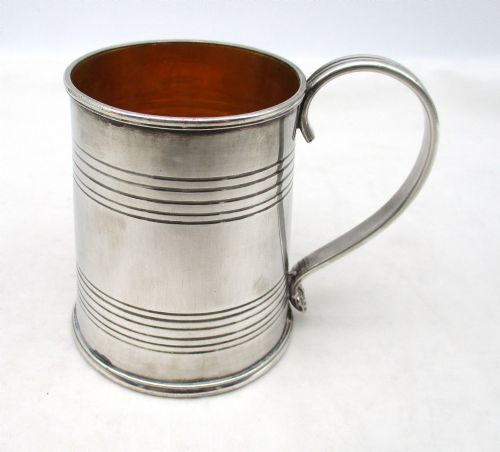
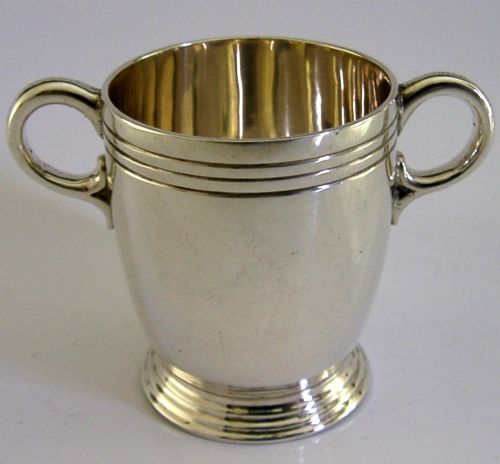
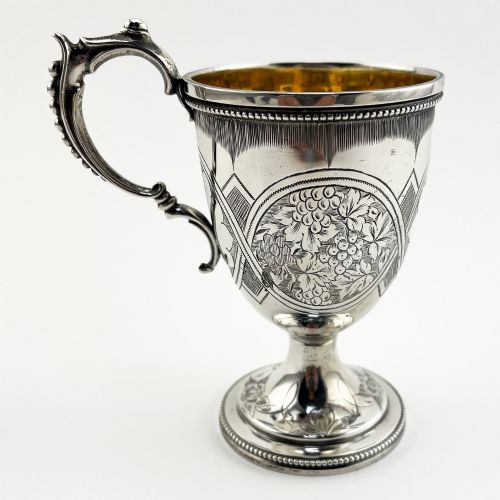
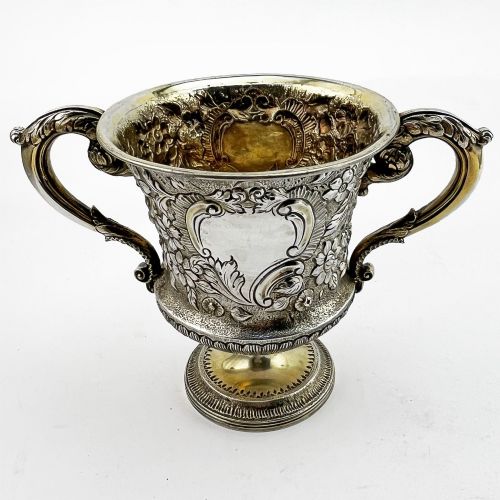
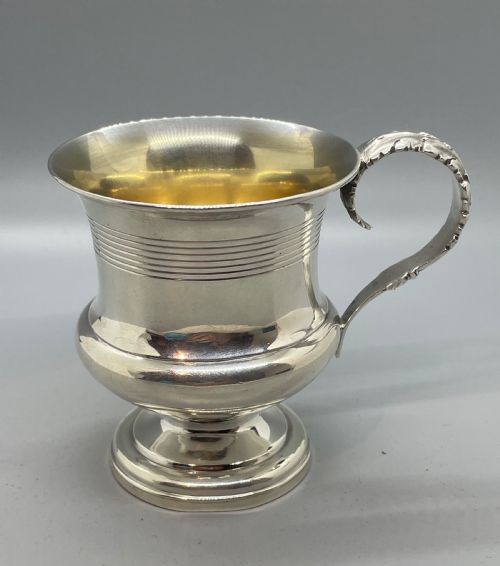
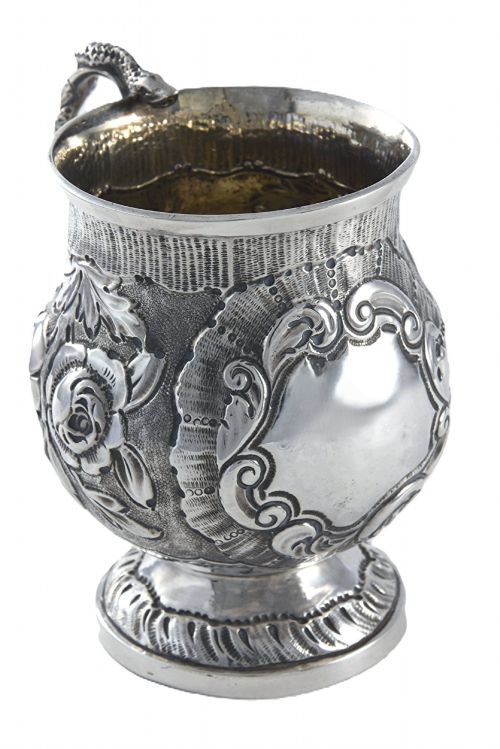
An antique silver gilt cup brings together precious metal and bright gold wash in forms ranging from heavy Georgian presentation pieces to delicate Victorian christening mugs.
Antique Silver Gilt Cup
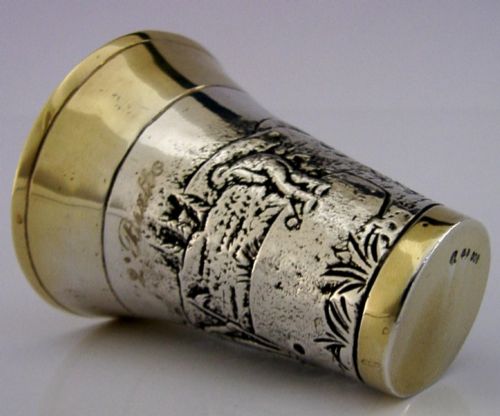
The aesthetic vocabulary spans multiple eras, capturing the heavy ornamentation of Victorian parcel gilt goblets alongside the restrained geometry of later art deco barware. Pieces emerge from diverse origins, encompassing English sterling silver, Imperial Russian works, German silver beakers, and French mounted agate. Identifying a specific example depends upon recognising the interplay between the underlying silver structure and the applied gold wash that illuminates the interior bowls or external chased surfaces.
Materials and construction methods
The underlying foundation relies heavily upon solid sterling silver, 800-grade silver, or copper bases coated through methods such as Old Sheffield Plate, producing durable bodies capable of supporting intricate hand engraving. Artisans applied gold gilt or vermeil to the silver surfaces using mercury gilding or electrochemical processes, creating a rich golden layer that protected the base metal from tarnishing while in contact with wine or water. Many vessels incorporate cast or hammered components, joining pedestal feet and applied handles to body cylinders through traditional silversmithing techniques.
Distinguishing quality in craftsmanship
Quality rests in the crispness of the hand engraving and the depth of the metalwork, where superior examples display sharp relief in floral motifs or naturalistic ornamentation without softening from excessive polishing. The thickness of the silver gauge and the weight of the vessel dictate its structural integrity, separating substantial presentation pieces and heavy marriage cups from lighter domestic wares.
The integrity of the remaining gilt surface influences desirability, as uneven wear reveals the pale silver beneath through careless cleaning rather than natural age. Master silversmiths demonstrated superior technique in the execution of handles, joins, and pedestal bases, ensuring balance and proportion across campana shapes, chalices, and tankards.
Stephan Wekeva·Elkington and Co Ltd·Peter and Ann Bateman·Paul de Lamerie·William Burwash·William Eaton
The Antique Silver Gilt Cup Glossary
- Silver gilt
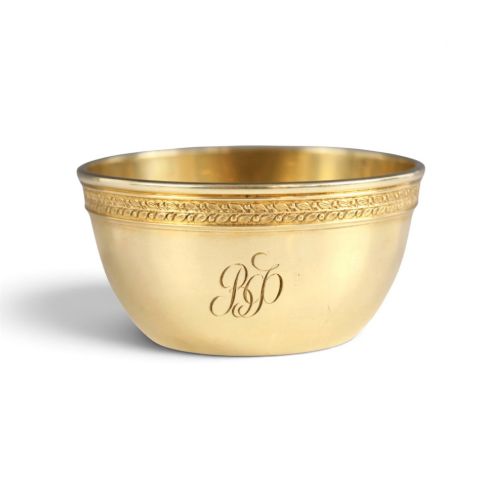
- Silver that has been covered with a thin layer of gold, often referred to as vermeil when applied to sterling silver. This technique combines the strength of silver with the rich appearance and corrosion resistance of gold.
- Parcel gilt
- An object where only specific areas, usually the interior bowl or select exterior decorative motifs, are gilded while the remaining silver surface retains its original polished or matte finish. It creates a striking visual contrast between the two precious metals.
- Old Sheffield Plate
- A composite material made by fusing a layer of silver to a thicker copper core, developed in the eighteenth century before the invention of electroplating. Edges often reveal thin lines of copper where the sheets met.
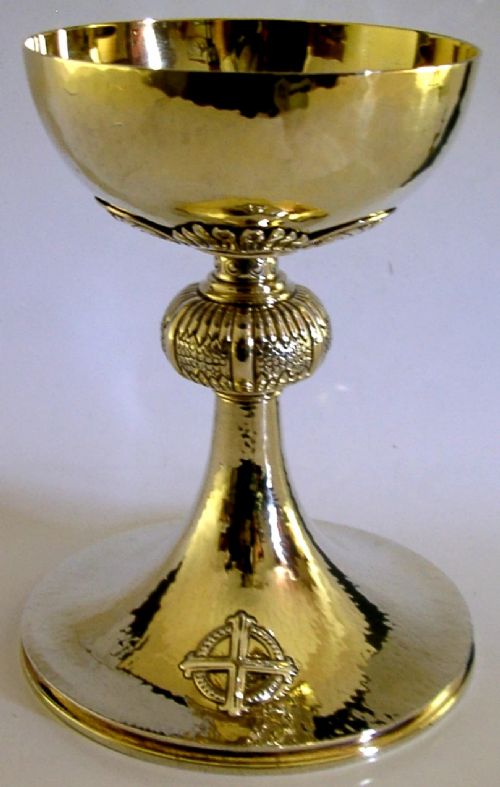
- Chalice
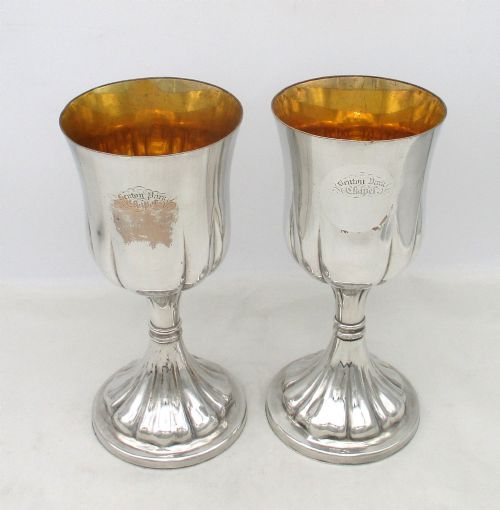
- A stemmed sacramental cup used for drinking wine during religious ceremonies, frequently produced in church settings or through specialised ecclesiastical commissions. These vessels typically feature deep bowls and wide, stable pedestal bases.
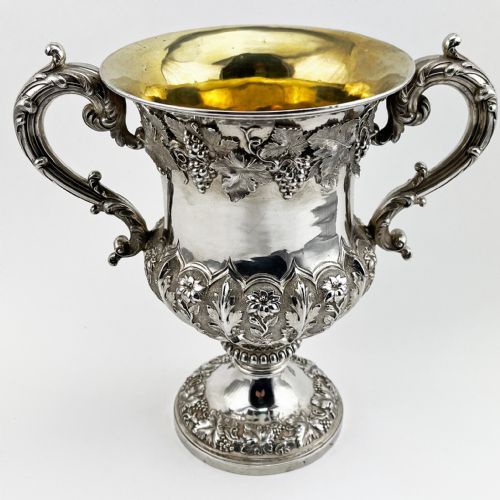
- Campana
- A bell-shaped vessel form popular during the Georgian period, often utilised for large two-handled presentation cups and wine coolers. The flaring rim and tapered body offer stability and ceremonial presence.
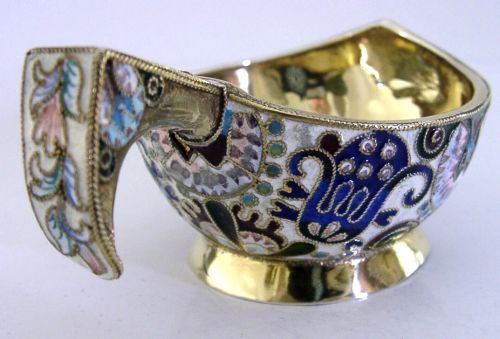
- Kovsh
- A traditional Russian boat-shaped drinking vessel with a single flat handle, often executed in silver gilt and enriched with polychrome enamel. These pieces trace their origins to ancient wooden drinking bowls.
Antique Silver Gilt Cup: Frequently Asked Questions
What is the difference between silver gilt and silver plate?
Silver gilt consists of solid silver coated with a layer of gold, providing a precious metal foundation beneath a golden surface. Silver plate involves a thin layer of silver bonded to a base metal like copper or nickel brass.
Items finished with gold gilt maintain their solid silver integrity underneath, whereas plated items reveal base metal beneath the silver layer when worn down.
How were antique chalices used?
Antique chalices served primarily as sacred vessels for communion wine in church services and ecclesiastical settings throughout the nineteenth century and earlier. Their deep bowls and sturdy stems allowed clergy members to hold them securely during ceremonies.
Secular versions of these pedestal cups also existed for ceremonial toasts, civic presentations, and communal dining tables.
How do I care for antique silver gilt?
Cleaning requires extreme caution because aggressive polishing wears away the thin layer of gold wash, exposing the silver underneath. Gentle dusting with a soft cloth suffices for routine maintenance without chemical dips.
Harsh commercial polishes destroy the aged patina and damage the gilt surface permanently, diminishing both appearance and historical integrity.
How can I tell the period of a cup?
Hallmarks stamped into the metal provide the most reliable indicator of age, recording the assay office, city, and specific date letter. Stylistic markers such as Victorian naturalism, Georgian campana curves, or art deco geometry offer additional clues when hallmarks are worn.
Comparing the manufacturing technique, whether hand-hammered or machine-assisted, helps narrow down the decade of production.