


Antique Silver Condiment Frame
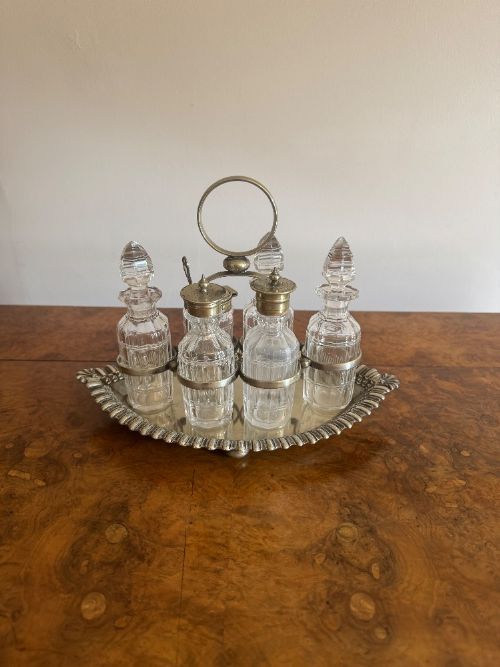
An antique silver condiment frame brings order to the table, holding glass bottles and casters securely within a structured silver or plated stand.
Antique Silver Condiment Frame
An antique silver condiment frame organises multiple cruets, bottles, and casters into a single portable stand for the dining table. These pieces range from compact three-bottle frames to large, multi-piece sets designed for grand meals.
The selections span several periods, including Georgian, Victorian, and Edwardian eras, alongside later pieces from the 1920s. Common forms include cruet sets, condiment stands, relish caddies, and decanter sets.
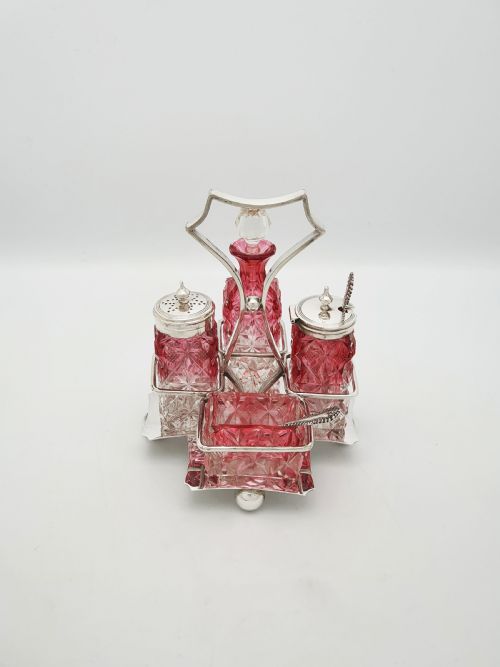
Many examples combine metal frames with fitted glass vessels, featuring cut glass or cranberry glass bottles. Their styles reflect prevailing design movements such as Gothic revival, novelty figural pieces, and classic Regency lines.
Materials and construction
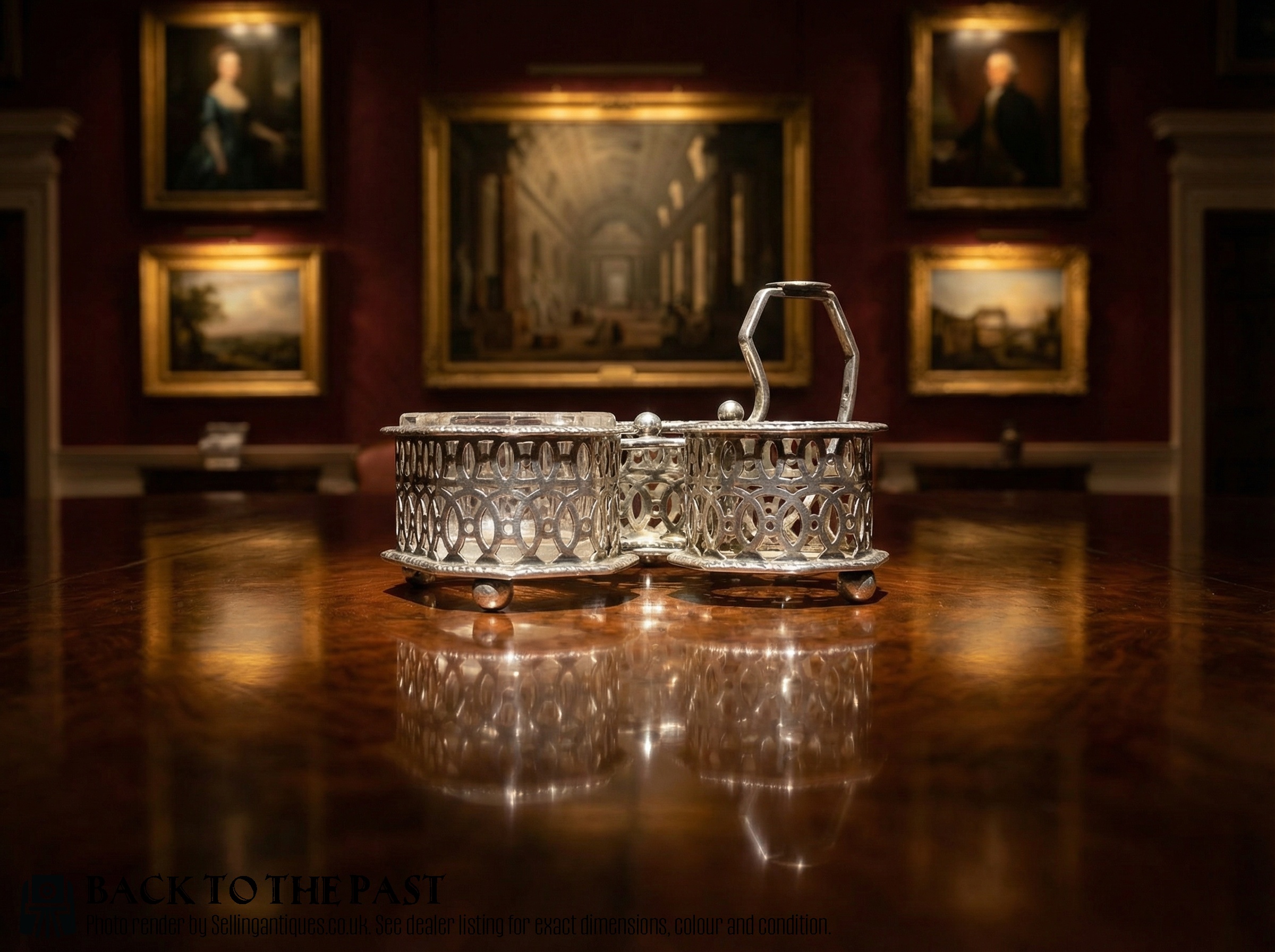
Maker workshops utilised sterling silver, silver plate, and Old Sheffield plate to form the structural stands and mounts. Handles, feet, and rings were cast or stamped before being soldered together to support the weight of the glass vessels.
Vessels were produced using clear, cut, or cranberry flashed glass, often shaped to fit designated rings within the metal frame. Sterling silver pieces carry hallmarks denoting the assay office, year, and silversmith, while plated items rely on base metal foundations.
Listings feature sterling silver and silver plate alongside Old Sheffield plate, paired with cut glass, plain glass, and cranberry glass.
Assessing quality and craftsmanship
Quality rests in the weight of the metal, the crispness of the chased or cast ornamentation, and the integrity of the fitted glass components. Heavier gauge silver and robust silver plate maintain their structural form better over decades of use.
The presence of matching, original glass bottles greatly influences the desirability of a frame. Superior examples demonstrate harmonious proportion between the stand and its vessels, with finely cut glass patterns matching the decorative detail of the metal.
Charles Thomas Fox·Mappin Brothers·Elkington and Co·Hester Bateman·William Hutton and Sons
The Antique Silver Condiment Frame Glossary
- Cruet set
- A collection of glass bottles for holding condiments such as oil, vinegar, salt, and pepper, fitted into a designated frame.
- Caster
- A small jar or bottle with a perforated top used for shaking sugar or dry spices over food.
- Old Sheffield plate
- A material made by fusing a thin sheet of silver onto a heavier copper core, common in items from the eighteenth and nineteenth centuries.
- Cranberry glass
- A translucent pinkish-red glass created by adding gold chloride to the molten batch, frequently utilised in Victorian tableware.
- Hallmark
- A series of official stamps applied to precious metals indicating the standard of purity, maker, and assay office.
Antique Silver Condiment Frame: Frequently Asked Questions
What are antique condiment frames used for?
These frames served to hold various liquid and dry seasonings together on the dining table, allowing diners to pass oils, vinegars, and spices with ease.
They kept the table organised during multi-course meals by gathering loose bottles into a single transportable stand.
How do I identify a Georgian condiment frame?
Georgian frames often exhibit classical proportions, restrained ornamentation, and clear hallmarks indicating late eighteenth or early nineteenth-century production.
They frequently employ sterling silver alongside matching cut glass bottles and casters secured in circular rings.
Are replacement bottles acceptable?
Finding a frame with its original matching glass bottles is preferable, though replacements often occur due to accidental breakage over centuries of use.
Matched sets retain greater cohesion, but many collectors accept period-appropriate glass that fits the frame apertures correctly.
How should silver condiment frames be cleaned?
Silver and silver-plated stands require gentle cleaning with a soft cloth and appropriate metal polish to preserve the underlying surface and any chased detail.
Avoid harsh abrasives, particularly on silver-plated items where excessive rubbing can wear through the thin silver layer to the base metal.