
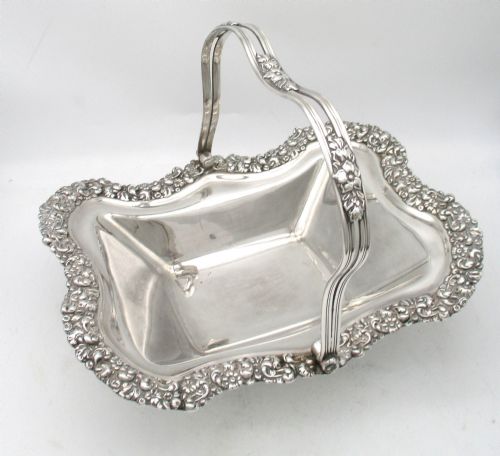
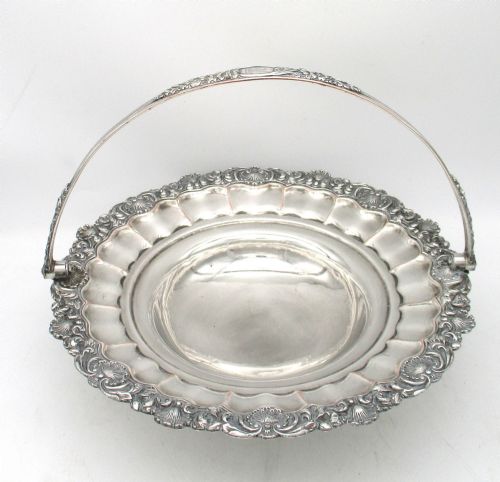


Antique Silver Cake Bowl
An antique silver cake bowl brings nineteenth and early twentieth century craftsmanship to the table, offering a decorative vessel suited for serving or display.
Antique Silver Cake Bowl
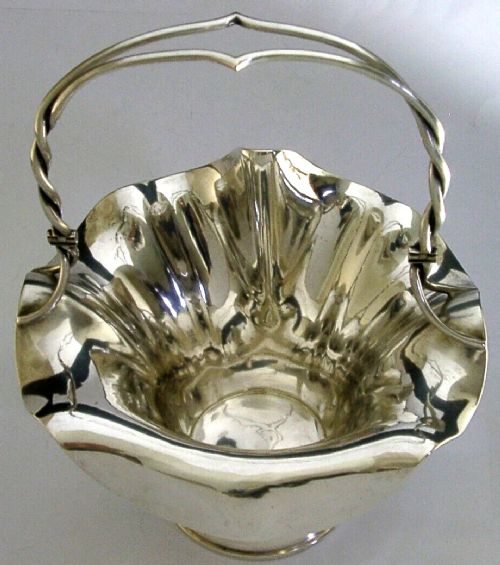
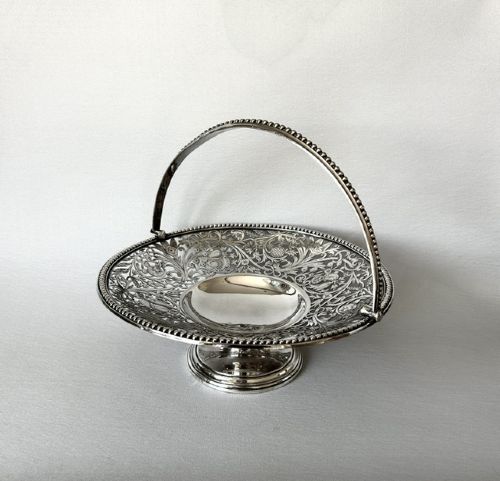
When searching for an antique silver cake bowl, buyers encounter a variety of forms including fruit baskets, bread baskets, centrepieces, and decorative bowls spanning the Georgian, Victorian, and Edwardian periods. These vessels were designed for formal dining and entertaining, functioning as both practical tableware and decorative objects.
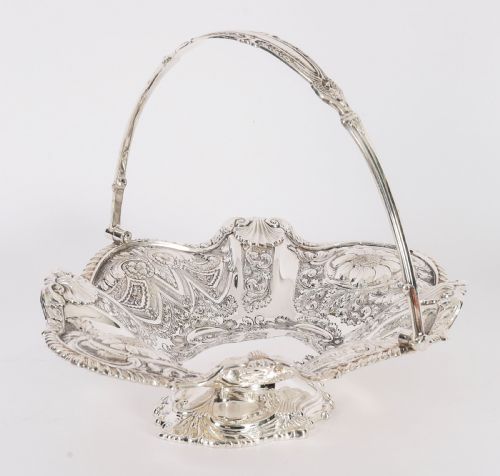
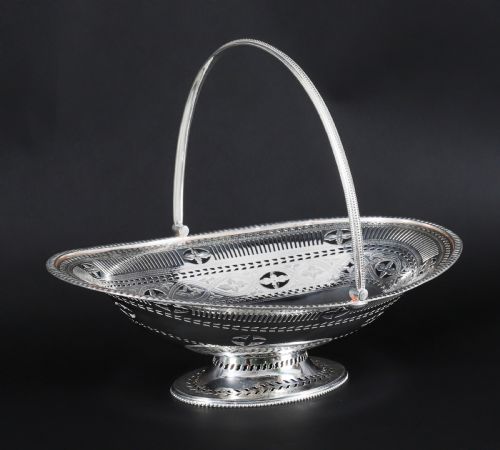
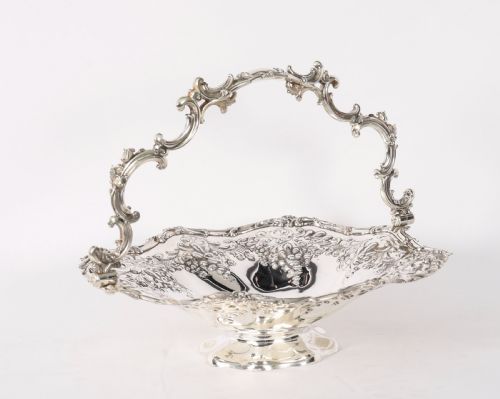
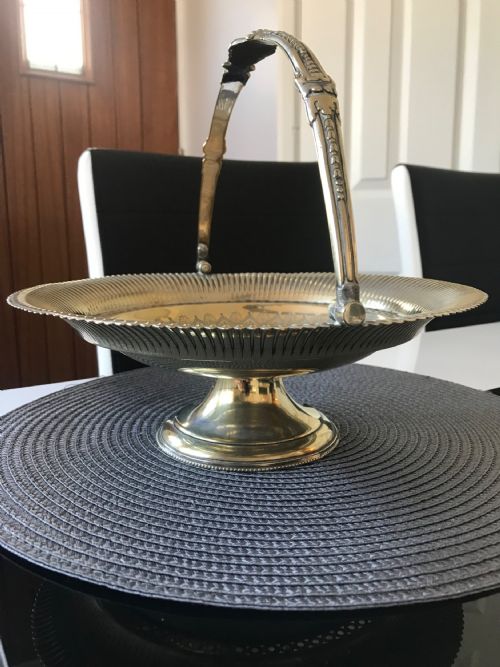
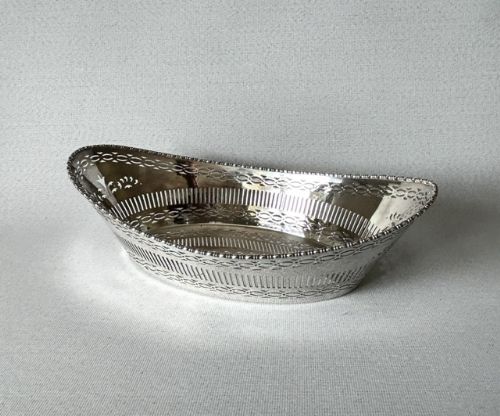
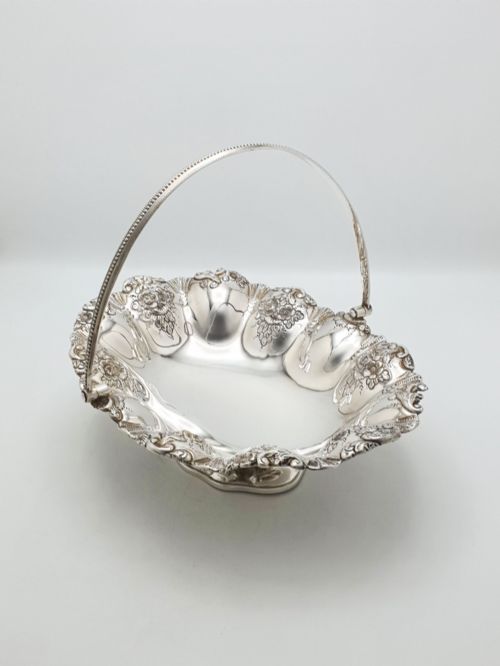
The pieces on this page appear in solid sterling silver, silver plate, and Old Sheffield plate, reflecting the shifting manufacturing methods of the nineteenth and early twentieth centuries. Forms range from swing-handled wirework and pierced lattice designs to heavy repoussé rims and footed bowls.
Victorian and Edwardian examples dominate the selection, showing stylistic influences from Rococo Revival and Neoclassical designs to organic Art Nouveau curves. Buyers frequently encounter silver plated versions alongside solid sterling pieces bearing hallmarks from Birmingham, Sheffield, and London.
How They Were Made
Makers utilised sterling silver and silver plate over base metals like copper, alongside specialised techniques such as Old Sheffield plating where a thin sheet of silver was fused to copper. Silversmiths shaped these materials through hammering, casting, and spinning.
Piercing, fretwork, and wirework created open lattice patterns across the body and handles of bowls and baskets. Repoussé and chasing techniques added raised floral and scroll ornamentation to the rims and borders of the vessels.
A few bowls arrive complete with original opaline glass liners, adding a flash of pastel colour to the silver wirework.
What Varies in Quality
Quality rests upon the crispness of the pierced or fretwork detail and the depth of the repoussé ornamentation executed by the silversmith. Heavier gauge metal provides structural integrity, distinguishing substantial solid silver and plated pieces from lighter domestic wares.
The integration of handles, feet, and decorative mounts reveals the maker's skill in assembly and finishing. Surviving original plating on Old Sheffield and silver plated examples indicates superior initial manufacturing standards.
George W. Scott & Sons Ltd·Mappin & Webb·Hammond, Creake & Co·William Hutton & Sons·James Dixon & Sons·Liberty & Co
The Antique Silver Cake Bowl Glossary
- Old Sheffield Plate
- A composite material made by fusing a thin sheet of silver to a thicker copper core. This technique predates electroplating and creates a warm dual-metal edge.
- Repoussé
- A metalworking technique where the artisan hammers the design from the reverse side to form raised patterns on the front. This ornamentation appears frequently on Edwardian and Victorian rims.
- Pierced Work
- The practice of cutting decorative geometric or lattice openings through the silver wall. It lightens the visual weight of large fruit and cake baskets.
- Sterling Silver
- An alloy consisting of pure silver and other metals, typically copper, standardised for strength and durability. Hallmarks on these bowls verify the silver standard and origin.
- Swing Handle
- A movable arched handle attached to the sides of a basket or bowl via pivots. It allows the vessel to be carried and stored compactly.
Antique Silver Cake Bowl: Frequently Asked Questions
What is the difference between a cake basket and a fruit bowl?
Cake baskets typically feature swing handles for passing around a table, whereas fruit bowls and centrepieces stand on fixed bases for stationary display.
Both forms share similar pierced or solid silver construction methods across Victorian and Edwardian manufacturing periods.
How do I care for antique silver and plated bowls?
Gentle cleaning with a soft cloth and specialised silver polish preserves the metal without removing the underlying plating or softening chased details.
Storing pieces away from direct humidity and rubber materials prevents tarnishing and protects the surface finish.
How can I tell the age of a silver bowl?
Hallmarks stamped on solid silver pieces indicate the assay office, standard, and date letter corresponding to specific active years of production.
Stylistic cues such as Art Nouveau asymmetrical lines or Neoclassical symmetry help date unmarked silver plated and Old Sheffield items.
Were these bowls used only for cake?
These versatile vessels served multiple purposes at the dining table, holding bread, pastries, and seasonal fruit alongside cakes.
Heavier examples functioned as formal centrepieces when left unladen on sideboards and dining tables.