


Antique Side Table with Tray
An antique side table with tray brings dual utility and classic form to a room, offering a removable surface paired with a sturdy stand.
Antique Side Table with Tray
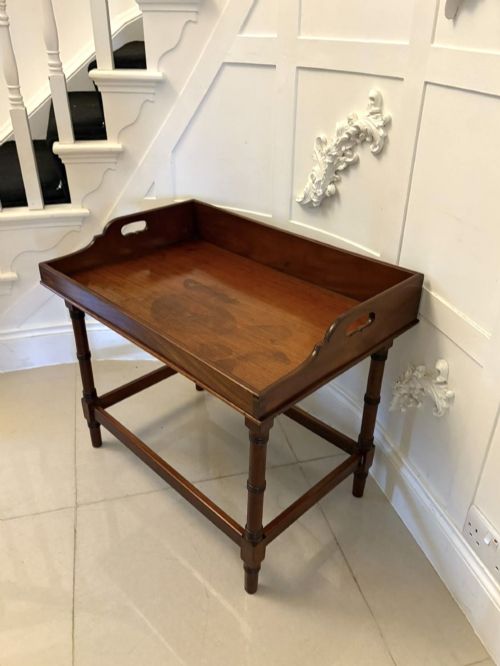
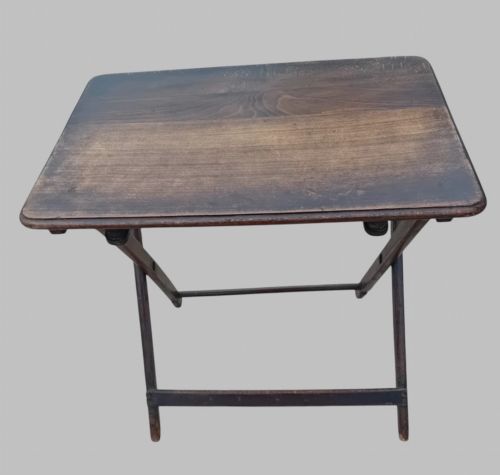
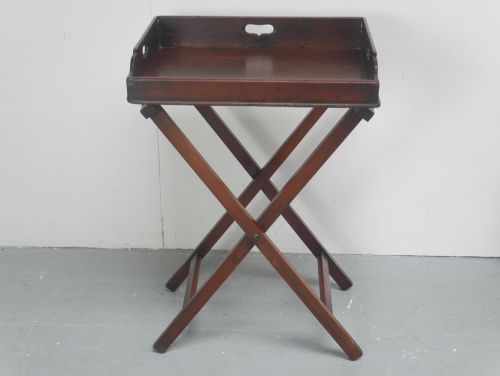
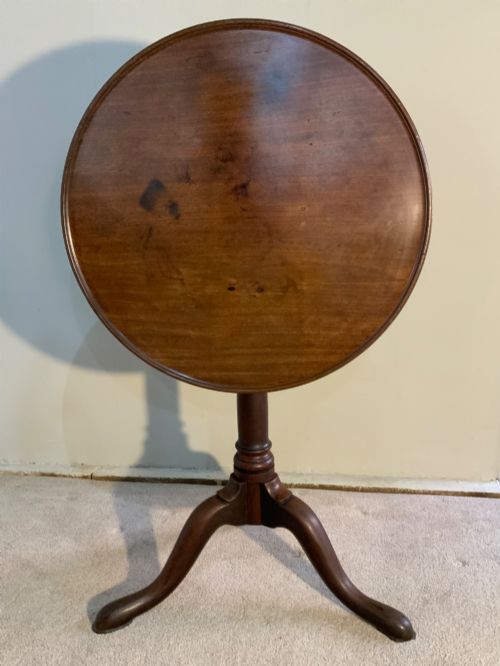
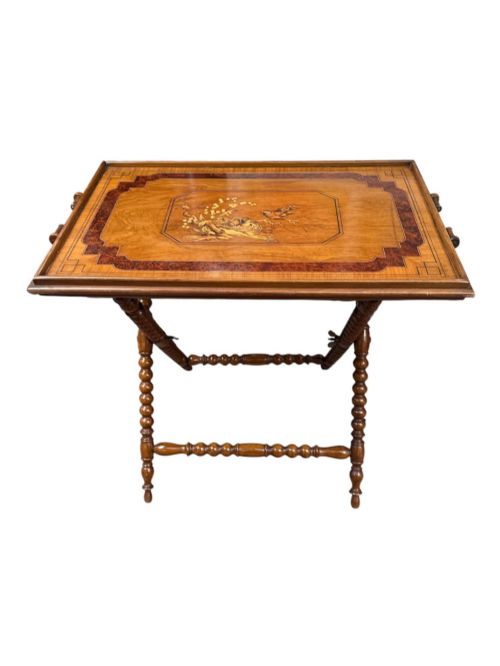
An antique side table with tray bridges the gap between portable servingware and permanent furniture, typically combining a raised rim tray with a matching or adapted folding stand.
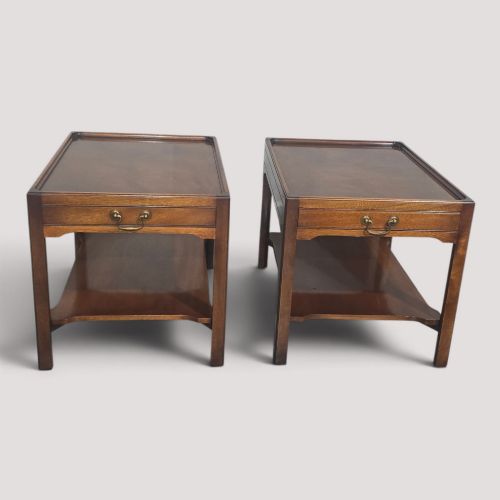
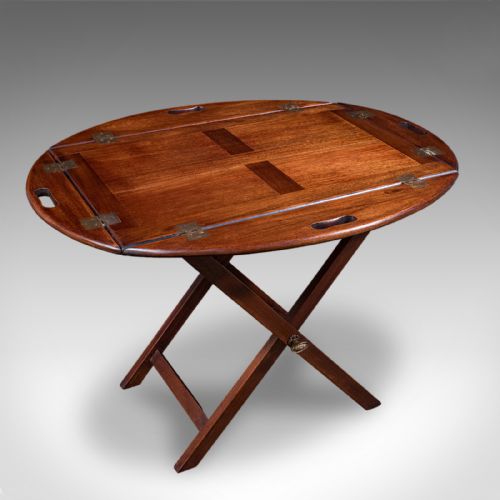
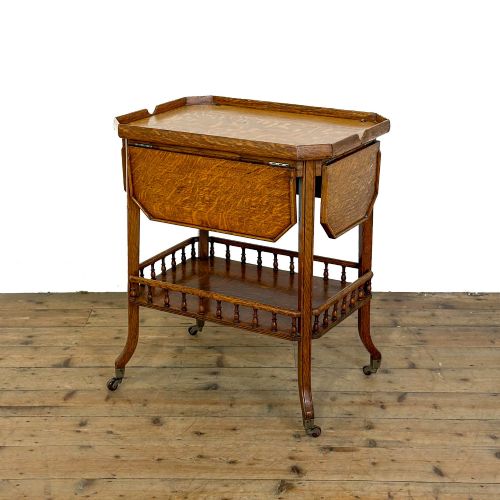
The selections span distinct eras from the Georgian period through the Victorian and Edwardian decades, encompassing both dedicated butler's tables and occasional tables with tray tops.
Forms range from sturdy oak and mahogany examples meant for heavy domestic service to more decorative pieces incorporating brass, copper, and glass.
How They Were Made
Cabinetmakers utilised dense timbers such as mahogany, Cuban mahogany, walnut, and oak to construct both the tray bases and the supporting frames.
Metal elements appear frequently, from solid brass mounts and bound decorations on Georgian tables to silver plate, EPNS, and engraved copper trays.
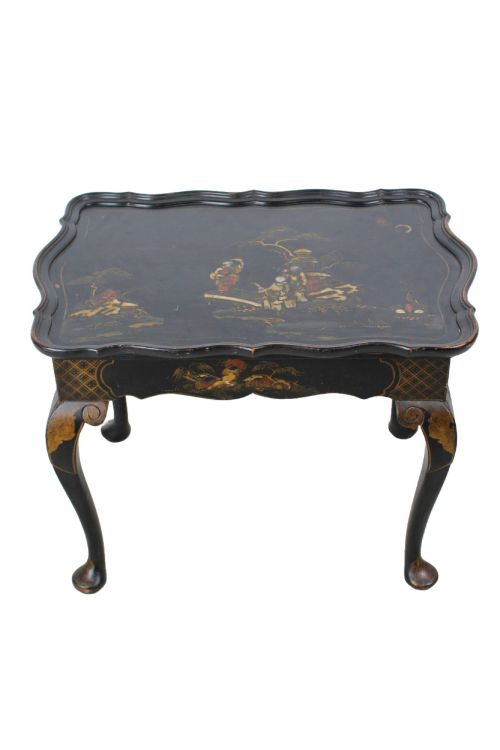
Specialised techniques include carved cabriole legs, hand-painted neo-classical scenes, and precise joinery to ensure the removable trays fit securely upon their folding or fixed stands.
Listings feature woods spanning oak, walnut, standard mahogany, and dense Cuban mahogany alongside brass, copper, and glass elements.
What Varies in Quality
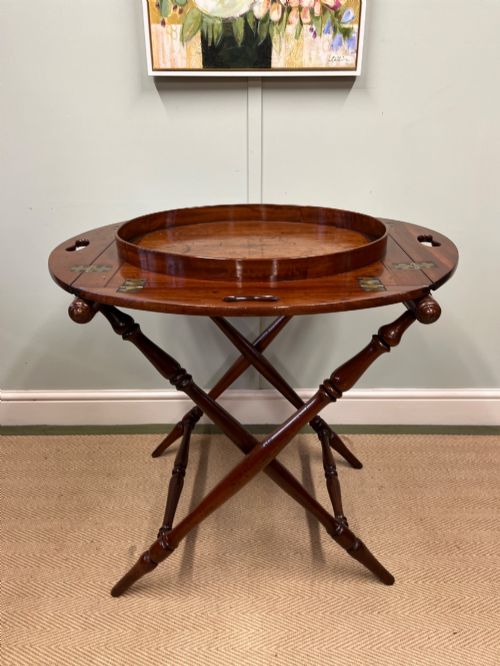
Quality rests primarily on the selection of timber and the harmony between the tray and its stand, particularly whether the stand is original to the piece.
Finishing details elevate certain examples, such as fine brass bound decoration, hand-engraved metalwork, or crisp cabinet carving on the legs and frame.
The Antique Side Table with Tray Glossary
- Butler's Tray
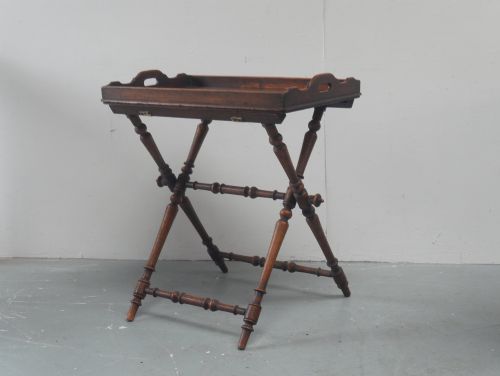
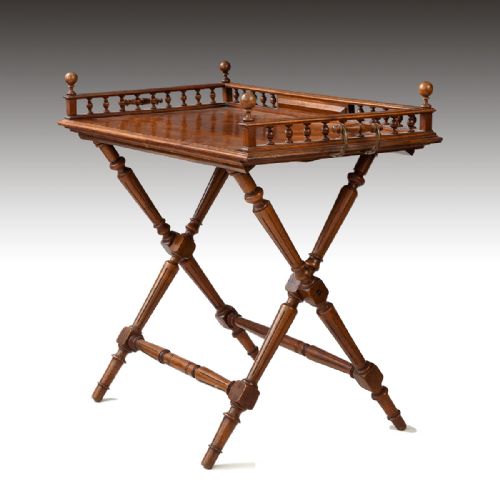
- A rectangular wooden tray with hinged or cutout sides designed for carrying service items, usually resting on a separate folding X-frame stand.
- Tray Table
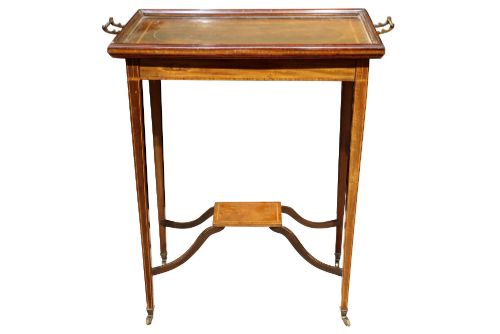
- A dual-purpose piece featuring a removable tray top supported by a dedicated frame, functioning as both a serving vessel and an occasional table.
- Cuban Mahogany
- A dense, richly grained hardwood sourced from the Caribbean and favoured by 18th-century cabinetmakers for high-end furniture.
- Silver Plate
- A base metal coated with a thin layer of silver, commonly utilised for serving trays and decorative top inserts during the 19th and early 20th centuries.
- Etagere
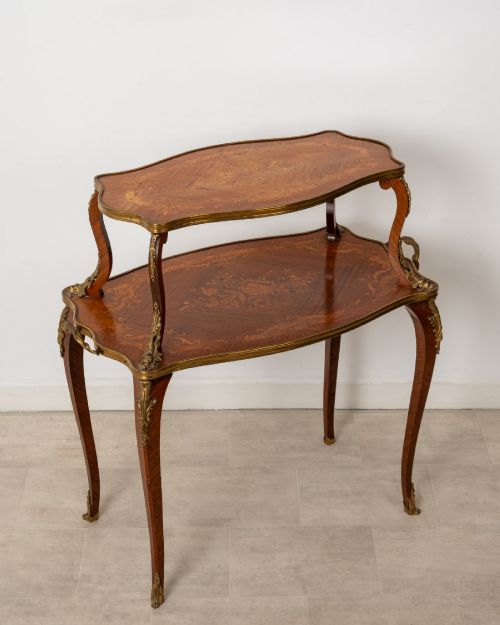
- A set of open shelves or tiers used for displaying objects, sometimes incorporating glass trays as seen in late 19th-century French designs.
Antique Side Table with Tray: Frequently Asked Questions
How do I know if the stand is original to the tray?
Examine the wear patterns, timber species, and overall patina across both components to check for consistency in age and craftsmanship. Original stands typically show matching wear where the tray rests upon the frame.
Subsequent marriages of trays and stands remain common in the antique trade because the portable upper sections were prone to heavier handling and loss over the decades.
Can I use an antique tray table for serving drinks?
Solid wood and metal-mounted tray tables handle everyday display and light hosting duties well, provided you protect vulnerable timber surfaces from moisture. Many period pieces were built specifically for domestic service involving silver and glassware.
Consider placing coasters or protective liners on antique wood surfaces to preserve the original polish and prevent water rings from forming on the finish.
How do I date an antique tray table?
Dating relies on identifying stylistic markers, timber types, and construction methods characteristic of specific periods like the Georgian era, the Victorian age, or the Edwardian years. Georgian pieces often feature Cuban mahogany and brass bound edges, while Edwardian examples introduce lighter oak and novelty cartographer motifs.
Hardware, dovetail construction, and the presence of period materials like early silver plate or EPNS help narrow down the manufacturing decade.