





Antique Shovel and Tongs
These antique shovel and tongs sets form the working heart of a period hearth, combining utility with distinct metalwork.
Antique Shovel and Tongs
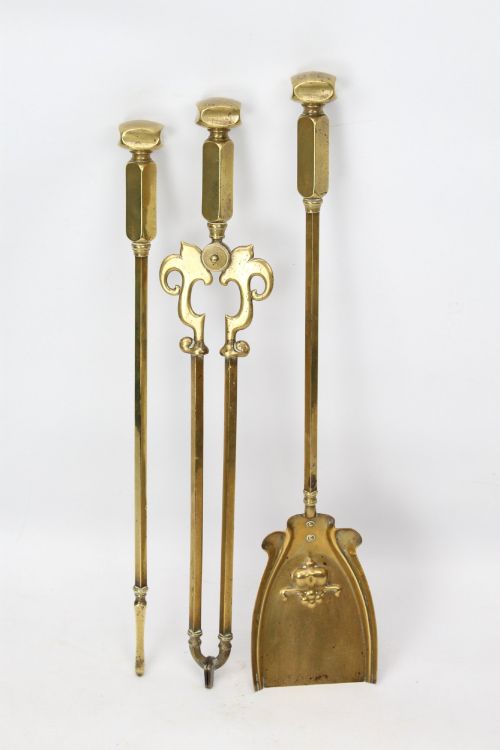
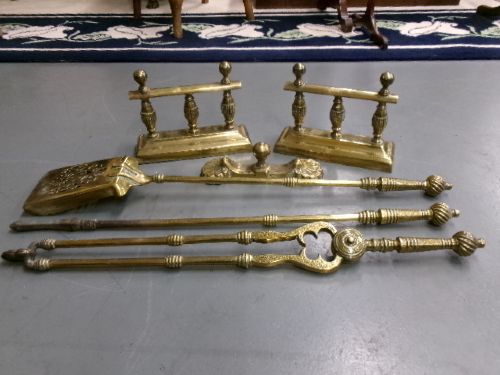
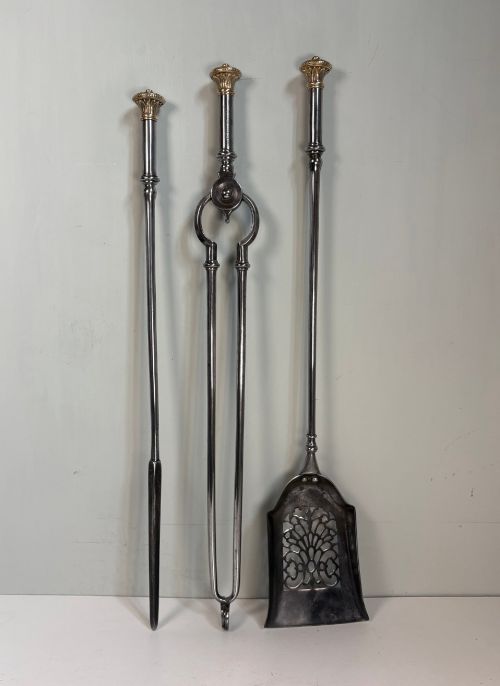
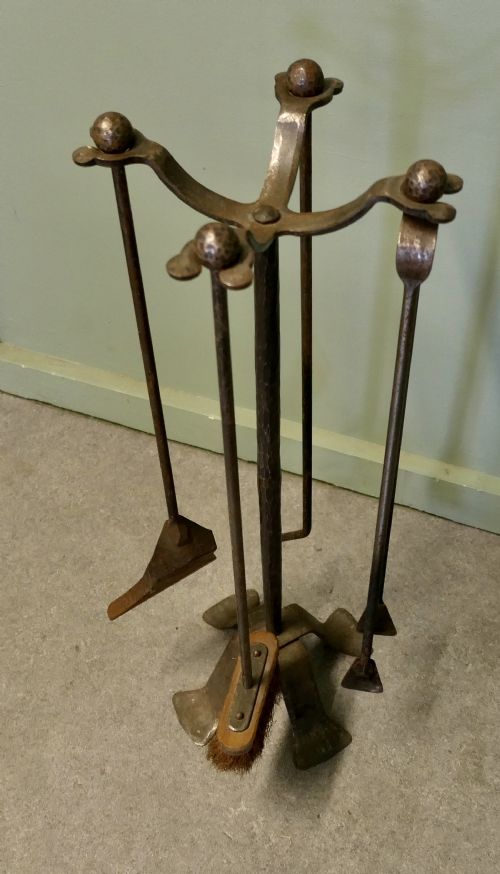
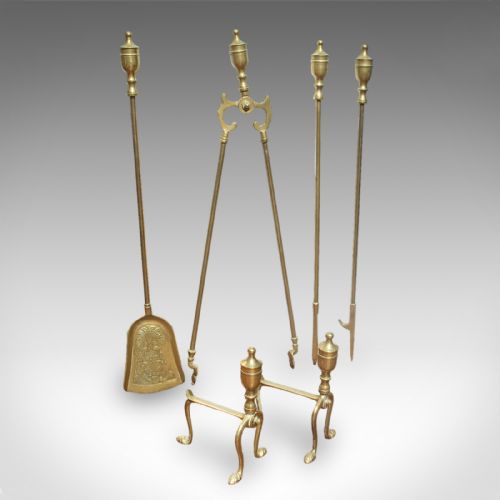
A buyer examining antique shovel and tongs sets encounters matching fireplace tools designed for managing coal or wood fires. These pieces frequently appear within larger companion sets alongside pokers and fire dogs.
The selections on this page span several distinct eras, with nineteenth-century Victorian and Georgian examples dominating the forms. English and French origins appear frequently among the listings, ranging from robust manor house sets to refined parlor accessories.
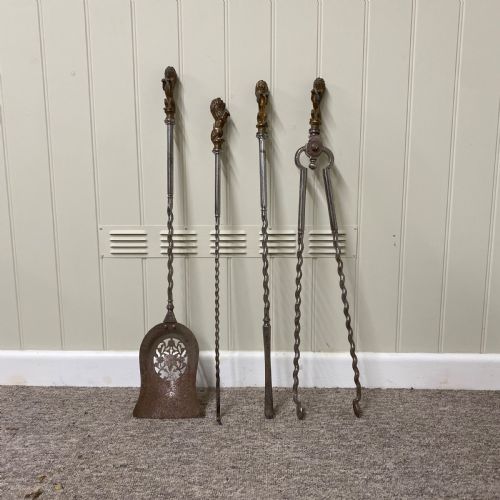
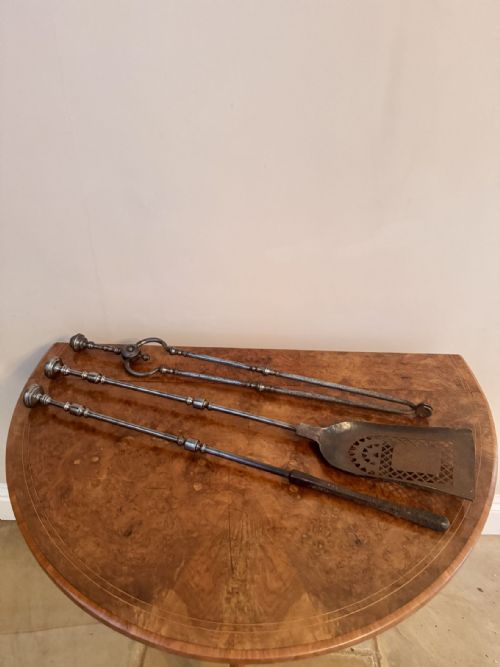
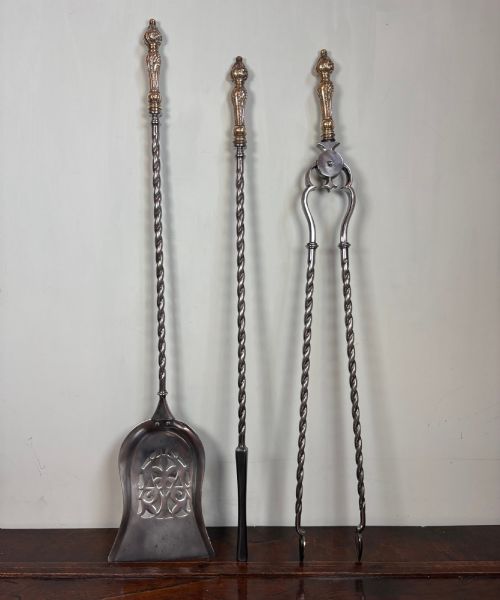
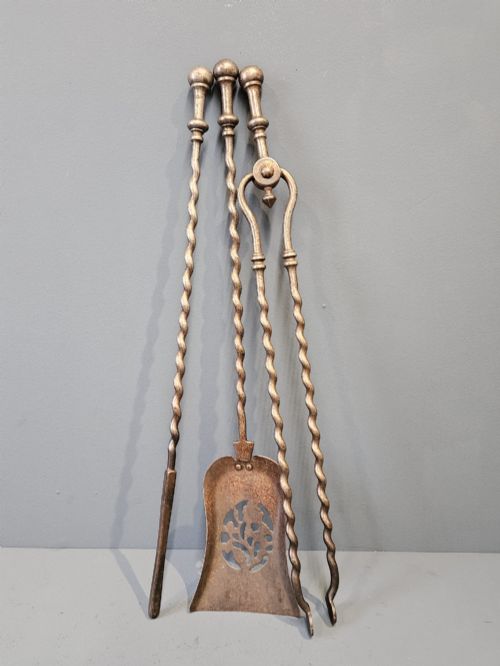
Sets commonly comprise a shovel for ash collection and tongs for manipulating fuel, forged or cast as a matched suite. Collectors often find them paired with fenders or housed in dedicated stands by the hearth.
Materials and construction methods
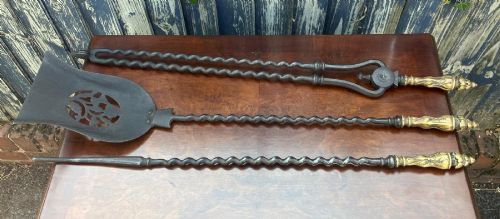
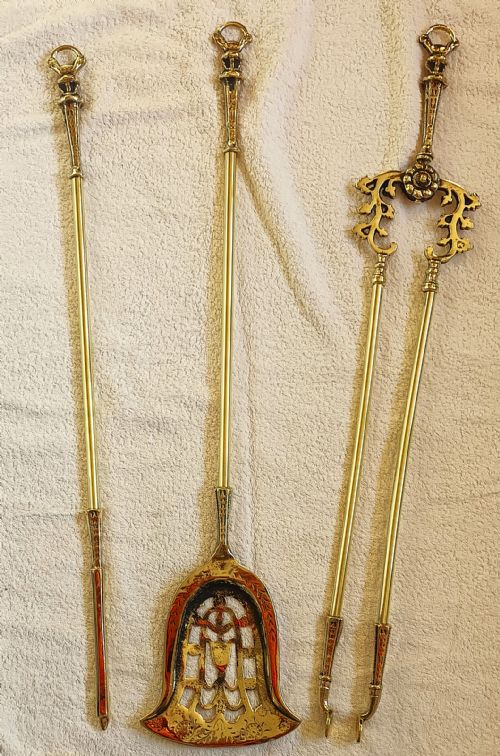
Makers utilised resilient metals such as steel, iron, and wrought iron for the structural components of the tools to withstand intense hearth temperatures. Polished steel and gunmetal provide bright surfaces, while brass and gilt brass offer warmth and decorative contrast.
Craftsmen applied specialised techniques including rope twist forming on handles and detailed casting for decorative finials. Individual components were joined securely, balancing weight and leverage for practical domestic use.
Antique Shovel and Tongs Retail Price Guide 2026
Typical asking prices for shovel and tongs among the pieces listed under this phrase on Sellingantiques today, from the lower quarter to the upper quarter. They describe what is for sale here now, not the wider market.
Some nineteenth-century tongs feature surprisingly strong springs, ready to launch a stray coal across the rug.
Distinctions in grade and execution
Quality rests upon the integrity of the metalwork and the crispness of decorative details like rope twist handles or cast finials. Superior sets maintain structural rigidity in the tongs and a balanced weight across all implements.
The choice of materials also dictates the grade, where heavy-gauge wrought iron or finely polished steel outlasts lighter, mass-produced alternatives. Makers who invested time in hand-finished surfaces produced sets with enduring visual presence.
The Antique Shovel and Tongs Glossary
- Companion set
- A matched group of fireplace tools, typically comprising a shovel, tongs, and poker, often displayed together on a stand or fender.
- Fire dogs
- Metal supports placed on either side of a hearth to hold logs, frequently found accompanying period fire tool sets.
- Gilt brass
- Brass coated with a thin layer of gold or gold-coloured finish to enhance decorative brilliance.
- Rope twist
- A decorative carved or forged spiral pattern resembling twisted rope, commonly found on handles.
Antique Shovel and Tongs: Frequently Asked Questions
How do I date an antique shovel and tongs set?
Dating relies on stylistic markers, manufacturing techniques, and the prevailing designs of periods like the Georgian or Victorian eras. Examining the specific alloy and handle ornamentation often points to a particular decade of production.
Makers frequently adopted regional conventions that shift subtly from the eighteenth century into the Edwardian period. Comparing the construction against documented domestic metalwork helps narrow the timeframe further.
Were these tools used for coal or wood fires?
Fire tools served both fuel types depending on the grate and the era, with tongs adapting to grasp logs or coal lumps. Shovels handled ash clearance regardless of whether the hearth burned wood or mineral fuel.
Sturdier wrought iron sets often suited larger manor house hearths burning heavy logs. Lighter brass and polished steel suites typically graced refined coal-burning domestic parlours.
What is the difference between steel and brass fire tools?
Steel and wrought iron provided maximum strength and heat resistance for heavy-duty stoking and ash management. Brass and gilt brass offered a decorative finish that brightened the fireplace when not in active use.
Many period sets combined both metals, utilising steel for the functional shafts and shovels alongside brass for decorative handles.
How should I clean polished steel fire tools?
Polished steel requires careful maintenance to prevent oxidation in damp environments while preserving the original reflective surface. Light applications of protective oil help maintain the metal without altering its age character.
Harsh abrasives should be avoided entirely to protect any subtle hand-finishing or historical patination. Keeping the tools dry near an active hearth remains the best preventative measure.