





Antique Shipping Harbour Canvas
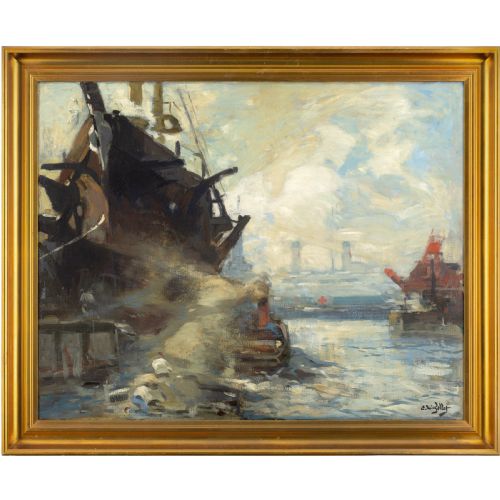
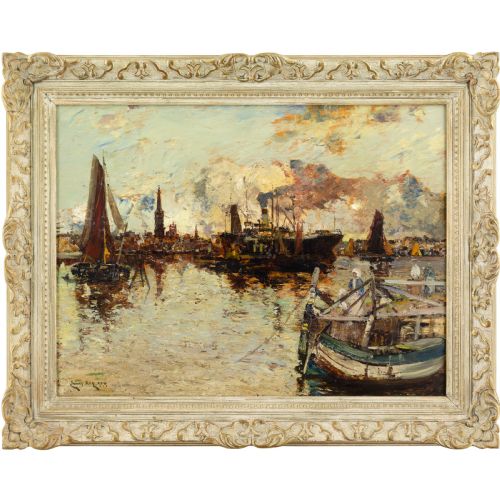
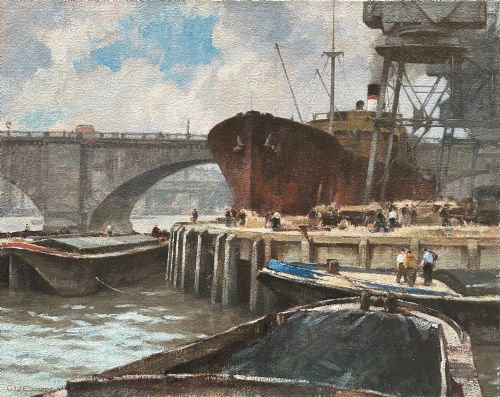
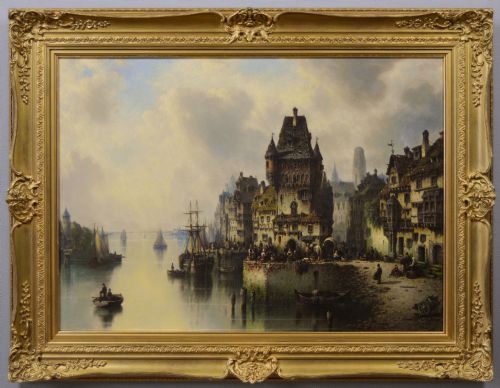
These antique shipping harbour canvas works capture bustling maritime life through enduring oil painting.
Antique Shipping Harbour Canvas
An antique shipping harbour canvas brings maritime history into a room through oil paint applied to woven fabric. These paintings record bustling ports, tidal rivers, and coastal anchorages from the Victorian era into the early twentieth century.
Most examples found here date from the nineteenth and early twentieth centuries, spanning periods from the early eighteen hundreds to nineteen thirty. The selection covers British and continental scenes, ranging from busy commercial rivers like the Thames to quiet coastal inlets.
Subjects include named vessels, shipyards, and urban waterfronts rendered by period marine artists. Buyers encounter both intimate river views and large harbour panoramas framed in original wood and giltwood.
How they were made
Artists painted these works using oil paint on stretched canvas supported by wooden stretcher frames. Painters applied pigment with brushes, building up rich surfaces that captured water, sky, and vessel details.
Many works retain their period frames constructed from wood and finished with gesso and gold leaf or gilt. These gilded surrounds complement the marine subject matter and protect the edges of the canvas.
Periods represented span from the early nineteenth century through the Victorian era up to nineteen thirty.
What varies in quality
Quality rests in the artist's ability to render water, rigging, and atmospheric light convincingly. Skilled hands capture the movement of waves and the specific architecture of historical shipping without stiff brushwork.
The integrity of the canvas and the preservation of the original oil paint surface determine the enduring strength of the piece. Superior works retain crisp details in the rigging and townscapes alongside complementary period frames.
Eugène-Louis Gillot·James Kay RSW·Charles William Wyllie·George Gregory·John Callow·William Langley·Hubert Thornley·Ludwig Hermann·Edward Fletcher·John James Wilson·Johan Jens Neumann·Francis Moltino·Bertram Priestman·James Scrimgeour Mann·Walter J. Hall
The Antique Shipping Harbour Canvas Glossary
- Canvas
- A heavy woven fabric used as a surface for oil painting. It provides the flexible base stretched over wooden frames for these marine works.
- Giltwood
- Wood carved and covered with a thin layer of gold leaf or metallic powder. This material frequently forms the ornate frames housing nineteenth-century marine paintings.
- Gesso
- A plaster-like mixture applied to wooden frames before gilding. It provides a smooth surface for laying down gold leaf.
- Maritime
- Pertaining to the sea, shipping, and navigation. This category embraces the harbours, rivers, and vessels depicted in these oil paintings.
- Impressionism
- An art style focusing on light and loose brushwork rather than strict detail. Several later works on this page reflect this approach to capturing water and air.
Antique Shipping Harbour Canvas: Frequently Asked Questions
What periods do these paintings cover?
The works span from the early nineteenth century through to nineteen thirty. They include Georgian and Victorian examples alongside twentieth-century maritime pieces.
Most pieces cluster around the nineteenth century and the early decades of the twentieth century.
Where do these harbour scenes take place?
Locations range across British rivers and ports such as the Thames, the Medway, Portsmouth, and Hull. Continental harbours like Antwerp and Ostend also appear.
Views capture specific ports, shipyards, and urban waterfronts from various European maritime centres.
How should I frame an antique canvas?
Many of these paintings retain their original wood and giltwood frames. Keeping the canvas in its period frame preserves its historical context.
If framing requires attention, consult a professional conservator to select a moulding appropriate to the painting's age.
What subjects feature in these works?
Paintings show sailing ships, steam vessels, shipyards, and bustling commercial docks. Artists recorded daily maritime traffic, moonlight on water, and wartime shipping.
Scenes range from quiet coastal inlets to busy industrial river pools filled with vessels.