




Framed Coastal Town Artwork
Framed coastal town artwork captures maritime settlements in oils and watercolours across the nineteenth and twentieth centuries.
Framed Coastal Town Artwork
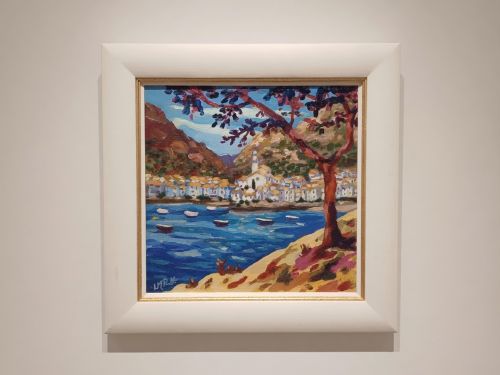
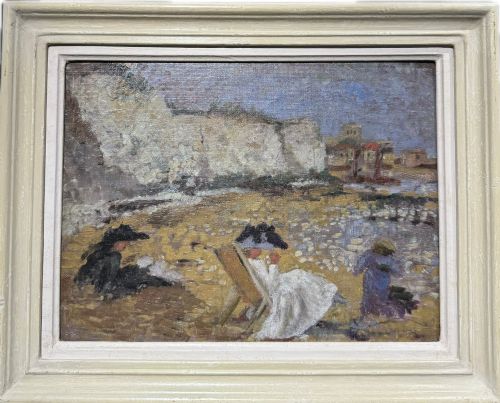
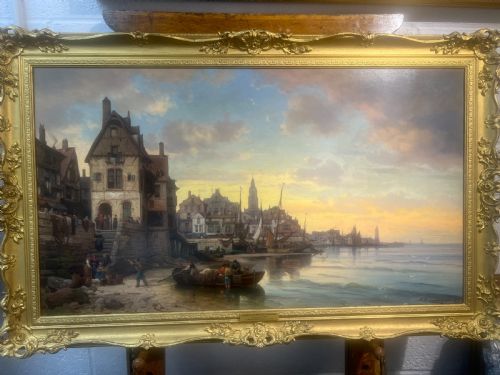
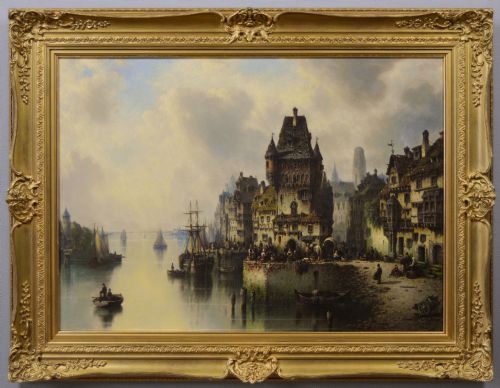
Framed coastal town artwork encompasses paintings depicting harbours, seaside settlements and maritime vistas from various periods. These works capture ports and coastal communities through distinct artistic lenses ranging from Victorian traditionalism to mid-century impressionism.
Buyers meeting these pieces on this page will most commonly encounter watercolours and oil paintings on canvas or paper. Subjects span British and continental scenes, including specific locations such as Whitby, St. Ives and the Firth of Forth.
Materials and construction
Artists rendering these coastal scenes utilised oil paint and watercolour on paper, canvas and wood panel. These mediums allowed painters to capture maritime light, sea spray and harbour architecture with varying degrees of texture and fluidity.
The surviving pieces are housed in period frames, often incorporating wood and gold leaf construction that complements the aesthetic of the artwork within.
Common materials recorded across the inventory include canvas, paper, wood and gold leaf.
Factors determining quality
Quality in these coastal works rests upon the artist's handling of atmospheric light and topographical precision. Superior pieces demonstrate a confident command of medium, whether capturing the bustling activity of a continental harbour or the quiet luminosity of a northern sea.
The harmony between the painting and its original or period frame contributes significantly to the overall integrity of the piece. Works that retain their contextual framing offer a more complete historical statement.
Lucy Pratt·Ethel Sands·Charles Euphraisie Kuasseg·Cecil Rochfort D'Oyly-John·Gustave de Breanski·Albert Robert Quinton·Rowland Henry Hill·Walter Emsley·Ludwig Hermann·Cuthbert Crossley·Donald Wood
The Framed Coastal Town Artwork Glossary
- Watercolour
- A painting method in which the paints are made of pigments suspended in a water-based solution. This technique is frequently employed on paper for delicate coastal views.
- Oil on canvas
- Pigments bound in a medium of drying oil applied to stretched fabric. This combination provides durability and allows for rich textural application.
- Gold leaf
- Gold beaten into extremely thin sheets utilised for gilding frames. It provides a reflective border that enhances the tones of the painting.
- Post-Impressionism
- An art movement extending beyond impressionism while retaining its use of vivid colours. Works in this style focus on symbolic motifs and distinct brushwork.
Framed Coastal Town Artwork: Frequently Asked Questions
How do I identify the period of a coastal painting?
Dating relies on examining the painting technique, the materials of the support, and stylistic clues within the architecture and clothing depicted in the scene. Framing styles also offer reliable indicators of the era in which the work was mounted.
Comparing the signature or attribution with known working dates of artists provides further chronological certainty.
Where should I hang a coastal artwork?
These pieces suit rooms with stable humidity and indirect natural light to protect organic materials like paper and canvas from fading. Placing them away from direct heat sources preserves both the painting and its wooden frame.
Consider eye-level placement in spaces where the narrative of the harbour view can be appreciated closely.
What is the difference between watercolour and oil coastal scenes?
Watercolour works on paper offer a translucent quality that captures transient light and coastal mist with immediacy. They traditionally require protective glass framing to prevent moisture damage.
Oil paintings on canvas present heavier textures and richer pigments, allowing for a more robust physical presence that does not require glass.
How do I care for a framed painting?
Dust frames gently with a soft, dry cloth and avoid chemical cleaning agents on both the gilded surfaces and the painted canvas or paper. Maintaining consistent room temperature prevents warping in the wood.
Professional conservators should handle any structural repairs to the canvas or the frame.