
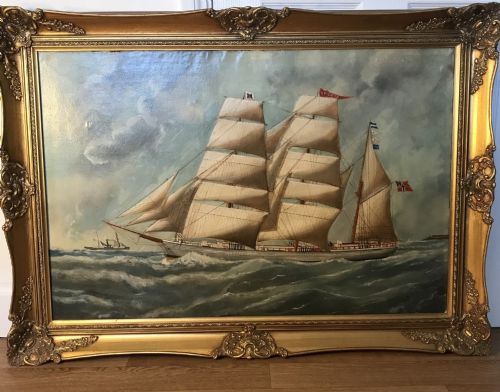
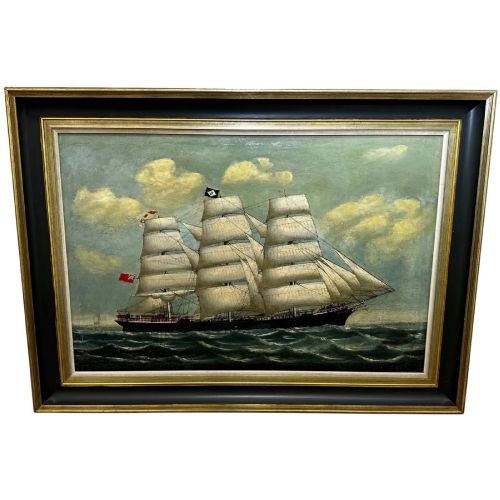
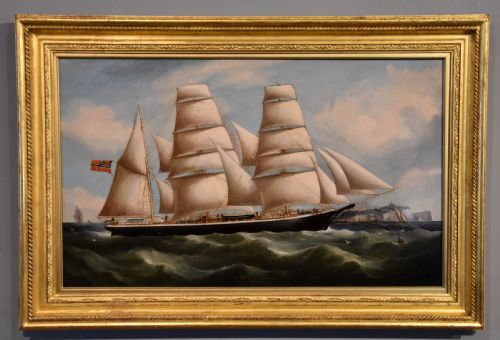


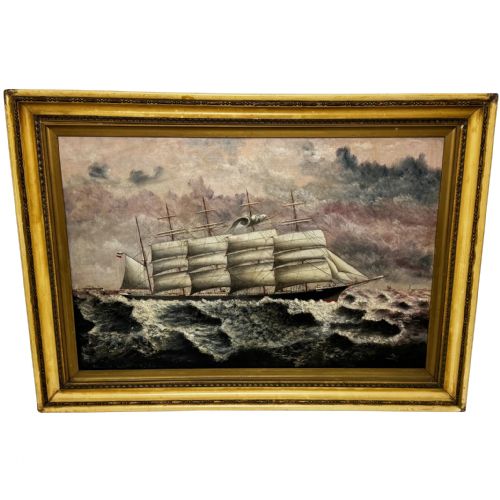


Antique Ship Portrait Canvas
An antique ship portrait canvas captures the maritime heritage of the sail and steam eras in oil paint.
Antique Ship Portrait Canvas
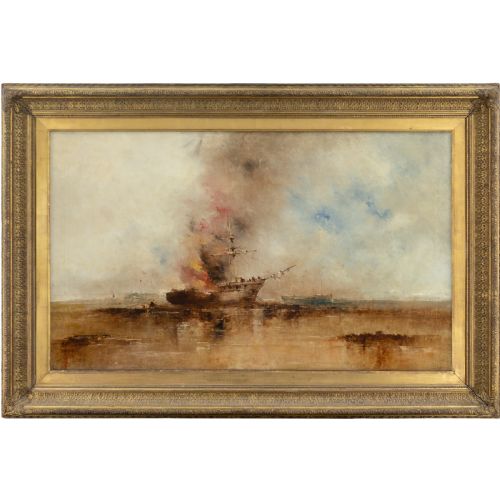
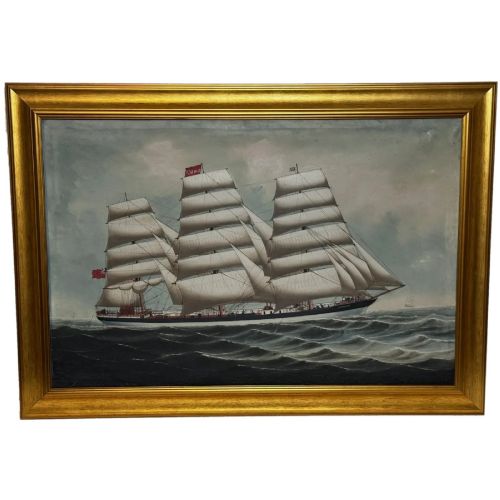
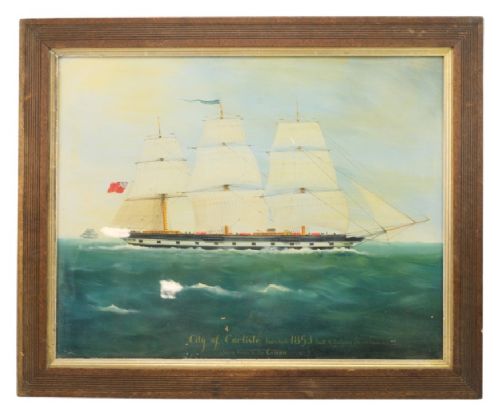
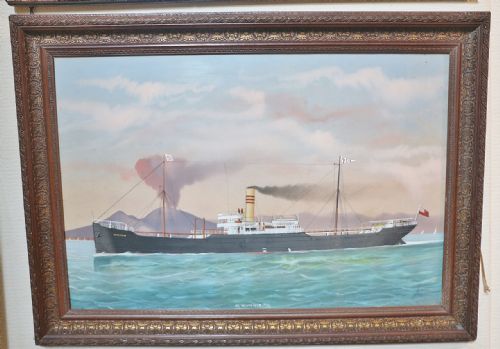
An antique ship portrait canvas records named vessels, naval vessels and merchantmen across the nineteenth and early twentieth centuries. These works document specific ships like the barque Vick or the clipper Slieve Roe, often painted with precise rigging and coastal landmarks.
Most pieces encountered on this page belong to the Victorian and Edwardian periods, executed in oil on canvas and frequently housed in giltwood frames. The subjects range from three-masted schooners and steel-hull ships to ocean liners and steamships.
Makers include named artists such as William McAlpine, Richard B. Spencer and Joseph Heard, alongside Anglo-Chinese and Neapolitan pierhead painters. Works span Georgian maritime scenes through to mid-twentieth-century depictions of naval cruisers.
Materials and Techniques
These works utilise oil paint applied to stretched woven canvas surfaces, capturing the play of light on water and the details of maritime rigging. Pigments are layered to render heavy seas, coastal skies and the distinct architectural lines of wooden and steel hulls.
Many canvases are framed in wood with gold leaf or gilt finish, reflecting the traditional framing methods of nineteenth-century marine art. The combination of oil medium and sturdy canvas support ensures the longevity of these historical records.
Subject matter ranges from three-masted schooners and naval cruisers to ocean liners navigating heavy seas and coastal waters.
Judging Quality in Marine Art
Quality rests in the precision of the vessel's rigging, the accuracy of maritime architecture and the convincing movement of water. Skilled hands render the hull and sails with proportional correctness, reflecting genuine nautical knowledge.
The handling of atmospheric conditions, such as choppy waters or heavy seas, separates standard pierhead records from masterworks. The integrity of the original canvas and the preservation of the oil paint layers further determine the standing of each piece.
William McAlpine·Reginald Arthur Borstel·Lai Fong·Richard B. Spencer·Marie-Edouard Adam·Joseph Heard·Johan Jens Neumann
The Antique Ship Portrait Canvas Glossary
- Pierhead painting
- A genre of ship portrait created near ports, often commissioned by captains or shipowners to record a specific vessel. These works prioritise accurate rendering of the ship's rigging and port backdrop.
- Barque
- A sailing vessel with three or more masts, having square sails on the foremast and mainmast and mizzen sails fore-and-aft rigged. This configuration was common for nineteenth-century merchant ships.
- Giltwood
- Wood carved and covered with a thin layer of gold leaf or gold paint. This material is standard for framing period marine oil paintings.
- Clipper
- A very fast nineteenth-century merchant sailing ship with three masts and a square rig. They are frequently depicted under full sail in open water.
Antique Ship Portrait Canvas: Frequently Asked Questions
What is an antique ship portrait canvas?
An antique ship portrait canvas is an oil painting on fabric that depicts a specific named vessel, such as a clipper, barque or steamship. These works served as historical records for captains, owners and maritime enthusiasts.
Made primarily during the nineteenth and early twentieth centuries, these paintings combine technical accuracy regarding ship rigging with realistic seascapes.
How do I identify the period of a marine painting?
The period is often indicated by the type of vessel depicted, such as a wooden barque from the mid-nineteenth century or an Edwardian steamship. Costume, framing materials and artist signatures also help establish the date.
Examining the construction of the canvas stretcher and the style of the oil paint application provides further clues to the decade of creation.
Where were pierhead paintings made?
Pierhead paintings were typically produced by local artists working in busy ports, such as Naples or Chinese treaty ports. Crews and captains commissioned these portraits before departing on new voyages.
These works focus heavily on accurate port topography and the exact structural details of the vessel.
How should I care for an oil painting on canvas?
Keep the canvas away from direct sunlight and fluctuating humidity to prevent the oil paint from cracking. Dust the surface gently with a soft, dry brush without applying pressure.
Avoid using chemical cleaners on the canvas or the giltwood frame, and consult a professional conservator for cleaning.