

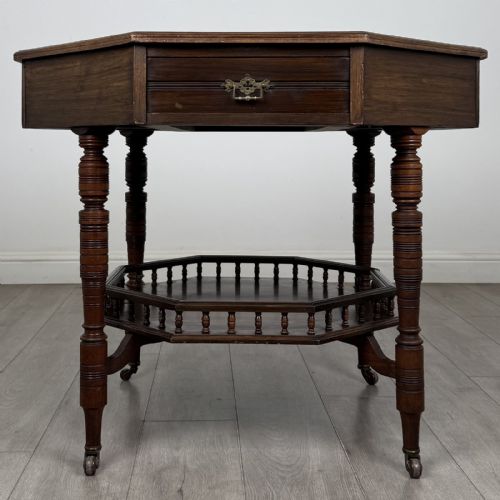
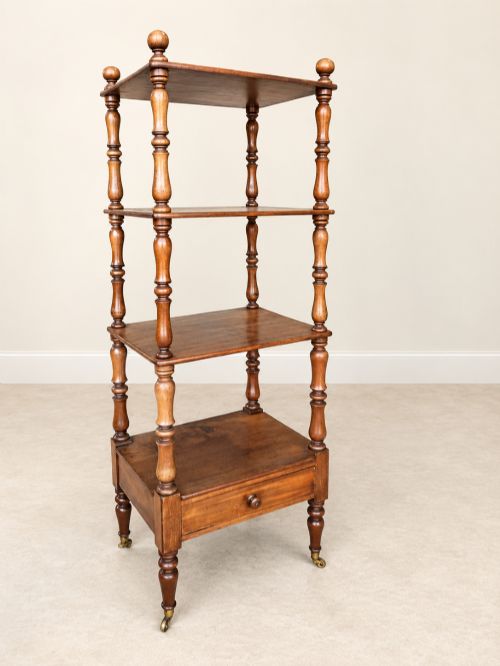
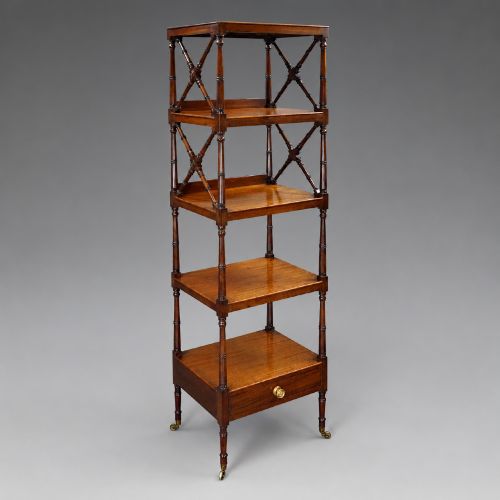
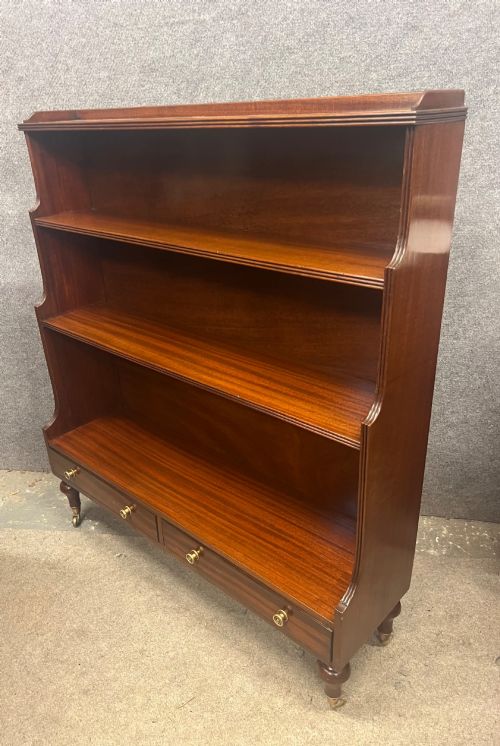





Antique Shelf on Castors
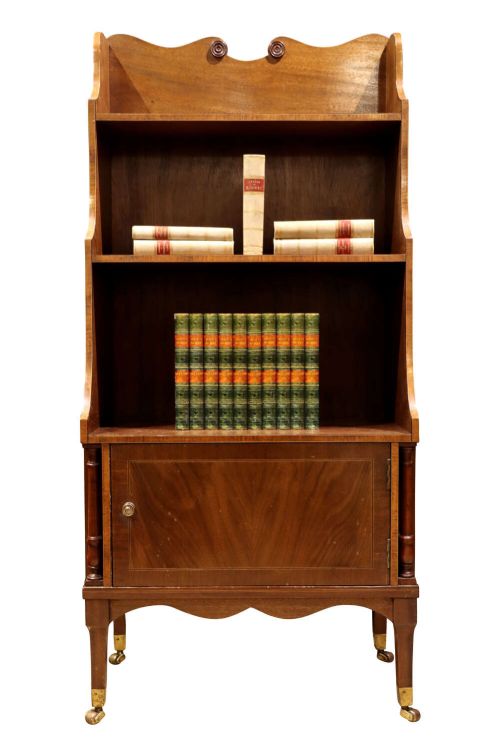
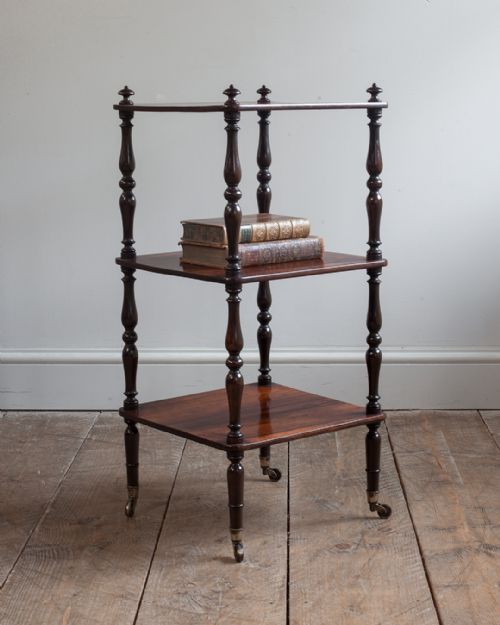
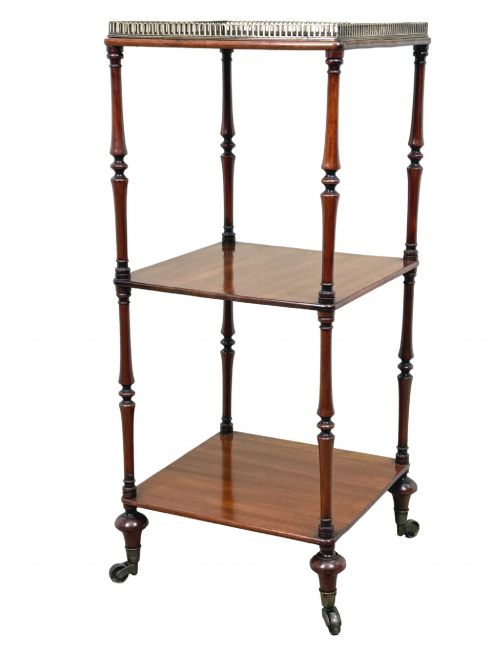
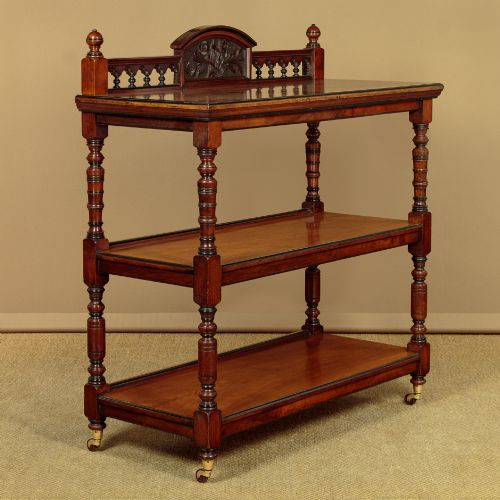
These antique shelf on castors designs are mobile timber tiers built to move freely across floors without losing their sturdy stance.
Antique Shelf on Castors
An antique shelf on castors primarily appears as a multi-tiered whatnot, bookcase, buffet, or etagere designed for practical movement. These pieces originate from periods spanning the Georgian, Regency, William IV, Victorian, and Edwardian eras.
The form exists to hold books, music, and display items while remaining easy to reposition around a room on small wheels. Most pieces you meet on this page utilise open or tiered shelving supported by slender uprights.
Makers constructed these movable stands in various footprints, ranging from diminutive rosewood étagères to large revolving mahogany bookcases. Every variation shares the defining characteristic of raised support on brass or cast iron castors.
Materials and construction methods
Cabinet makers relied heavily on dense hardwoods such as mahogany, rosewood, walnut, and satinwood to build these tiered structures. Grain patterns like burr walnut, birdseye maple, and burr elm frequently appear on primary display surfaces.
Metal components play a structural role, with brass castors fitted to turned feet to allow smooth rolling across carpets and floorboards. Joinery traditions of the nineteenth century ensured that vertical supports remained rigid despite the added weight of books and objects.
Antique Shelf on Castors Retail Price Guide 2026
Typical asking prices for shelf on castors among the pieces listed under this phrase on Sellingantiques today, from the lower quarter to the upper quarter. They describe what is for sale here now, not the wider market.
Some nineteenth-century readers clearly possessed a great deal of sheet music, judging by the specialised musical stands mounted on wheels.
Qualities of distinction
Superior examples distinguish themselves through the choice of timber figure, such as richly grained rosewood or burr walnut selected by the cabinet maker. Refined turning on the upright supports and crisp inlay work separate the finest workshop output from simpler utilitarian pieces.
Proportion and scale dictate the visual success of the piece, with smaller diminutive stands and balanced double-sided formats demanding careful joinery. Original castors and sound structural integrity preserve the intended mobility and balance of the tier.
The Antique Shelf on Castors Glossary
- Etagere
- A piece of furniture consisting of a set of open shelves for displaying small objects. The term derives from the French word for a stage or shelf.
- Buffet
- A sideboard or set of serving shelves used for dining rooms. These versions incorporate sturdy tiers mounted on mobile castor bases.
- Regency Style
- A design aesthetic reflecting the period of the English Regency. It incorporates classical restraint, clean lines, and dark imported timbers.
- Castor
- A small wheel fitted to the foot of a piece of furniture. It allows heavy wooden stands to be pushed across floors with minimal effort.
Antique Shelf on Castors: Frequently Asked Questions
What is an antique shelf on castors?
These pieces are multi-level wooden stands, bookcases, and etageres fitted with small wheels on the feet for easy movement.
They were built across the Georgian, Victorian, and Edwardian eras to hold books and display ornaments in sitting rooms.
How were these movable shelves used?
Owners rolled them beside reading chairs or dining tables to hold books, sheet music, and serving items within reach.
The mobility allowed occupants to rearrange their rooms without lifting heavy timber furniture.
How do I care for wood on castors?
Keep the timber polished with traditional wax and protect the surface from direct heat and strong sunlight.
Check the metal attachments periodically to ensure the wheels roll smoothly across the floor.
How can I tell different periods apart?
Georgian and Regency pieces often showcase clean mahogany or rosewood surfaces with classical proportions and understated turning.
Victorian and Edwardian examples introduce richer burr veneers, elaborate inlay work, and revolving bookcase mechanisms.