


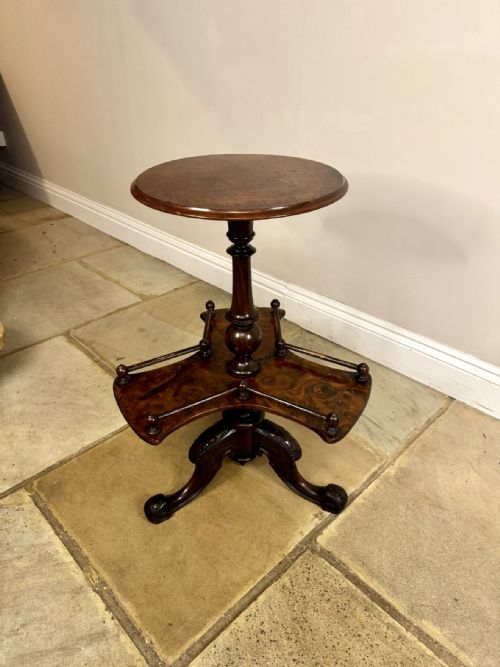


Small Whatnot
A small antique whatnot provides tiered shelving for display and storage, bringing compact elegance to corners and sitting rooms.
Small Whatnot
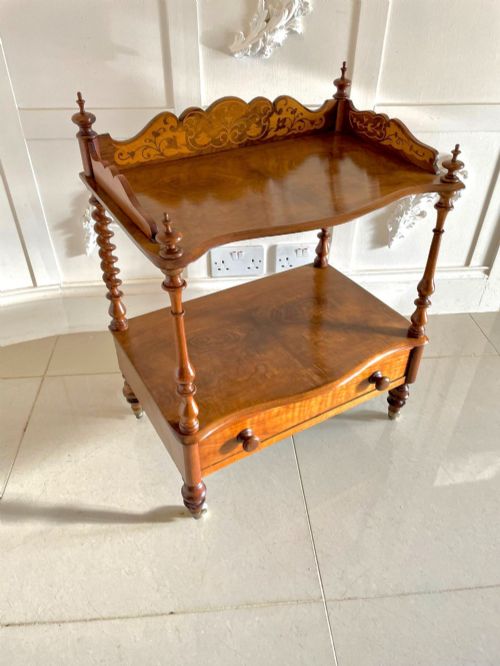
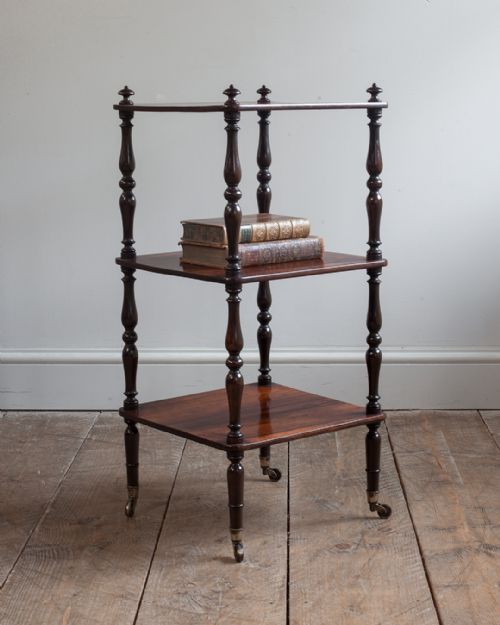
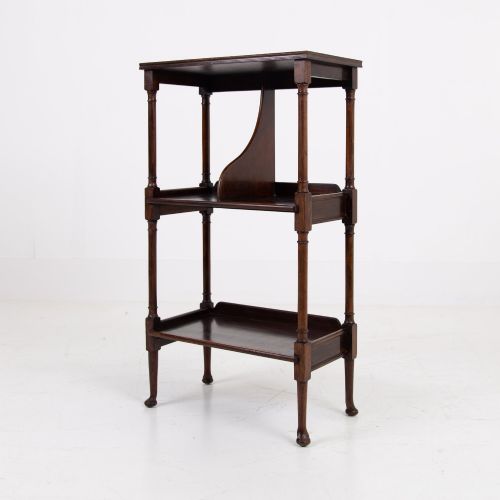
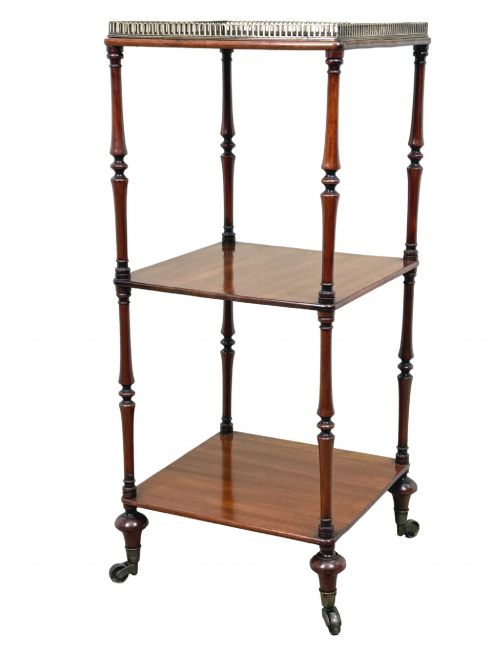
A small antique whatnot functions primarily as a tiered shelving unit or étagère, designed to hold books, ornaments and small decorative objects in tight spaces. These pieces appear across several distinct historical periods, including the Georgian, Regency, William IV and Victorian eras.
The form adapts easily to various domestic settings, serving as a lamp table, bedside stand or corner display piece. Buyers often encounter pieces displaying specific stylistic revivals, such as Regency Revival designs alongside genuine period items from the nineteenth century.
Evaluating Quality and Detail
Superior examples distinguish themselves through the choice of timber veneer, particularly highly figured burr walnut or rich rosewood with consistent grain patterns. The crispness of inlaid boxwood and the finesse of turned uprights or carved details separate standard production from exceptional pieces.
Structural integrity across multiple tiers dictates the overall standard of a piece, where tight joints and balanced proportions ensure stability without excessive bulk. The integration of secondary functions, such as drawers or writing surfaces, reflects the ambition of the original maker.
Small Whatnot Retail Price Guide 2026
Typical asking prices for small whatnot among the pieces listed under this phrase on Sellingantiques today, from the lower quarter to the upper quarter. They describe what is for sale here now, not the wider market.
Listings feature items predominantly from the nineteenth century, spanning Georgian, Regency, William IV, Victorian and Edwardian periods.
The Small Whatnot Glossary
- Whatnot
- A piece of furniture consisting of a set of open shelves for displaying small objects or books. First appearing in the late eighteenth century, it became a staple of nineteenth-century interiors.
- Étagère
- A piece of furniture with a set of open shelves for displaying ornaments. The term is frequently used interchangeably with whatnot in nineteenth-century contexts.
- Burr walnut
- Wood taken from a walnut tree outgrowth, producing intricate, swirling grain patterns. Highly prized by cabinet makers for decorative veneering.
- Regency revival
- A stylistic movement occurring around nineteen hundred that reinterpreted the classic furniture forms of the Regency period. These pieces draw heavily on early nineteenth-century proportions and motifs.
- Waterfall front
- A tiered shelving design where each lower shelf steps forward or curves outward in a cascading profile. This arrangement improves visibility and access to items stored on lower levels.
Small Whatnot: Frequently Asked Questions
What is a small antique whatnot used for?
These pieces were originally designed to hold books, ceramics and decorative ornaments in domestic parlours and drawing rooms.
Today, buyers utilise them as versatile display stands, bedside tables or lamp tables that occupy minimal floor space.
How do I identify a Victorian whatnot?
Victorian examples frequently feature dark timbers such as walnut and mahogany, often enhanced with burr veneers or inlaid boxwood details.
They commonly span multiple open tiers supported by turned columns, and occasionally incorporate lower cupboards or Davenport desk configurations.
Are Regency whatnots different from later pieces?
Regency pieces tend to display cleaner architectural lines and employ solid mahogany or rosewood with restrained decorative elements.
Later Victorian and revival interpretations often introduce more elaborate figuring, boxwood inlay and complex tiered configurations.
Can I use a whatnot as a bedside table?
The compact footprint and multi-tiered structure make these pieces suitable for holding bedside lamps, books and nighttime essentials.
Open shelves allow for easy access, whilst variants with enclosed cabinets provide concealed storage.