


Antique Sheffield Platter
An antique sheffield platter brings substantial silver service to the dining table, combining copper and silver in durable domestic hardware.
Antique Sheffield Platter
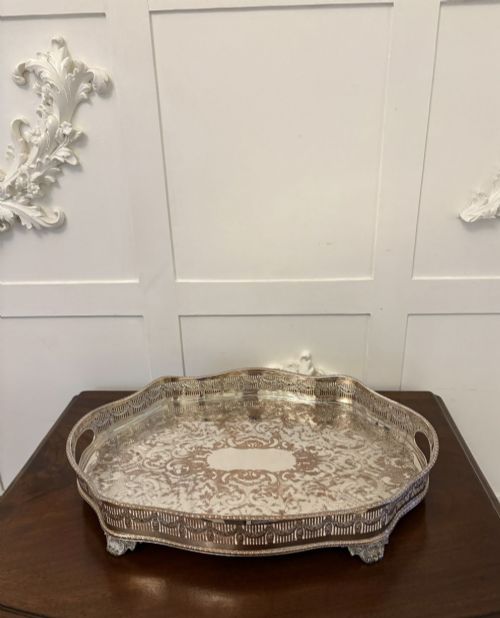
When you search for an antique sheffield platter, you encounter serving trays, meat domes, warming dishes, and salvers produced across the Georgian, Victorian, and Edwardian periods.
The pieces on this page include large meat trays, tea trays, dinner plates, and game covers originating from workshops in Sheffield.
Most items you meet here utilise Old Sheffield Plate or later silver plate on copper or nickel bases, reflecting centuries of British metalwork.
How they were made
Traditional Old Sheffield Plate is produced by fusing a sheet of silver to a thicker copper core under heat and rolling them together into plates.
Later pieces employ electroplated nickel silver or standard silver plating methods, depositing a thin layer of silver over base metals.
Surface decoration involves hand engraving, piercing, reticulation, and applied borders shaped in Regency, Victorian, and Rococo styles.
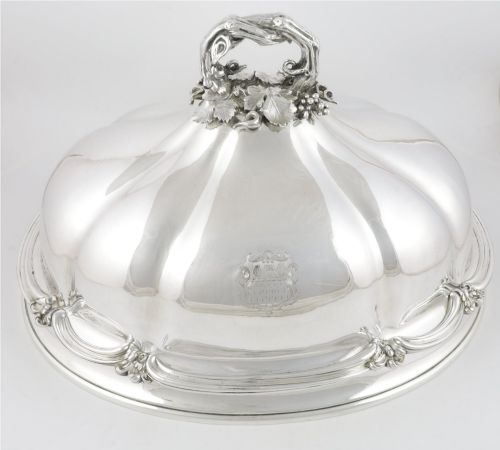
Several heavy meat domes carry the original armorial crests of English dukes, having spent centuries guarding Sunday roasts.
What varies in quality
Quality depends on the integrity of the fused metal layers, where lesser items reveal the underlying copper through extensive wear on high points.
Maker attribution and the crispness of chased or engraved detailing separate standard utilitarian serving items from superior workshop productions.
Roberts Cadman·Henry Wilkinson·Matthew Boulton·Walker Knowles·J Dixon and Sons·Frank Cobb and Co·Cresswick·Lee and Wigfull·J.H. Potter·Mappin and Webb
The Antique Sheffield Platter Glossary
- Old Sheffield Plate
- A material made by fusing silver and copper together before rolling into sheets. This technique predates modern electroplating.
- Meat Dome
- A large domed cover used to keep joints of meat warm on the dining table. These pieces often feature substantial handles and engraved crests.
- Salver
- A serving tray raised on feet, typically used for drinks or visiting cards. They appear in circular and shaped outlines.
- Reticulation
- An openwork pattern pierced through the metal of a tray or basket. This decorative technique lightens the visual weight of heavy serving pieces.
- EPNS
- Electroplated nickel silver, a common base metal composition introduced in the nineteenth century. It provides a bright silver surface over a durable alloy.
Antique Sheffield Platter: Frequently Asked Questions
What is Old Sheffield Plate?
Old Sheffield Plate is a composite material formed by fusing silver to a copper core. The layered metal is then hammered and rolled into sheets for silversmithing.
This method differs from later electroplating by creating a thick, bonded layer of real silver that wears down to reveal the warm copper underneath over generations of use.
How do I clean an antique platter?
Cleaning requires a soft cloth and a gentle, non-abrasive silver polish formulated for plated items. Harsh scrubbing wears away the thin silver layer.
Wash the piece in warm soapy water and dry it thoroughly immediately after polishing to prevent moisture spots on the metal surface.
How do I date an antique tray?
Dating relies on maker marks, style markers, and the manufacturing technique visible on the reverse or edges. Early pieces show fused copper edges, while later items use electroplate.
Design styles such as Georgian rococo revival, Regency minimalism, or Edwardian pierced work also provide clear chronological indicators for each piece.
What were meat domes used for?
Meat domes covered large joints of roasted meat on the dining table to retain heat before carving. Servants lifted the dome when serving guests.
These heavy covers often feature cast handles on top and engraved family crests or coats of arms across the curved body.