



Antique Sevres Style
Antique sevres style pieces bring French 19th-century elegance into a room through porcelain, ormolu, and hand-painted detail.
Antique Sevres Style
When you search for antique sevres style, you encounter decorative objects and furnishings that echo the aesthetic of the famous French royal porcelain manufactory. The selection on this page centres on items produced during the 19th century, drawing heavily on Victorian and French Second Empire sensibilities.
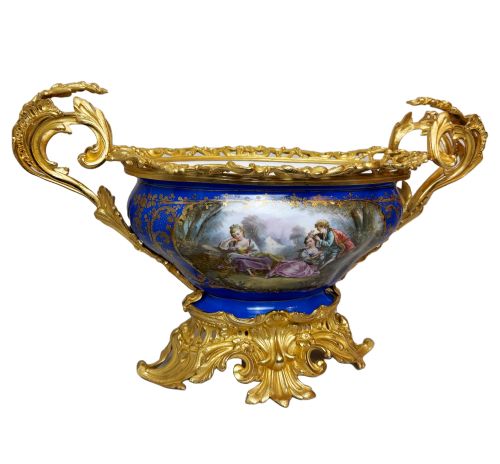
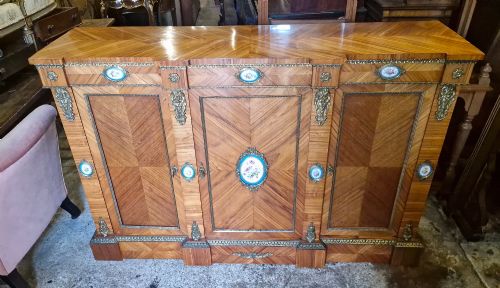
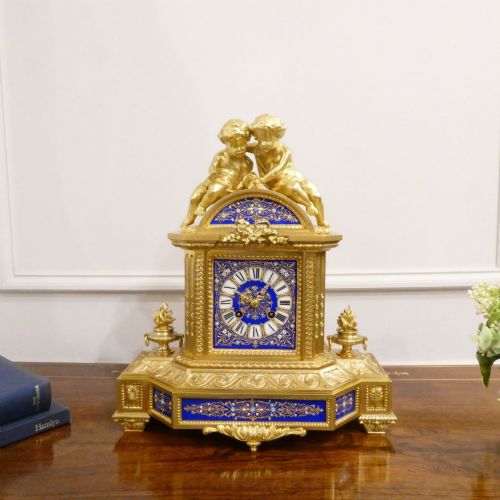
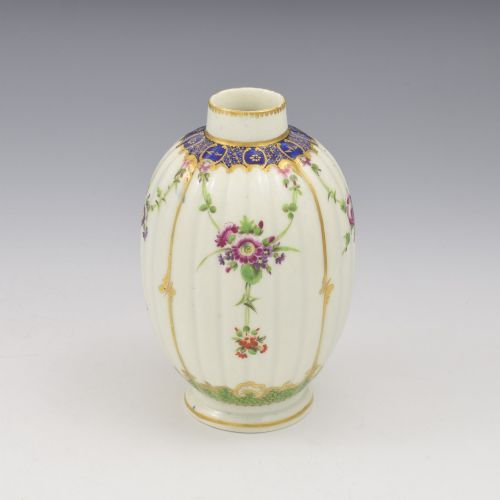
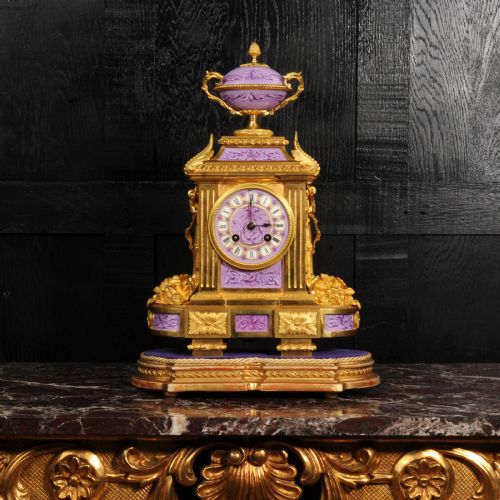
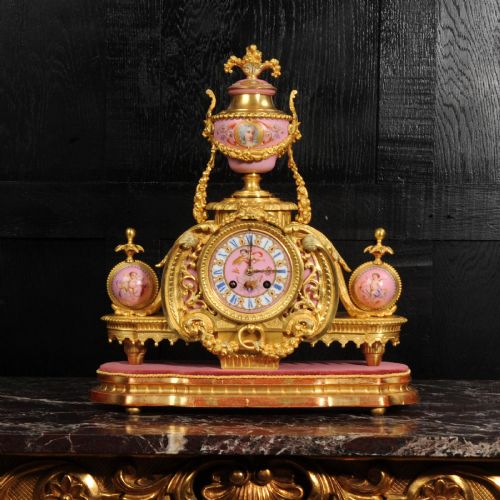
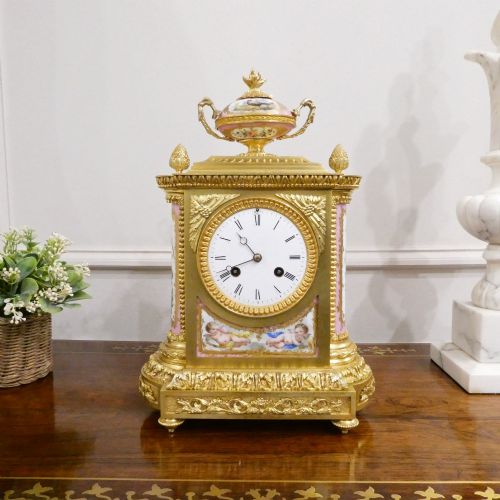
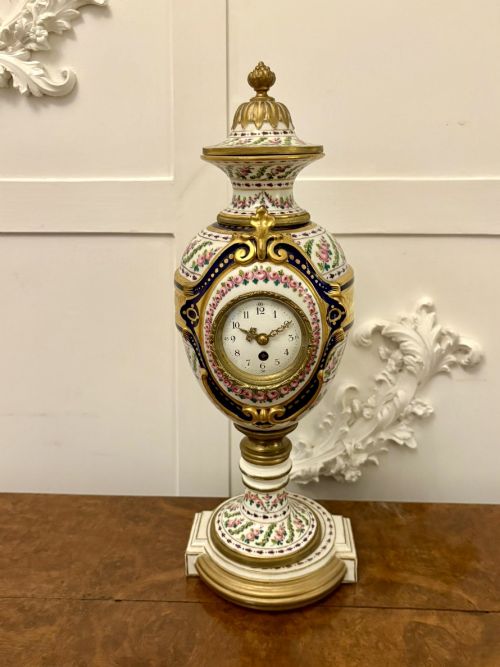
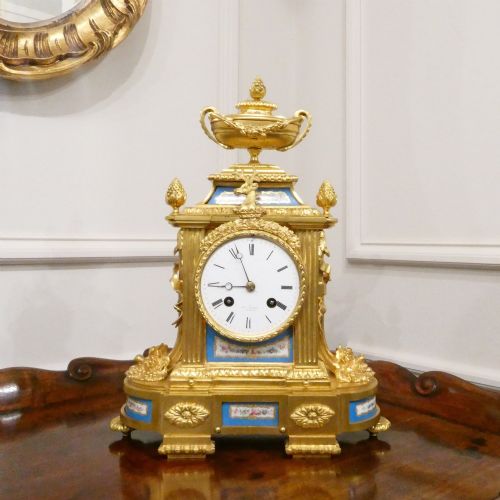
You will most commonly meet mantel clocks, vases, and jardinières mounted with porcelain plaques. These pieces often combine glazed ceramic bodies with ornate gilt bronze or ormolu mounts, reflecting revival styles such as Louis XV and Louis XVI.
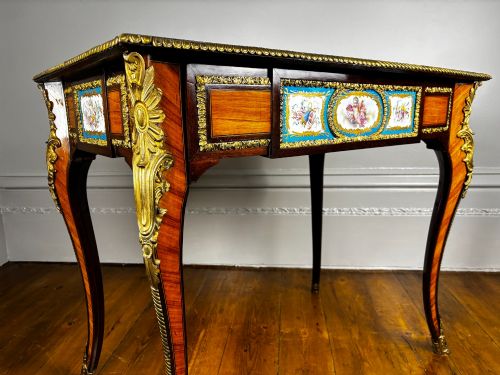
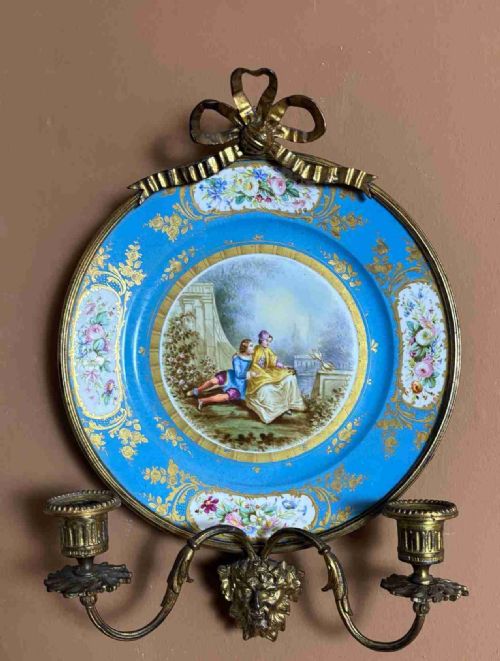
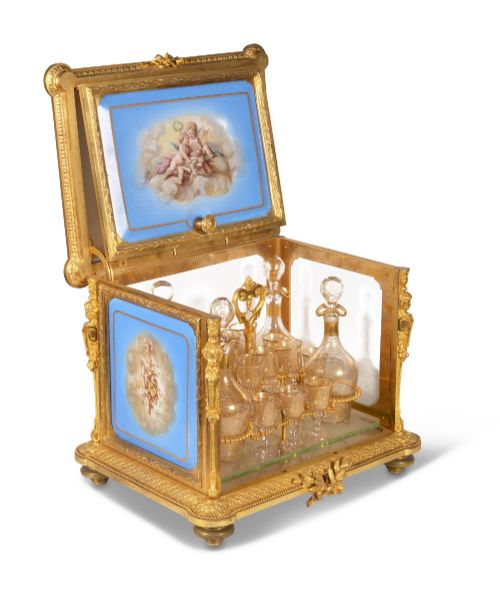
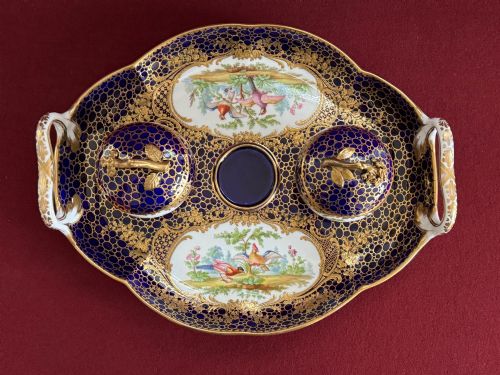
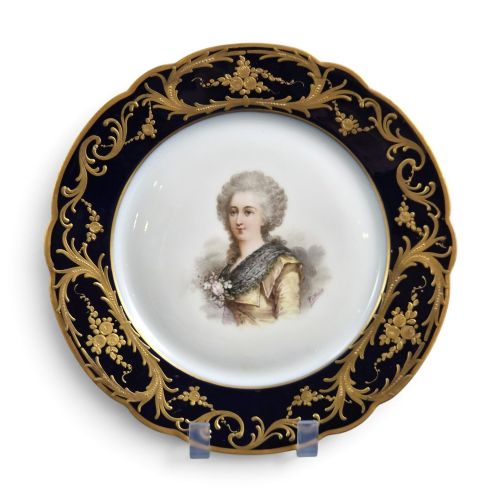
Smaller items also appear, including cabinet plates, jewellery caskets, writing desks, and table lamps. These objects frequently utilise rich ground colours like cobalt blue and turquoise, complemented by hand-painted portraits or pastoral scenes.
How they were made
Makers shaped ceramic bodies from fine porcelain and fired them at high temperatures to achieve durable surfaces. Artisans then applied ground colours such as bleu céleste or cobalt before adding hand-painted enamel details and gilding with gold leaf.
Metalworkers cast bronze mounts using the lost-wax technique, chasing the details by hand before applying mercury gilding to produce ormolu. Cabinetmakers incorporated kingwood, rosewood, walnut, and ebonised timber into furniture pieces designed to house porcelain plaques.
Clockmakers fitted mechanical movements into the bronze and porcelain housings, collaborating with bronze casters and ceramic painters to complete complex mantel clock sets.
Antique Sevres Style Retail Price Guide 2026
Typical asking prices for sevres style among the pieces listed under this phrase on Sellingantiques today, from the lower quarter to the upper quarter. They describe what is for sale here now, not the wider market.
The inventory records French revival styles including Louis XV, Louis XVI, and Napoleon III across multiple decades.
What varies in quality
The refinement of the hand-painted decoration sets apart the higher tiers of these pieces. Superior items display meticulously rendered portraits and landscapes with delicate brushwork, whereas lesser examples rely on stencilled transfers or hasty application.
The weight and precision of the ormolu mounts dictate the overall standard of construction. Finely chased bronze mounts with crisp detailing and heavy casting show greater craftsmanship than lightweight, softly cast metal elements.
The integration of materials determines the success of the piece. Top-grade items demonstrate a harmonious balance between the porcelain body and the timber or metal framework, with seamless joinery and coherent stylistic ambition.
Jean-Baptiste Delettrez·Achille Brocot·Henry Marc·Etienne Lenoir·Japy Frères·Leroy Paris·Samson Paris
The Antique Sevres Style Glossary
- Ormolu
- Gilt bronze created by applying an amalgam of gold and mercury to a bronze base, then heating it to drive off the mercury. This technique produces a durable golden finish characteristic of French decorative arts.
- Bleu Céleste
- A bright sky-blue ground colour developed at the Sèvres manufactory during the 18th century. It frequently serves as a backdrop for floral reserves and gilt ornamentation.
- Jardinière
- A decorative container designed to hold plants or flowers. In 19th-century contexts, these often feature porcelain plaques mounted in ormolu frames.
- Cartonnier
- A desktop cabinet fitted with compartments for papers and documents. These pieces are often adorned with ormolu mounts and inset porcelain panels.
- Cassolette
- A decorative vase or vessel with a reversible lid that can function either as a solid vase or an incense burner. They often appear in matched pairs with gilt bronze mounts.
- Secrétaire Abattant
- A tall fall-front writing desk containing a vertical cabinet space. Examples from this period frequently incorporate porcelain plaques within their wood veneers.
Antique Sevres Style: Frequently Asked Questions
What is sevres style porcelain?
Sevres style porcelain refers to decorative ceramics produced in imitation of the famous French royal factory, known for rich ground colours and hand-painted panels.
These items usually date from the 19th century and adopt Louis XV or Louis XVI revival aesthetics.
How were antique ormolu mounts made?
Ormolu mounts were produced by casting bronze into intricate shapes, chasing the surface by hand to sharpen details, and applying a gold amalgam.
This labour-intensive process yielded a bright, durable golden finish that complemented the glazed porcelain.
Where were these pieces used?
These decorative objects served as display items in 19th-century drawing rooms, parlours, and libraries. Mantel clocks, vases, and jardinières functioned as both ornamental centerpieces and practical accessories.
Desks and caskets combined utility with display, holding correspondence and valuables.
How do I care for antique porcelain and ormolu?
Keep porcelain and ormolu pieces out of direct sunlight to prevent fading of enamels and gilt details. Dust gently with a soft, dry cloth and avoid chemical cleaners.
For clocks, ensure professional servicing keeps the mechanical movement running smoothly.