


Antique Serving Dish Pair
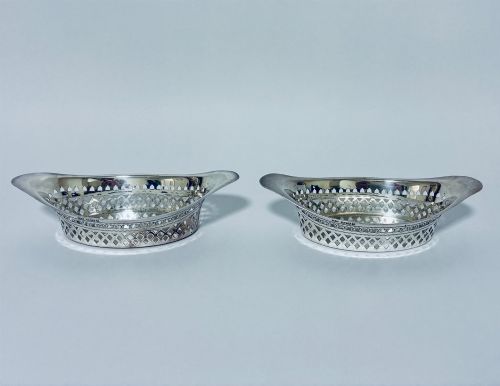
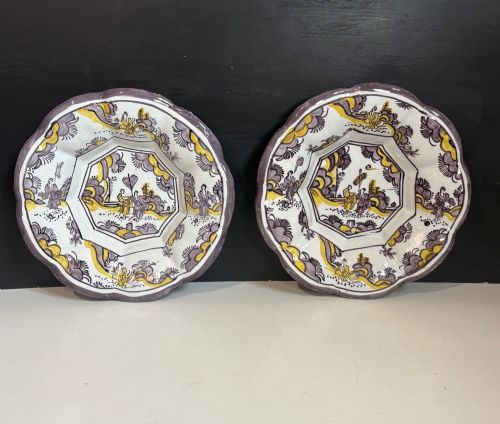
An antique serving dish pair brings matched symmetry to the table through porcelain, silver plate, and earthenware crafted for formal dining.
Antique Serving Dish Pair
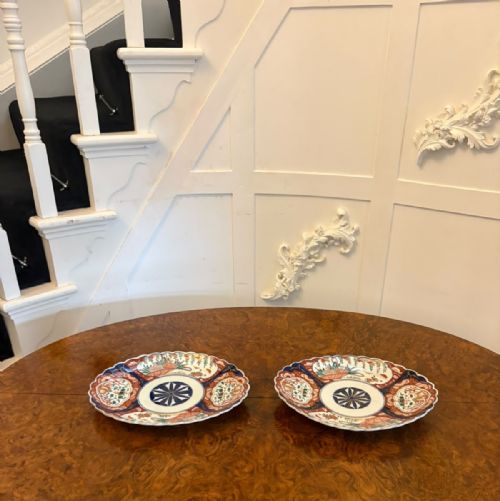
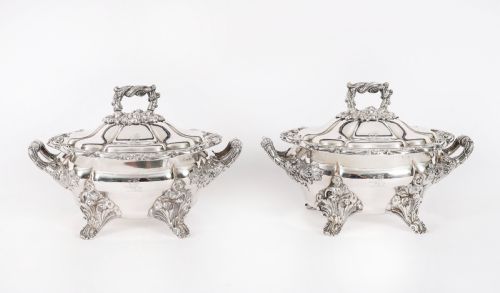
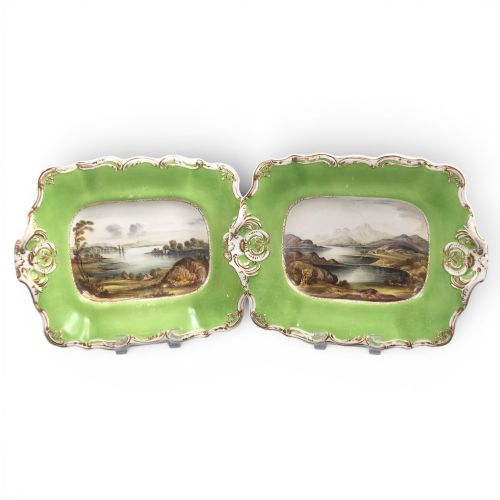
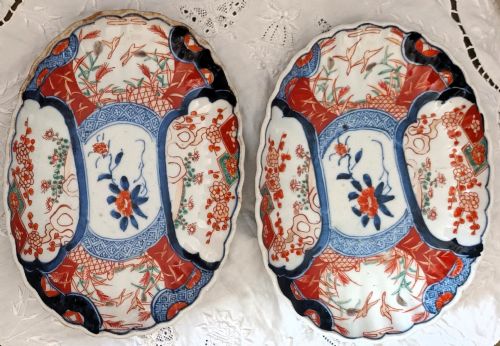
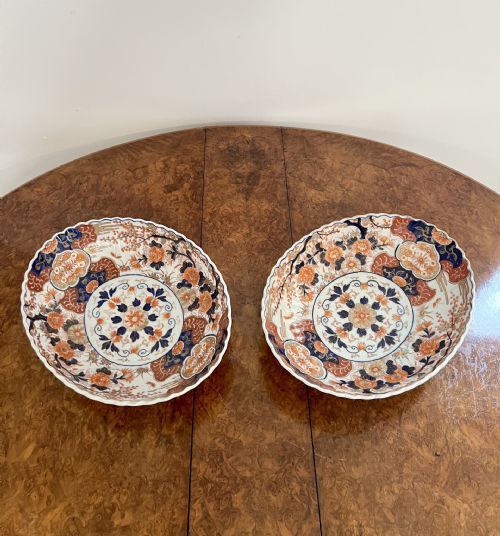
An antique serving dish pair encompasses entree dishes, tureens, platters, and decorative plates originating from the eighteenth century through to the Edwardian period. Buyers encounter Georgian and Victorian silver plated warmers alongside Japanese Meiji Imari porcelain and English ironstone service pieces.
The selection ranges from grand lidded sauce tureens and meat platters down to fan-shaped dishes and dessert plates. Most pieces serve the dining room function they were designed for, whether holding joints of meat, vegetables, or sweet courses in matched pairs.
Craftsmanship and preservation
Quality rests in the crispness of moulded detail on ironstone and silver, the depth of hand-painted enamels on Japanese Imari porcelain, and the preservation of original silver plating over copper or base metal. Superior examples maintain balanced forms and sharp registration in transferware patterns.
Makers such as Spode, Wedgwood, and Masons applied rigorous standards to paste composition and glaze consistency, while prominent silversmiths executed heavy-gauge metalwork with tight-fitting lids and robust handles.
A pair of warming dishes often contains a hidden compartment once filled with boiling water to keep gravy piping hot.
Edward and John Barnard·Walker and Hall·Elkington·Matthew Linwood·Cresswick·Hamilton and Inches·Dan Holy
The Antique Serving Dish Pair Glossary
- Entree dish
- A covered serving vessel designed to keep courses warm at the table. These often feature removable handles for versatile use.
- Imari
- Japanese porcelain decorated in underglaze blue, iron red, and gold. This style was widely emulated by European potteries.
- Ironstone
- A durable type of earthenware patented in the nineteenth century. It resists chipping and mimics fine porcelain.
- Old Sheffield plate
- An early method of fusing a thin sheet of silver to a thicker copper base before rolling. This technique predates modern electroplating.
Antique Serving Dish Pair: Frequently Asked Questions
What is an antique serving dish pair used for?
These pieces were created to serve food symmetrically on formal dining tables, holding meats, vegetables, sauces, or desserts.
Today, they function as practical tableware for entertaining or as display items on sideboards and dressers.
How do I care for silver plated serving dishes?
Wash metal items by hand in warm soapy water using a soft cloth, avoiding harsh abrasive cleaners that strip the plating.
Dry them thoroughly after washing and store them in dry conditions to maintain the finish.
How do I date an ironstone serving dish?
Examine the maker marks stamped or printed on the base, comparing registry numbers or pattern names with historical pottery records.
Style characteristics, such as moulded Rococo Revival scrolls or transferware motifs, also indicate the manufacturing decade.
Are silver plated dishes safe for food?
Most silver plate and old Sheffield plate items are safe for serving dry or cooked foods during meals.
Avoid leaving acidic foods or liquids on silver surfaces for extended periods to prevent tarnishing or reaction with the metal.