


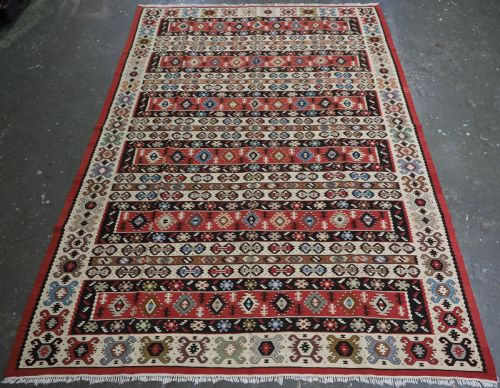


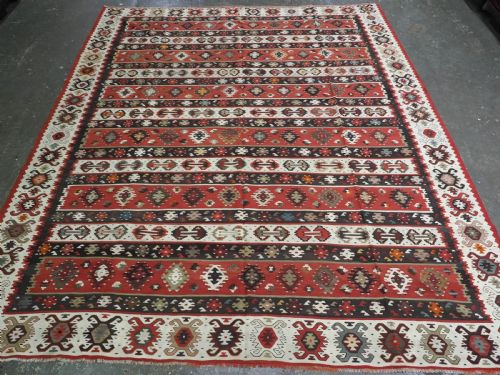


Antique Serbian Kilim
These antique serbian kilim pieces are flat-woven flat rugs of Balkan traditional design that bring warmth and genuine folk art character to any floor.
Antique Serbian Kilim
When you search for an antique serbian kilim, you encounter flat-woven textiles originating from the Pirot and Sarkoy regions around the year 1920. These pieces primarily take the form of area rugs, kilim rugs, and larger room-size carpets.
The aesthetic falls firmly under Balkan folk art and traditional Balkan styles, presenting specific motifs like flowering trees, lattices, banded patterns, and repeat medallions. Such flat-woven floor coverings function well in various interior settings that require authentic textile heritage.
How they were made
Makers utilised wool and cotton as the primary materials for these flat-woven textiles, creating durable surfaces suitable for floor use. The weaving technique relies on interweaving warp and weft threads without a pile.
This construction method results in a flat, reversible fabric where the distinct geometric or floral patterns appear clearly on both sides. The reliance on natural wool and cotton fibres contributes to the soft yet resilient quality observed in these rugs.
Antique Serbian Kilim Retail Price Guide 2026
Typical asking prices for serbian kilim among the pieces listed under this phrase on Sellingantiques today, from the lower quarter to the upper quarter. They describe what is for sale here now, not the wider market.
These woven floor pieces travelled through generations of Balkan homes, surviving decades of foot traffic simply by being flipped over when one side grew tired.
What varies in quality
Quality in these flat-woven rugs separates according to the complexity and execution of the specific design, ranging from classic patterns to scarce lattice variations. Pieces also differ based on whether they display banded layouts or intricate repeat medallions.
The overall condition and the subtlety of the colour palette also define the better examples, with certain items showing warm soft tones while others retain rich, excellent colours. Size further separates standard area formats from large room-size carpets.
The Antique Serbian Kilim Glossary
- Kilim
- A flat-woven carpet or rug produced without a pile. This technique creates a lightweight textile that sits flat upon the floor.
- Pirot
- A traditional centre for textile production associated with Balkan folk art weaving. Rugs originating from this area show distinct regional design characteristics.
- Sarkoy
- A regional designation linked to the production of these traditional flat-woven textiles. Pieces carrying this attribution share stylistic traits with Pirot examples.
- Medallion
- A central decorative motif placed within the field of the rug. Repeat medallion designs organise the textile surface into structured geometric sections.
Antique Serbian Kilim: Frequently Asked Questions
How do I clean an antique kilim?
Gentle surface cleaning and regular light shaking maintain the wool and cotton fibres properly. Professional textile cleaning is advisable for deeper maintenance.
Avoid heavy immersion or harsh chemical treatments to preserve the traditional flat-weave structure and the soft colours of the wool.
Where should I place these rugs?
These flat-woven carpets suit low-traffic areas or spaces where their distinctive Balkan folk art designs can remain visible. They function effectively as area rugs or large room-size floor coverings.
Using a suitable underlay helps keep the flat textile stable on smooth flooring surfaces and reduces daily friction.
What designs are available?
The available patterns include classic layouts, flowering tree motifs, scarce lattice arrangements, and banded or repeat medallion designs. Each style reflects traditional Balkan aesthetics from around nineteen twenty.
Some variants showcase warm soft colours, while others present striking contrasts through their wool and cotton construction.
Are these rugs reversible?
The flat-weave construction means the pattern appears on both sides of the textile. This allows the rug to be turned periodically to distribute wear evenly.
Neither side possesses a raised pile, ensuring a clean profile regardless of which face is displayed upward.