

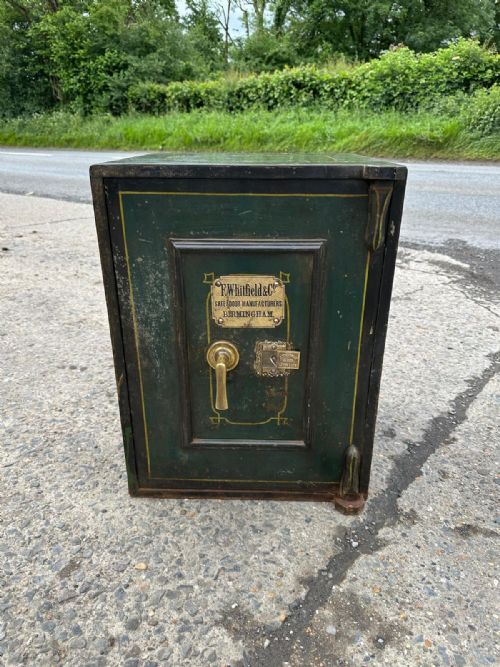
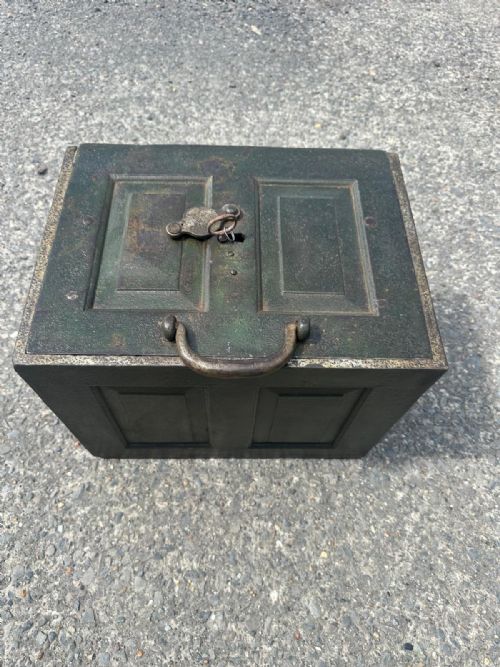


Antique Security Safe
An antique security safe brings heavy ironwork and brass hardware into a room, offering genuine historical weight alongside practical storage.
Antique Security Safe
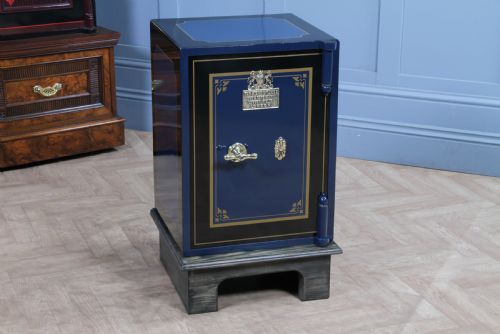
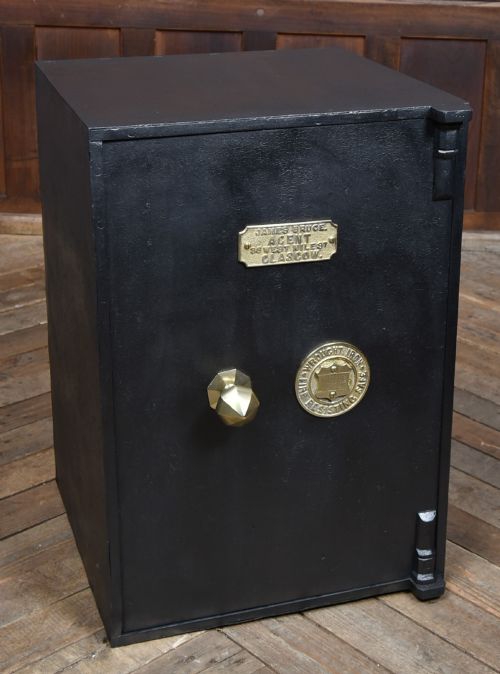
An antique security safe provides heavy protection for valuables, emerging in forms ranging from robust industrial boxes to refined domestic strongboxes. When searching for an antique security safe, buyers encounter utilitarian cast iron models alongside ornate luxury examples raised on bespoke stands.
The pieces on this page span the Regency period through the Victorian era and into nineteen hundred. Makers applied heavy metal construction to create secure cash boxes, chests, and large floor-standing units intended to withstand both theft and fire.
How they were made
Makers constructed these pieces using heavy cast iron, steel, and wrought iron to achieve formidable structural integrity. Protective bodies were reinforced with brass fittings, bronze elements, and internal mechanisms designed to outwit intruders.
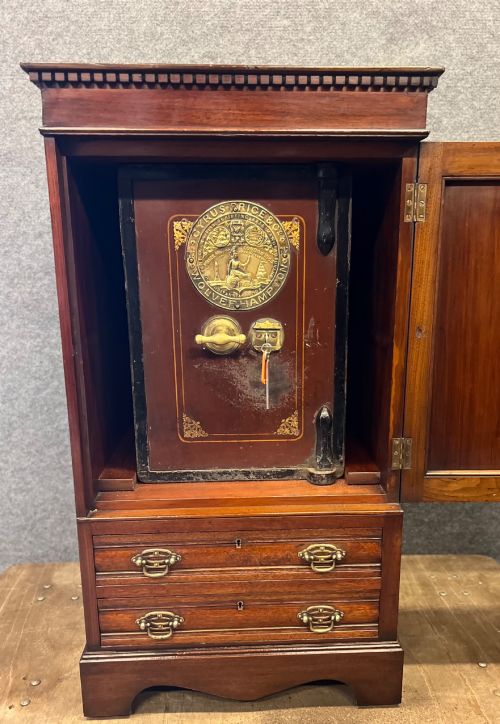
Aesthetic refinement often matched industrial utility, with certain pieces housed in burr walnut cabinets or fitted with secret letter compartments. Original keys and multi-dial combination systems demonstrate advanced mechanical skill for their respective periods.
Antique Security Safe Retail Price Guide 2026
Typical asking prices for security safe among the pieces listed under this phrase on Sellingantiques today, from the lower quarter to the upper quarter. They describe what is for sale here now, not the wider market.
Listings feature materials including cast iron, steel, wrought iron, brass, bronze, and burr walnut across the Victorian and Regency periods.
What varies in quality
The distinction between standard utility boxes and top-tier pieces lies in the sophistication of the locking mechanisms and the presence of decorative enhancements. Fully restored luxury models featuring original paint finishes and bespoke stands sit well above plain, unbranded industrial boxes.
Makers such as Chubb, Tanns, and Whitfield invested greater artistry into brass work, ornate dial systems, and cabinet integration. The survival of original keys and functional internal drawers further elevates the standing of an individual piece.
James Bruce Glasgow·Tanns Defiance London·F Whitfield And Co·Waring And Sons·Chubb·George Price
The Antique Security Safe Glossary
- Strong box
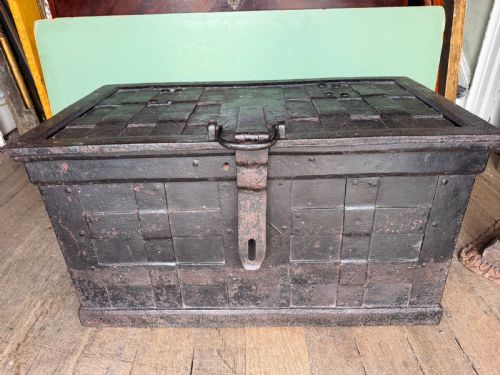
- A heavily reinforced metal or iron container built to store valuables securely before the widespread adoption of modern bank vaults. These portable units often featured elaborate locking mechanisms.
- Cash box
- A smaller secure container designed specifically for money, frequently equipped with internal coin trays and compartment lids. They represent a more portable subset of security hardware.
- Combination safe
- A security container unlocked via a sequence of numbers or letters on dials rather than a traditional key. French examples from the late nineteenth century frequently utilised three-dial systems.
- Wrought iron
- A tough, malleable iron form hammered or rolled into shape, used extensively in early security construction before steel production dominated. It offers high resistance to fracture under stress.
- Burr walnut
- A highly figured wood veneer applied to luxury furniture cabinets that sometimes housed smaller security boxes. It brings decorative warmth to an otherwise severe iron object.
Antique Security Safe: Frequently Asked Questions
How heavy is an antique security safe?
These pieces are exceptionally heavy due to their solid iron and steel construction. Moving them typically requires specialist equipment and careful floor assessment.
Smaller strongboxes and desk versions weigh considerably less, though they still maintain a dense, solid feel from their metal plates and brass hardware.
Do these safes still lock securely?
Many surviving examples retain their original keys or functional dial mechanisms and continue to lock effectively. Professional restoration often ensures the internal bolts operate smoothly.
Buyers should verify the mechanical status of each individual piece, as some are sold primarily as decorative furniture items with non-operational locks.
How do I care for iron and brass?
Maintenance involves keeping the metal dry and occasionally applying a light wax or protective oil to prevent surface oxidation. This preserves the original colour of the iron without stripping historical patination.
Brass elements respond well to gentle cleaning with a soft cloth to maintain their lustre without harsh chemical abrasion.
Can I use an antique safe as a bedside table?
The larger luxury versions raised on wooden stands function well as striking bedside tables or side cabinets. Their flat tops and substantial presence suit domestic placement.
Smaller strongboxes sit easily on top of desks or inside wardrobes, combining historical interest with discreet storage space.