





Antique Seaside Picture
An antique seaside picture captures the coast through nineteenth and early twentieth century brushwork, offering timeless domestic and maritime charm for your walls.
Antique Seaside Picture
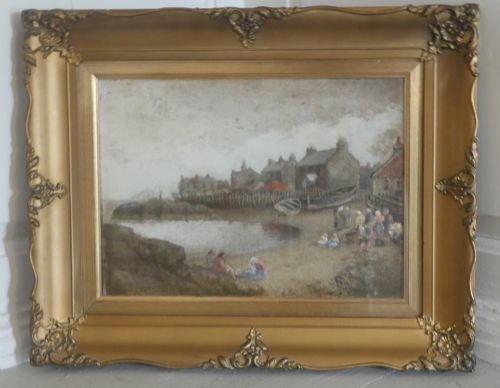
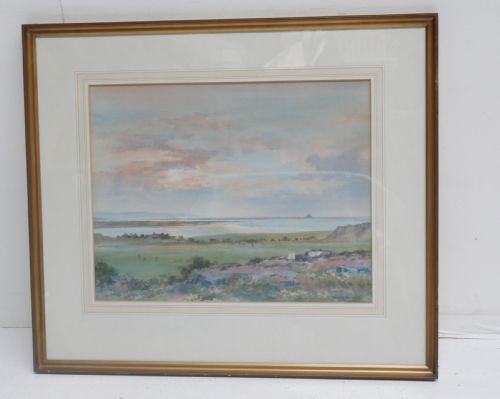
An antique seaside picture encompasses coastal scenes, harbour views, and beach paintings from the Victorian and Edwardian eras. These artworks document nineteenth and early twentieth century shores with notable regional detail.
You are most likely to meet watercolours on paper and oil paintings on canvas depicting British and European coasts. Subjects range from Scottish fishing ports and Dorset cliffs to Yorkshire bays.
The objects take the form of framed wall art, often retaining their period gilt wood surrounds and protective glass. They record historical maritime life, local architecture, and coastal topography.
How they were made
Makers applied watercolour pigment to paper or laid oil paint onto canvas and wooden supports. Artists utilised traditional media to capture changing coastal light and atmospheric maritime conditions.
Works are frequently housed in period wooden frames, occasionally enhanced with gilt decoration to complement the painting. These protective enclosures maintain the integrity of the paper and canvas over the centuries.
Antique Seaside Picture Retail Price Guide 2026
Typical asking prices for seaside picture among the pieces listed under this phrase on Sellingantiques today, from the lower quarter to the upper quarter. They describe what is for sale here now, not the wider market.
Several artists clearly enjoyed painting chickens scratching about outside coastal cottages almost as much as the sea.
What varies in quality
The execution of detail in figures, architectural elements, and coastal topography distinguishes finer examples from simpler works. Superior pieces demonstrate confident brushwork and a sophisticated handling of light and tone.
The preservation of the original paper, canvas, and pigment influences the visual impact of the piece. Intact framing and minimal surface disruption maintain the historical integrity of the artwork.
Edward Mills·John Bedloe Goddard·Sir Thomas Newenham Dean·William Raymond Dommersen·Alfred Henry Vickers·Alfred Robert Quinton·John Abernethy Lynas-Gray·William Greaves·James Kinnear·William Shayer·Henry Valter
The Antique Seaside Picture Glossary
- Watercolour painting
- A work executed with water-soluble pigments on paper. This medium allows for delicate washes and translucent effects particularly suited to coastal skies and sea.
- Oil on canvas
- A painting technique using pigments bound in a drying oil applied to stretched canvas. It provides rich textures and deep colour saturation ideal for dramatic seascapes.
- Gilt wood
- Wood decorated with a thin layer of gold leaf or gilt paint. Period frames utilise this finish to enhance the presentation of the artwork.
- Genre painting
- Artwork depicting scenes from everyday life, often including fisher folk and coastal workers. These pieces offer social history alongside landscape representation.
- Realism
- An artistic style focused on portraying subjects truthfully without artificiality. Nineteenth century examples concentrate on accurate depictions of coastal topography and maritime activity.
Antique Seaside Picture: Frequently Asked Questions
How do I hang a heavy oil painting safely?
Ensure your wall fixings are secured directly into wall studs or use appropriate heavy-duty wall anchors designed for the weight of the frame.
Hang the painting at eye level using sturdy picture wire and dual hook systems to distribute the weight evenly.
Where should I display an antique watercolour?
Keep watercolours away from direct sunlight to prevent the fading of delicate pigments on paper over time.
Choose an interior wall with stable humidity and temperature conditions to protect both the paper and the original frame.
How do I identify a Victorian beach painting?
Look for period dress on figures, such as long skirts and straw hats, alongside traditional fishing boats and coastal architecture.
Examine the reverse of the frame or canvas for nineteenth-century labels, artist signatures, and framing stamps.